




The Solar Paradox
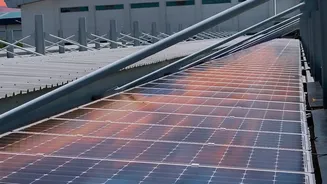
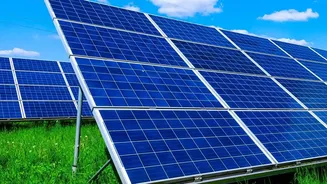
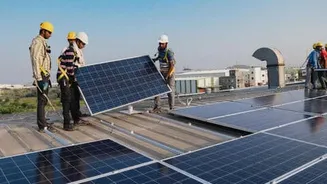
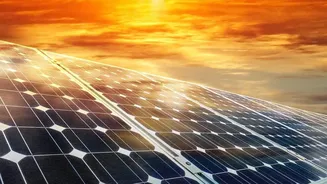
Solar energy is a cornerstone of India's plan for a sustainable future. With ambitious targets to expand solar capacity, countless photovoltaic panels are being installed across the country. However, these vital assets face a persistent threat from the very
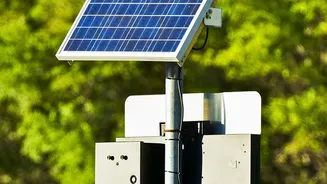
source of their power: the sun itself. High solar radiation, particularly the ultraviolet (UV) component, relentlessly bombards the surfaces of solar panels, inverters, and other outdoor equipment. Over time, this exposure causes photodegradation, a process where materials break down, leading to a gradual but significant loss of efficiency. This degradation means panels produce less power and have a shorter operational lifespan, ultimately impacting the economic viability of solar projects. For a sun-drenched country like India, finding a way to protect this critical infrastructure is not just a technical challenge but an economic necessity.
Nature's Ultimate Sunscreen
When faced with the challenge of UV radiation, nature already has a masterful solution: melanin. This is the pigment responsible for the colour of our skin, hair, and eyes. Its primary biological function is to provide protection against the harmful effects of the sun's UV rays by absorbing and scattering the light. Melanin is incredibly effective at absorbing a broad spectrum of UV light and dissipating that energy safely as heat, preventing it from damaging sensitive cells. There are different types of melanin, but one in particular, eumelanin (the pigment that produces brown and black colours), is an exceptionally powerful photoprotectant. Scientists have long been fascinated by its properties, wondering if this natural shield could be adapted for industrial purposes. The core idea is simple yet revolutionary: if melanin can protect our skin, can it also protect our technology?
Engineering a Synthetic Solution
Harvesting melanin from natural sources is not practical for large-scale industrial applications. The real breakthrough lies in the creation of bio-synthetic melanin. Researchers have developed methods to produce melanin in the lab that is structurally and functionally identical to its natural counterpart. This process allows for the creation of pure, high-quality melanin on a scale needed for manufacturing. By tweaking the chemical process, scientists can also fine-tune the properties of the synthetic melanin, optimising it for specific applications like enhancing its electrical conductivity. This synthetic version offers all the protective benefits of natural melanin—powerful UV absorption, long-term stability, and the ability to dissipate energy harmlessly—but in a form that can be integrated into industrial materials and coatings. This innovation paves the way for using nature's elegant defence mechanism in a completely new context.
Creating the Protective Shield
The application of bio-synthetic melanin to solar equipment is a field of active research and development. The most promising approach involves creating thin films or coatings that can be applied to the surfaces of solar energy systems. These shields would act as a sacrificial layer, absorbing the brunt of the UV radiation before it can reach the sensitive components underneath. The melanin can be embedded within a durable polymer matrix to create a transparent or semi-transparent film that can be layered over solar panels without significantly blocking the light needed for power generation. For other equipment, like inverter casings or junction boxes, the melanin could be incorporated directly into the plastic or metal, providing built-in, lifelong protection from sun-induced decay.
The Benefits of Melanin-Tech
The advantages of successfully implementing bio-synthetic melanin shields are manifold. The most immediate benefit is an extended lifespan for solar equipment. By slowing down the rate of UV degradation, panels could maintain their peak performance for much longer, improving the return on investment for solar farm operators. This enhanced durability also means lower maintenance costs and fewer replacements over the life of a project. Furthermore, by protecting the integrity of the panel materials, these shields could lead to higher and more consistent energy output over decades. For a country like India, which experiences some of the highest levels of solar irradiance in the world, this technology could be a game-changer. It promises to make solar power more reliable, efficient, and cost-effective, helping to accelerate the transition to renewable energy and bolster the nation's energy security.