


The Sun’s 11-Year Rhythmic Cycle
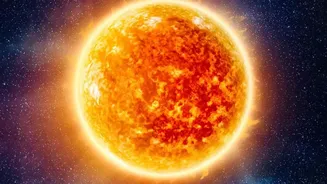
The sun, our life-giving star, isn't as constant as it appears. It has a heartbeat of sorts, a roughly 11-year cycle that swings between periods of quiet and intense activity. The peak of this activity is known as the solar maximum. We are currently in Solar
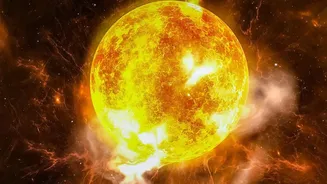
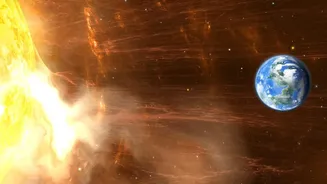
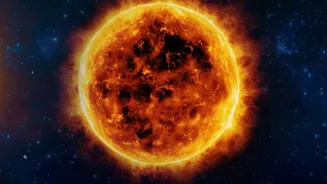
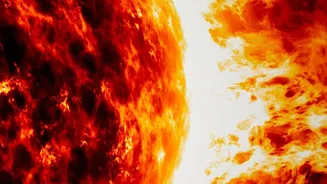
Cycle 25, which began in December 2019 and reached its peak activity period in late 2024. During a solar maximum, the sun's magnetic field becomes tangled and hyperactive, leading to an increase in sunspots—dark, cool areas on the sun's surface—as well as more dramatic events like solar flares and coronal mass ejections (CMEs). A solar flare is a massive burst of radiation, while a CME is a giant cloud of magnetised plasma and solar particles hurtling through space. It is these powerful eruptions that are responsible for the beautiful and potentially disruptive phenomena we experience here on Earth.
Painting the Sky: How Auroras Are Born
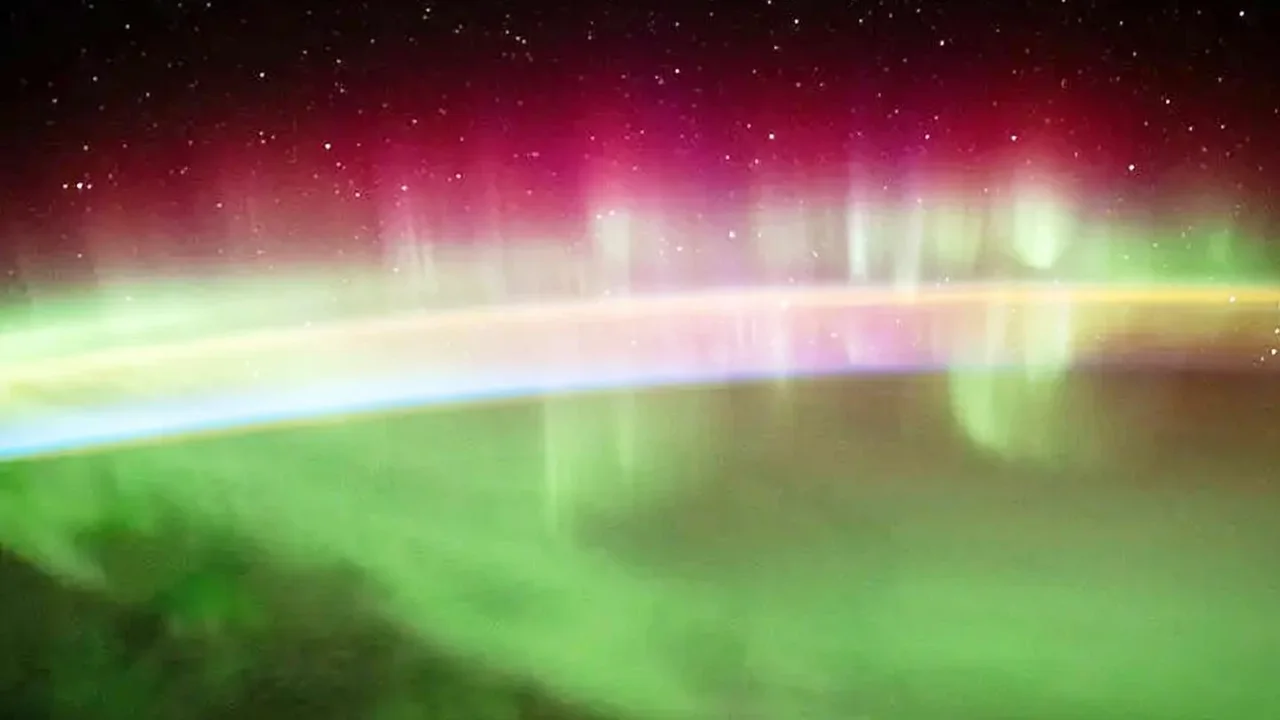
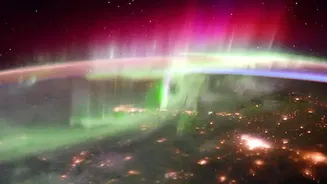
The breathtaking auroras, or the Northern and Southern Lights, are the most beautiful consequence of a solar maximum. They are created when charged particles from the sun, carried by a CME, collide with Earth's protective magnetic field, the magnetosphere. Earth's magnetic field funnels these energetic particles towards the North and South Poles. As they travel down magnetic field lines into our upper atmosphere, they collide with gas atoms like oxygen and nitrogen. These collisions excite the atoms, which then release their excess energy as photons, or particles of light. The result is the shimmering, dancing curtains of light we see in the sky. The colour of the aurora depends on which gas is hit and at what altitude. Oxygen typically glows green or red, while nitrogen can produce blue and purple hues.
A Rare Glimpse: Auroras in India
For most of India, seeing an aurora is practically impossible due to the country's low magnetic latitude; the light show is usually confined to polar regions. However, during extremely powerful geomagnetic storms, the auroral ovals can expand significantly. On rare occasions, this has made a faint, reddish glow visible from the highest altitudes of northern India, like Ladakh. In May 2024, an extremely powerful solar storm allowed cameras in Hanle, Ladakh, to capture this rare phenomenon. The lights seen from India are typically red because we are viewing the very top edge of the auroral display, where high-altitude oxygen atoms emit a red light when excited by solar particles. So, while you shouldn't plan a trip to Delhi or Mumbai to see them, the current solar maximum makes a rare sighting from the high Himalayas a remote possibility.
The Risk to Our Connected World
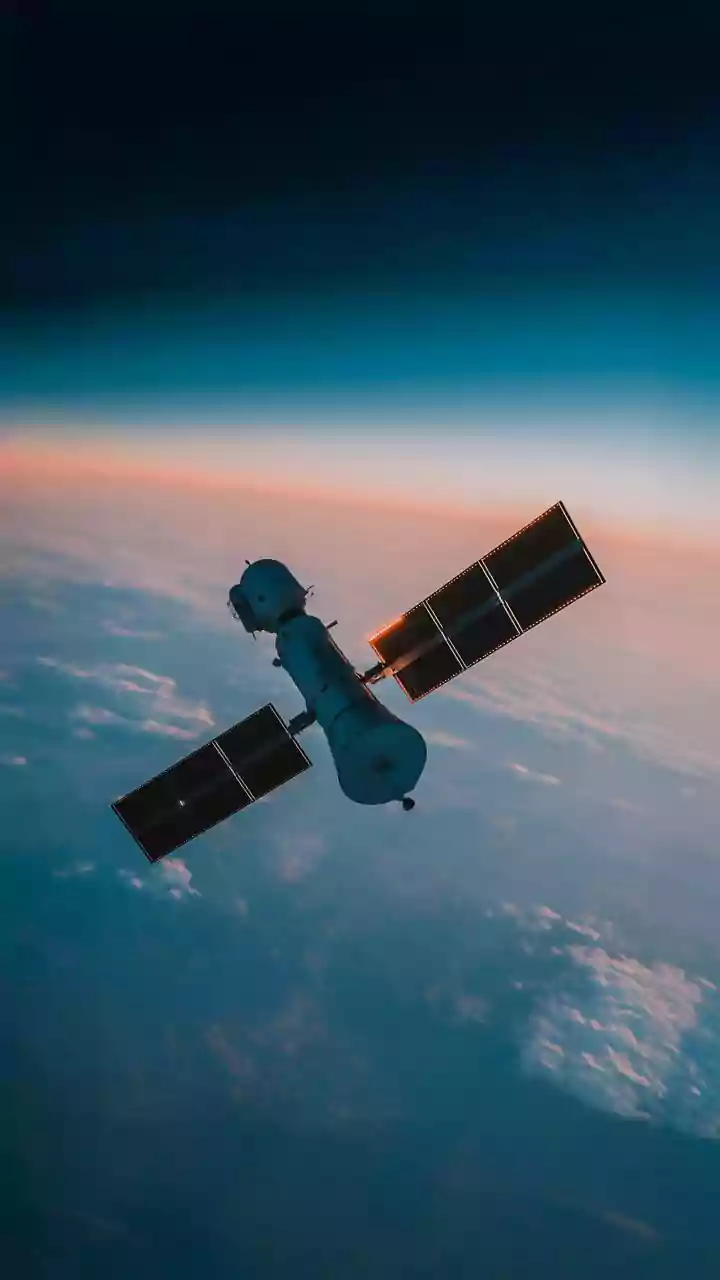
The same solar energy that creates beautiful auroras can wreak havoc on the technology we depend on. When a strong CME hits Earth, it can induce powerful electrical currents in long conductors on the ground, potentially overloading power grids and causing widespread blackouts. The impact on space-based technology is even more direct. The bombardment of solar particles can damage satellite electronics, disrupting everything from television broadcasts to weather forecasting. Global Navigation Satellite Systems (GNSS), including GPS, are particularly vulnerable. The solar storm energises Earth's ionosphere, which can delay and distort satellite signals, leading to inaccurate positioning for aviation, shipping, and even the navigation app on your phone. High-frequency radio communications, used by aircraft and emergency services, can also be completely blacked out.
Watching the Sun: India’s Eye in the Sky
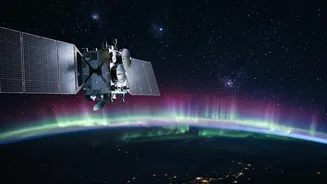
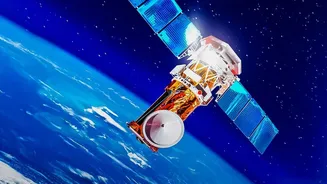
Given the risks, monitoring the sun and forecasting space weather is a global priority. India is playing a crucial role with its Aditya-L1 mission. Launched by ISRO, Aditya-L1 is India's first space-based observatory dedicated to studying the sun. Positioned 1.5 million kilometres from Earth at the Lagrange Point 1 (L1), it has an uninterrupted view of the sun. Its suite of seven instruments observes solar flares and CMEs, providing crucial data that helps scientists understand solar dynamics and predict space weather events. By analysing how solar eruptions affect Earth's magnetic field, missions like Aditya-L1 give us the early warnings needed to protect our critical infrastructure—from satellites in orbit to power grids on the ground—from the sun's powerful outbursts.