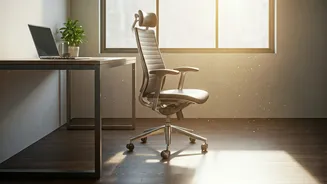







The Problem: Posture Fatigue
You know the feeling. You start the day sitting tall, focused and ready. By lunchtime, your shoulders have started to creep towards your ears. By 3 PM, you’re in a full-on slouch, with a nagging ache in your neck and a stiff lower back. This is ‘posture
fatigue’. It’s the cumulative strain on your muscles from holding one position—typically, hunched over a keyboard—for hours on end. This static posture leads to tight chest muscles, a weak upper back, and a forward head position often called ‘tech neck’. The result isn't just poor aesthetics; it's physical discomfort, reduced energy levels, and even tension headaches.
The Solution: Exercise Snacking
Forget blocking out an hour for the gym. The secret to combating posture fatigue is ‘exercise snacking’. The concept is simple: instead of one long workout, you perform very short bursts of targeted movement—or ‘snacks’—throughout the day. We’re talking two to five minutes at a time. This approach is powerful for two reasons. First, it’s incredibly manageable. Anyone can find two minutes. Second, it’s more effective for posture. Frequent, short breaks that reverse your sitting posture are better at preventing stiffness than one long session trying to undo eight hours of damage. It’s about consistently reminding your muscles how to move properly.
Snack 1: The Chin Tuck Lifesaver
This is the ultimate move to counteract ‘tech neck’. It strengthens the deep neck flexors and stretches the muscles at the back of your neck. How to do it: Sit or stand tall, looking straight ahead. Gently tuck your chin towards your throat, as if you’re trying to make a double chin. You should feel a stretch at the base of your skull. Don't look down; imagine you're sliding your head straight back on a shelf. Hold for 5 seconds. Relax. Repeat 5-10 times. Do this every time you catch yourself jutting your head forward to read the screen.
Snack 2: Seated Cat-Cow
This classic yoga pose, adapted for your chair, is perfect for waking up a stiff spine and releasing tension in your mid-back. How to do it: Sit on the edge of your chair with your feet flat on the floor. Place your hands on your knees. On an inhale, arch your back, push your chest forward, and look up towards the ceiling (Cow pose). On an exhale, round your spine, tuck your chin to your chest, and let your shoulders roll forward (Cat pose). Flow between these two movements for 60-90 seconds, syncing your breath with the motion.
Snack 3: The Doorway Chest Stretch
Your chest muscles get extremely tight from hunching over a keyboard. This simple stretch, done in any doorway, is the perfect antidote. How to do it: Stand in a doorway and place your forearms on the frame, with your elbows just below shoulder height, forming a goalpost shape. Gently step one foot forward until you feel a stretch across your chest and the front of your shoulders. Hold for 20-30 seconds. Don't over-stretch; it should feel good, not painful. Repeat 2-3 times.
Snack 4: The Desk Plank
A strong core is essential for good posture, as it provides the stability your spine needs. A desk plank is a quick, discreet way to engage your core muscles. How to do it: Stand a few feet away from your desk. Place your hands or forearms on the edge of the desk, shoulder-width apart. Walk your feet back until your body forms a straight line from your head to your heels. Engage your core by pulling your belly button towards your spine. Don't let your hips sag. Hold for 30-60 seconds. Breathe normally.
Making Exercise Snacking a Habit
The key to success is consistency. The best exercises are the ones you actually do. To build the habit, try 'habit stacking': every time you finish a task, get up for water, or send a long email, do one exercise snack. Alternatively, set a recurring timer on your phone or computer for every 60-90 minutes. When it goes off, take just two minutes to perform one of the exercises above. Your back, neck, and energy levels will thank you for it.