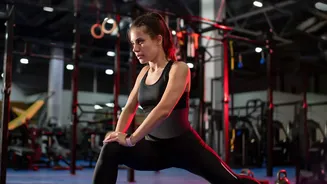






Sonam Bajwa is celebrated not just for her acting but also for her dedication to fitness. Her intense leg day workouts are proof, but the secret isn't just lifting heavy—it's about how you lift. This is where controlled movement comes in.
Sonam Bajwa’s Blueprint for Lower-Body Strength
When glimpses
of Sonam Bajwa’s workout routine surface, they often show her tackling a demanding leg day. The actress is known for incorporating foundational strength exercises like squats, lunges, and other forms of resistance training to build and maintain a strong lower body. These exercises are cornerstones of many fitness plans for a reason: they are incredibly effective. A strong lower body, encompassing the muscles around the hips, knees, and ankles, is crucial not only for a sculpted physique but for overall functional fitness. It improves balance, enhances posture, and supports bone health, making everyday activities like climbing stairs or carrying groceries easier and safer.
The Core Principle: What Is Controlled Movement?
The real lesson from a well-structured workout like Sonam's lies in the execution. Fitness experts emphasize that the benefits of exercises like squats and lunges are unlocked through proper form, not just raw effort. A key part of this is controlled movement. Instead of using momentum or 'swinging' weights, controlled training involves deliberately slowing down each part of an exercise. This is often called 'Time Under Tension' (TUT), where the goal is to keep muscles engaged for longer during each repetition. This means focusing on a slow, steady lowering phase (eccentric), a brief pause, and a powerful but controlled lifting phase (concentric). By doing this, you force the target muscle to do the work, rather than letting momentum or other muscle groups take over.
Why Quality Over Quantity Is the Golden Rule
Rushing through reps might feel productive, but it often leads to sloppy form and diminished results. The primary benefit of controlled movement is injury prevention. When you move slowly, you have time to ensure your joints are properly aligned—for instance, making sure your knees track over your toes during a squat. This conscious effort prevents the kind of poor technique that can lead to knee, hip, or back injuries. Furthermore, slowing down makes the exercise more challenging, even with lighter weights. By extending the time a muscle is under tension, you create a greater stimulus for muscle growth and strength gains without needing to lift excessively heavy. This focus on quality also builds a stronger mind-muscle connection, allowing you to actually feel the specific muscles you intend to work.
How to Integrate Controlled Reps into Your Workout
Applying this principle to your own training is straightforward. Start by reducing the weight you'd normally use. The focus here is on mastery of the movement, not ego. For any given exercise, try a '3-1-1' tempo. This means taking three seconds to lower the weight, pausing for one second at the bottom of the movement, and taking one second to lift it back to the start. For example, in a lunge, you would descend over three seconds, hold briefly, and then push back up. During the entire movement, keep your core engaged to stabilize your body. Avoid the temptation to bounce out of the bottom of a rep; instead, initiate the upward movement with deliberate muscle force. If you're unsure about your form, it's always best to master the bodyweight version of an exercise first.
Applying Control to Foundational Leg Exercises
For squats, focus on a controlled descent, keeping your chest up and back straight. Feel the tension in your glutes and quads as you slowly lower your hips. Pause at the bottom without relaxing, then drive up through your heels. For lunges, step forward and lower your back knee toward the ground with precision, ensuring your front knee doesn't collapse inward. Push off with force but maintain control as you return to the starting position. Even on a leg press machine, resist the urge to let the weight drop quickly. Control its path on the way down for a count of three. This eccentric focus is a powerful tool for building strength safely.