






The End of Odd-Sized Packs
The Department of Consumer Affairs has rolled out a mandate that requires companies to sell edible oils in a fixed set of standard quantities. After a three-month transition period that began in June 2026, manufacturers, packers, and importers of major
cooking oils must now use specified pack sizes. These include retail-friendly volumes like 200 ml, 500 ml, 1 litre, 2 litres, and 5 litres, along with larger quantities for bulk use. This rule applies to all major edible oils, such as sunflower, soybean, mustard, groundnut, and palm oil, whether produced domestically or imported. As a result, the array of confusing sizes like 810 grams or 870 grams are being phased out from supermarket shelves.
Why This Change Was Necessary
For years, consumers faced a subtle tactic where brands would sell oil in slightly smaller, non-standard packs. A bottle might look like it contained a full litre but would actually hold 950 ml or even 910 ml. This practice gave the impression of a lower price, while in reality, the per-unit cost could be higher than a competitor's standard one-litre pack. This created a confusing marketplace where comparing the true value of different brands required mental gymnastics and a calculator. Consumer groups and industry bodies agreed that this proliferation of odd sizes was detrimental to transparency, leading the government to step in and reintroduce standardization.
Your New Supermarket Superpower: Easy Comparison
The single biggest benefit of this regulation is the power it puts back into the hands of the consumer. With standard sizes, price comparison becomes direct and intuitive. You can now look at a one-litre bottle from Brand A and a one-litre bottle from Brand B and immediately know which one offers better value without needing to calculate the price per millilitre. To further boost transparency, the rules also mandate that if a pack declares its contents by volume (litres/ml), it must also state the equivalent weight (kilograms/grams). This simple change levels the playing field and ensures that brands compete on price and quality, not on confusing packaging.
What to Look For on Your Next Shopping Trip
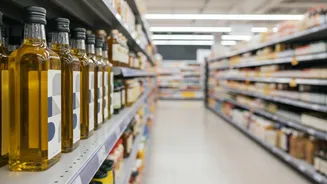
As the new rule takes full effect by September 2026, you will see a more uniform shelf display. Look for the new standard sizes: 200 ml, 500 ml, 1 litre, 2 litres, and 5 litres are the most common for household use. Note that packages smaller than 200 ml are exempt from this rule to ensure that affordable, single-use sachets remain available for all consumers. Minor edible oils are also exempted from the requirement. The next time you buy cooking oil, take a moment to check the net quantity. You'll likely find it much easier to spot the best deal for your family's budget, confident that you are comparing apples to apples, or in this case, litre to litre.