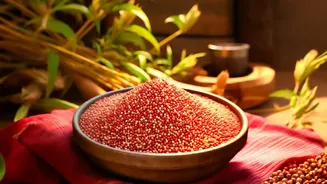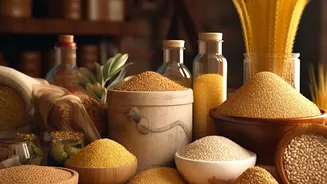


What Exactly Are Ancient Grains?
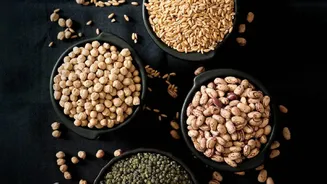
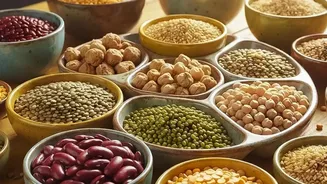
The term 'ancient grains' generally refers to grains and pseudocereals (seeds that are consumed like grains) that have remained largely unchanged by selective breeding for the last several hundred years. Unlike modern wheat, which has been modified for mass
production, grains like farro, quinoa, and millet have been cultivated in the same way for centuries. Many originated in regions across Africa, Asia, and South America, where they have long been dietary staples. Their recent surge in popularity isn't just a trend; it's a rediscovery of ingredients that are packed with flavour, texture, and nutrients like protein and fibre.
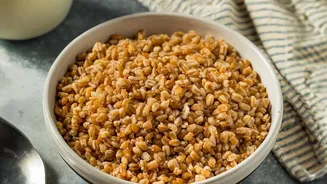
Farro: The Chewy and Nutty Staple
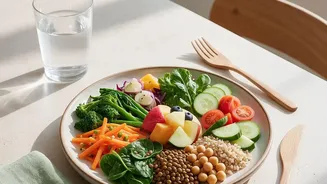
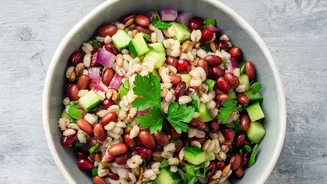
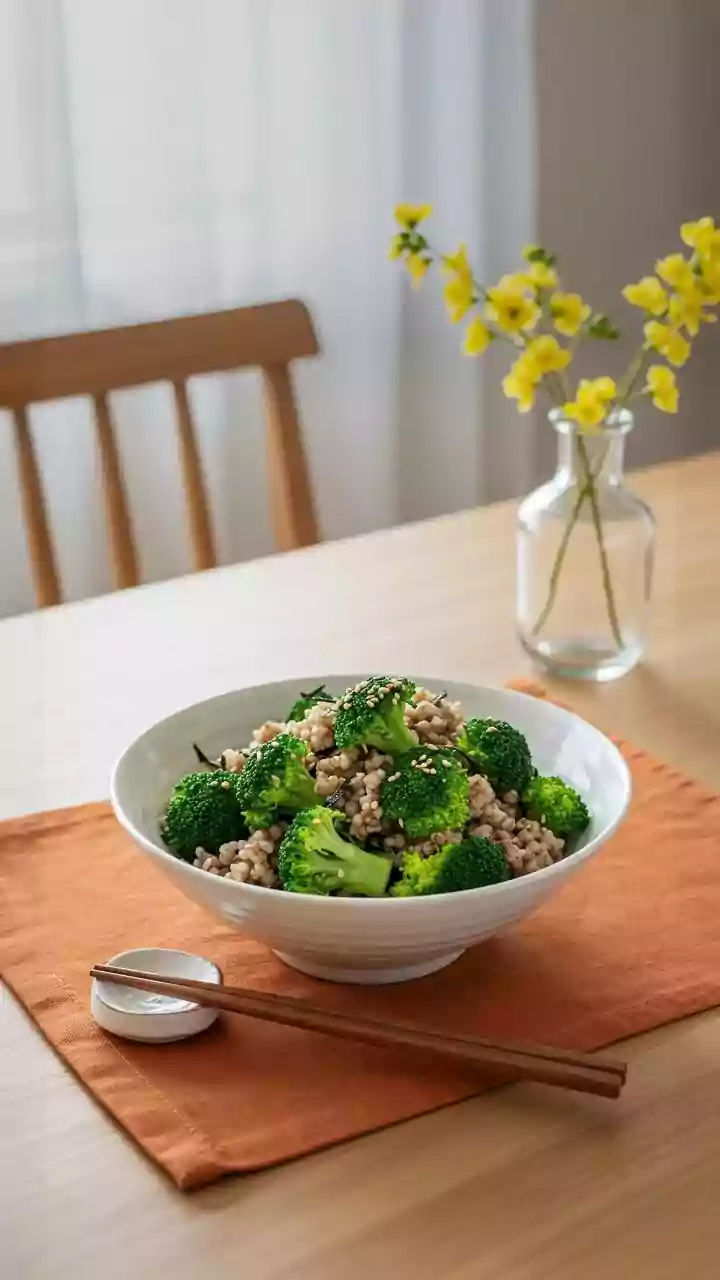
If you're looking for a grain with a satisfying bite and a distinct nutty taste, farro is an excellent starting point. Popular in Italian cuisine, it has a wonderfully chewy texture that holds up well in soups, stews, and salads. Farro does contain gluten, as it's a type of wheat. Cooking it is straightforward: for most varieties, like pearled or semi-pearled, simply simmer it in water or broth until tender, which can take anywhere from 15 to 30 minutes. For an even richer flavour, try toasting the dry grains in a pan for a few minutes before adding liquid. Once cooked, it makes a fantastic base for a grain bowl or a hearty substitute for rice.
Quinoa: The Quick and Versatile Seed
Though technically a seed, quinoa is cooked and eaten like a grain and is a complete protein, meaning it contains all nine essential amino acids. It's also naturally gluten-free. Quinoa has a mild, slightly nutty flavour that becomes more pronounced when toasted. The key to great quinoa is rinsing it thoroughly before cooking to remove its natural coating, called saponin, which can taste bitter. The most common cooking method uses a 2:1 ratio of liquid to quinoa. Simply bring the liquid to a boil, add the quinoa, reduce the heat to a simmer, cover, and cook for about 15 minutes or until the water is absorbed and the tiny 'germ' spiral appears. Let it sit covered for another 5 minutes, then fluff with a fork.
Millet: The Fluffy and Mild Option
Often associated with bird feed, millet is a wonderful and versatile gluten-free grain for human consumption, too. It has a mild, slightly sweet flavour and can be cooked to different consistencies. For a fluffy, pilaf-style texture that works well as a side dish or in salads, use a 1:2 ratio of millet to water or broth. Bring it to a boil, then simmer covered for about 15-20 minutes. For a creamier, porridge-like consistency, simply increase the liquid ratio to 1:3 and stir more frequently while it cooks. Toasting the dry millet in a pan before adding liquid can enhance its subtle nutty notes.
Amaranth: The Peppery Powerhouse
Another gluten-free pseudocereal, amaranth was a staple of the ancient Aztecs. Its flavour is more distinct than many other grains, often described as earthy, peppery, or nutty. When cooked, these tiny grains release starch, resulting in a texture that's more like a creamy porridge than a fluffy pilaf. This makes it an excellent choice for a warm breakfast cereal, a thickener for soups, or as a base for polenta-style dishes. A typical ratio is one part amaranth to three parts water, simmered for about 20-25 minutes until it becomes a thick, creamy mixture.
Simple Tips for Success
Getting started with ancient grains is easier than you think. A few simple tricks can elevate their flavour and texture. Always rinse grains like quinoa and amaranth to remove any bitterness or residue. For a deeper, toastier flavour, stir the dry grains in a hot, dry pan for a few minutes until fragrant before adding your cooking liquid. Don't be afraid to experiment with your liquids; swapping water for vegetable or chicken broth is an effortless way to infuse the grains with savoury flavour from the inside out. After cooking, letting the grains rest, covered and off the heat, for 5-10 minutes allows them to absorb the last bits of steam, resulting in a perfectly fluffy finish every time.