
From Amorphous Blobs to Elegant Forms
Not long ago, the design world fell head over heels for curves. We saw an explosion of cloud-like sofas, puffy armchairs, and furniture that seemed to pool in our living rooms. This initial phase was a direct reaction against years of sharp, minimalist
geometry. It was all about maximum softness and creating a visual sense of comfort. While cosy, this approach often lacked definition, leading to spaces that could feel a bit unanchored or whimsical without a clear focal point. The trend was clear, but the execution was often soft to the point of being formless. This early embrace of all things round set the stage for a necessary evolution, proving that you can have too much of a good thing.
The Search for Visual Structure
An abundance of curves without any contrasting lines can make a room feel visually chaotic. Without the grounding influence of straight edges, rounded forms can lose their impact and the space can lack a sense of order. This is where the rebalance comes in. Designers and homeowners are now seeking to integrate the softness of curves with the stability of linear shapes. The goal is no longer just to make a room feel soft, but to make it feel harmonious and intentionally designed. This new approach understands that the power of a curve is most potent when it has a straight line to play against. It is a shift from a purely decorative trend to a sophisticated design principle that values both flow and stability.
Architectural Curves Take the Stage
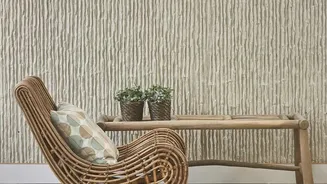
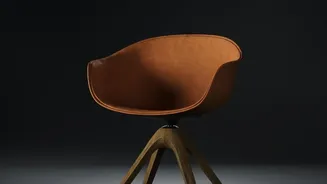
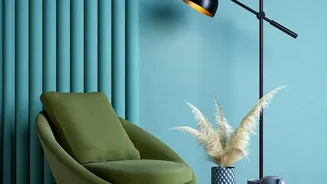
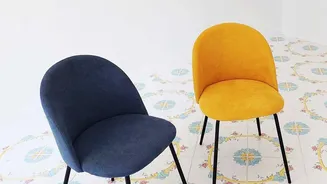
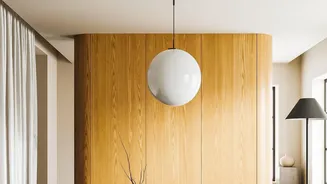
The latest chapter in curved furniture is all about architectural form. Think less 'blob' and more 'sculpture'. These new pieces feature tauter upholstery, more defined silhouettes, and an intentional blend of curves and angles within a single item. A sofa might have a gracefully curved back but sit on clean, straight legs. A cabinet might pair a rounded top with sharp, vertical lines. These are not just soft objects; they are functional sculptures. The curve is still present, but it is more deliberate and often asymmetrical, creating visual interest without sacrificing structure. This evolution brings a level of sophistication that elevates the trend from a passing fashion to a timeless design choice.
How to Master the Balance
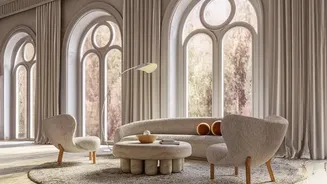
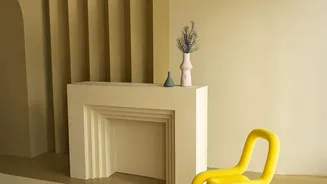
Incorporating this balanced trend into your own home is about creating a dialogue between shapes. The key is contrast. Start by anchoring your space with a significant curved piece, like a serpentine sofa or a round dining table. Then, introduce structure around it. Pair that curved sofa with a rectangular coffee table or a linear media console. Place an arched mirror—a classic architectural curve—above a sharp-angled sideboard. A rectangular rug is an excellent tool for grounding a floating curved sectional in the middle of a room, defining the space while letting the furniture's shape shine. A good rule of thumb is to aim for a room that is predominantly linear, with curves used as a powerful, softening accent. This ensures the rounded pieces act as a focal point rather than contributing to visual clutter.
The Enduring Appeal of the Curve
There's a deep psychological reason we're so drawn to curves. Studies show that our brains perceive rounded shapes as safer, more welcoming, and more calming than sharp angles. They echo the organic forms found in nature—rolling hills, smooth stones, and flowing water—which our minds are wired to find comforting. This innate appeal is why the trend has such staying power. The latest evolution doesn't reject this fundamental comfort; it enhances it by adding a layer of visual sophistication. By balancing the inherent softness of curves with the deliberate structure of straight lines, we create spaces that feel both safe and stable, inviting and intentional. It’s the best of both worlds, offering a nurturing environment that is also visually composed and mature.