






Start with the Ingredients, Not the Claims
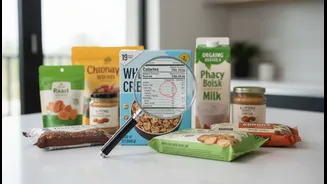
The front of the pack is marketing; the back is information. The most crucial part of any food label is the ingredients list. By law, ingredients must be listed in descending order of weight. This means the first two or three ingredients make up the bulk
of the product. If sugar, palm oil, or refined flour (maida) are at the top of the list, that tells you more than any 'healthy' or 'multigrain' claim on the front. Recent actions by FSSAI have targeted products that make bold claims on the front while the ingredients list tells a different story.
Decode the Meaning of 'Natural'
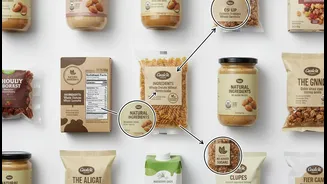
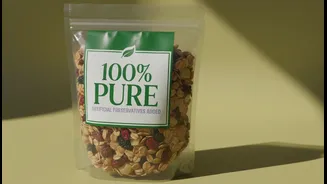
The word 'natural' is one of the most misused terms in food marketing. According to FSSAI guidelines, a product can only be called 'natural' if it is derived from a plant, animal, or mineral and has not been significantly processed or had ingredients added to it. Recently, FSSAI issued notices to companies for using '100% Natural' on products that contained preservatives and synthetic colours. If a product that has been heavily processed uses 'Natural' as part of its brand name, it must include a disclaimer stating it does not represent the true nature of the food. So, always be skeptical and check the ingredients for artificial additives.
Uncover Hidden Sugars and Fats
Food manufacturers often use multiple types of sweeteners to avoid listing 'sugar' as the first ingredient. Look out for its many aliases: high-fructose corn syrup, glucose syrup, dextrose, maltodextrin, and fruit juice concentrate are all forms of sugar. Similarly, watch for fats. A recent FSSAI notice highlighted a product marketed as 'Premium Chocolate' that contained hydrogenated vegetable fat instead of cocoa butter. This type of fat is a source of unhealthy trans fats. Always check the nutritional information for the amounts of 'Total Sugar' and 'Saturated Fat'.
Look for the Jaivik Bharat Logo for 'Organic'
If a product claims to be 'Organic', it is legally required to carry the Jaivik Bharat logo. This unified logo was introduced by FSSAI to help consumers identify genuinely certified organic products. Simply printing '100% Organic' on a label without this certification is considered misleading, and FSSAI has recently taken action against companies for this violation. To be sure, you can also look for the NPOP or PGS-India certification marks, which are the two systems a product must pass through to get the Jaivik Bharat seal.
Beware of Misleading Serving Sizes
This is a classic trick to make a product seem healthier than it is. A company might list the calories and sugar for a 'serving size' of just two biscuits or a small handful of chips, knowing most people will consume the entire packet. Always check the serving size listed at the top of the nutrition panel and then check the net weight of the package. Do the maths to understand how many calories, how much sugar, and how much salt you are consuming if you eat the whole thing. It’s often double or triple what the per-serving values suggest.
Question Vague Health Claims
Claims like 'Boosts your immune system', 'Removes toxins', or 'FSSAI Approved' are major red flags. FSSAI regulations prohibit unsubstantiated health claims. The FSSAI logo and license number on a pack simply mean the business is registered; it is not a special endorsement or approval of the product's quality or health benefits. A recent crackdown targeted a company for marketing its juice capsules as 'FSSAI Approved' and for making health claims without scientific backing. If a benefit sounds too good to be true, it probably is.