







The Grand Vision for an AI-Native State
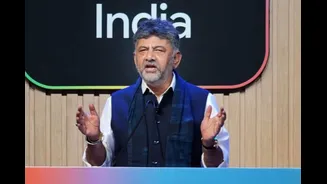
On July 14, 2026, Karnataka Chief Minister D.K. Shivakumar announced the state's plan to launch India's first government-driven university dedicated entirely to Artificial Intelligence. The announcement, made at the Google I/O Connect event in Bengaluru,
is the centrepiece of a larger strategy to transform Karnataka into an "AI-native state". The vision extends beyond creating a new academic institution; it aims to build a comprehensive ecosystem. This includes an accompanying AI Hub to act as an incubator for startups and researchers, and the integration of AI into public services like education, healthcare, and agriculture to improve everyday life for citizens. The government sees this not just as a technological upgrade, but as a transformational shift comparable to the internet or mobile technology revolutions.
Crafting the Curriculum for the Future
While specific course details are still being formulated, the university's mandate is clear: create a world-class talent pipeline. The institution is expected to offer a full spectrum of academic programs, from undergraduate and postgraduate degrees to advanced doctoral research. The curriculum will likely focus on core AI disciplines such as machine learning, data science, and robotics. This educational push isn't happening in isolation. The government also plans to introduce AI learning at the school level, starting from Class VI, to build foundational skills early on. The university will serve as the apex of this statewide educational strategy, aiming to produce not just coders, but innovators and researchers who can push the boundaries of AI. A 100-acre campus is planned for Bengaluru, with regional campuses proposed for several other cities to ensure wider access.
The Search for World-Class Faculty
An institution is only as good as its teachers, and for a specialised field like AI, this presents a significant challenge. The plan's success will depend heavily on its ability to attract and retain top-tier faculty with expertise in a globally competitive field. The government's proposal emphasizes fostering advanced research, which is a key factor in attracting leading academics. These experts will be tasked not only with teaching but also with guiding the research that will position the university as a centre of innovation. The state hopes that its established tech ecosystem, home to thousands of startups and Global Capability Centres (GCCs), will be a major draw for talent. The synergy between a thriving industry and a dedicated research university is a powerful combination for attracting the best minds.
Forging Critical Industry Partnerships
From day one, the Karnataka government has framed this initiative as a collaborative effort between academia, industry, and government. This is not just a talking point; it's a structural necessity. The AI Hub, planned alongside the university, is designed specifically to bring startups, established companies, and academic researchers under one roof. Chief Minister Shivakumar has openly invited major tech players like Google to partner with the state on this journey. These partnerships are vital for several reasons. They ensure the curriculum remains relevant to industry needs, create opportunities for student internships and projects, facilitate the commercialization of research, and provide a direct pathway to employment for graduates. By embedding industry collaboration into its DNA, the university aims to bridge the gap between academic theory and real-world application, ensuring its graduates are job-ready and its research has practical impact.