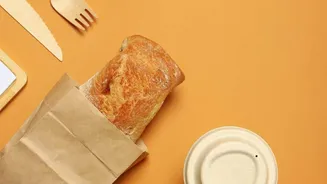









From Sugarcane Waste to Sturdy Container
The star of this green shift is bagasse, the dry, fibrous pulp that remains after sugarcane stalks are crushed to extract their juice. For centuries, this agricultural byproduct was often discarded or burned. Now, it's being repurposed into a valuable
resource for the packaging industry. The process involves turning the fibrous residue into a pulp, which is then press-molded into various shapes like bowls, plates, and clamshell containers. These products are not only biodegradable and compostable, breaking down in a matter of months, but they are also surprisingly robust. They offer excellent heat resistance, making them safe for microwaves, and are sturdy enough to hold gravies and other liquids without turning soggy, a crucial feature for food delivery.
Delivery Giants Lead the Charge
Major players in India's food delivery ecosystem are actively steering their restaurant partners toward more sustainable options. Zomato launched its 'Plastic-Free Future Program', which now includes over 10,000 restaurants that have switched to non-plastic alternatives. The company recently introduced 'PackSwitch,' an online platform to help restaurants find and source sustainable packaging materials, including bagasse, for their specific dishes. As of March 2026, restaurants in this program had delivered over 100 million orders in low-plastic packaging. Similarly, Swiggy has been promoting eco-friendly options through its 'Swiggy Packaging Assist' marketplace, which offers partners access to a variety of sustainable materials. The platform plans to expand its catalogue to explicitly include items made from bagasse and cornstarch.
The Environmental and Business Case
The shift away from single-use plastics is driven by both environmental urgency and changing consumer attitudes. India's food delivery industry is estimated to generate tens of thousands of tonnes of plastic waste annually. Eco-friendly materials like sugarcane bagasse offer a compelling solution, contributing to a circular economy where waste is minimized. The production of bagasse packaging also requires less energy and has a lower carbon footprint compared to plastic. For businesses, adopting green packaging is becoming a smart strategic move. A significant majority of Indian consumers report that sustainable packaging is an important factor in their purchasing decisions. By making the switch, restaurants and delivery platforms can enhance their brand image, attract environmentally conscious customers, and align with tightening government regulations against single-use plastics.
Challenges on the Path to Greener Deliveries
Despite the clear benefits, the transition is not without its hurdles. One of the main barriers for restaurants, particularly smaller businesses, is cost. Eco-friendly alternatives can be more expensive than conventional plastic packaging. This can increase a restaurant's operational expenses, a cost that may be passed on to the consumer. Another challenge is ensuring the integrity and availability of the supply chain for these new materials. While platforms like Zomato's PackSwitch and Swiggy's marketplace aim to solve this, ensuring a consistent and affordable supply across the country is a significant undertaking. Furthermore, for compostable packaging to be truly effective, it requires proper disposal and waste management infrastructure, which is still developing in many parts of India.