





The Divine Allure of Temple Jewellery
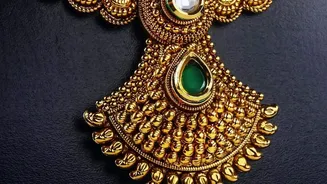
Hailing from South India, Temple jewellery is exactly what its name suggests: a style that originated to adorn the idols of gods and goddesses in temples. Dating back over a thousand years to the Chola dynasty, this jewellery is steeped in spiritual significance.
Crafted predominantly from gold, often with an antique or matte finish, its defining feature is its chunky, sculptural quality. The designs are not merely decorative; they are narrative. Each piece tells a story through intricate motifs of deities like Goddess Lakshmi and Lord Ganesha, along with peacocks, lotuses, mangoes, and architectural elements inspired by temple walls. The primary technique used is repoussé, where artisans hammer gold sheets from the reverse side to create raised, three-dimensional figures. This gives the jewellery its characteristic bold and divine presence, making it a cherished choice for South Indian brides and classical dancers.
The Regal Gleam of Kundan
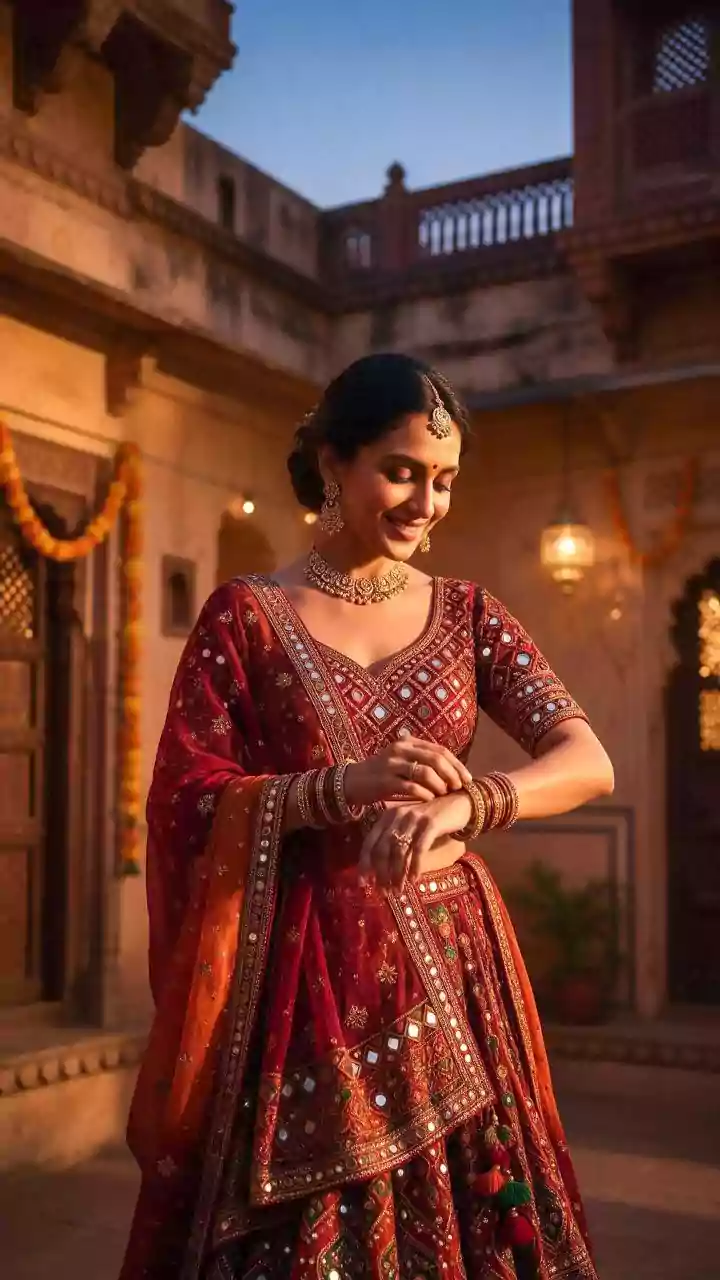
Travel north to the royal courts of Rajasthan and the Mughal empire, and you'll find the origins of Kundan. The word 'Kundan' itself means highly refined gold. This style is not about the stone itself, but the intricate setting technique. Kundan is the art of setting polished gemstones, and more commonly, coloured glass, into a framework of gold. Artisans create a base, often filled with lac (a natural resin) for stability, and then painstakingly encase each stone with delicate foils of hyper-purified gold. This gold foil is skilfully layered and pressed to hold the stone without any claws or prongs. The result is a vibrant, mosaic-like appearance, often with elaborate Meenakari (enamel work) on the reverse side—a signature of Mughal-influenced jewellery. Kundan offers a regal look at a more accessible price point than Polki, making it a widely popular choice for festive and bridal wear across India.
The Raw Radiance of Polki
Polki jewellery is defined by one central, precious element: uncut diamonds. This is one of the oldest forms of diamond jewellery, originating in India long before modern faceting techniques became the norm. Also rooted in Mughal and Rajput traditions, Polki uses diamonds in their natural, unpolished state. These raw diamonds are set into a gold casing, often using the Jadau technique, with a silver or gold foil (daank) placed behind the stone to enhance its natural lustre and create a soft, ethereal glow. Unlike the fiery sparkle of a brilliant-cut diamond, a Polki diamond has a more subtle, moon-like luminosity. Because the diamonds are uncut, each stone is unique, giving Polki jewellery an organic, heirloom quality. This use of real, raw diamonds makes Polki significantly more expensive than Kundan and positions it as a symbol of luxury and heritage, especially for bridal jewellery.
A Clear Comparison
To put it simply, the three styles differ fundamentally in material and method. Temple jewellery is all about sculpted gold and divine, South Indian motifs. Its beauty lies in its three-dimensional, narrative designs. Kundan is a technique of setting glass or semi-precious stones in an intricate gold foil framework, celebrated for its colourful, Mughal-inspired grandeur. Polki, the most luxurious of the three, is defined by its use of raw, uncut diamonds, cherished for their natural, organic sparkle. While both Kundan and Polki often use the 'Jadau' method of setting stones in a lac-filled gold base, the core material—glass versus uncut diamonds—is the primary differentiator. Temple jewellery stands apart with its focus on embossed gold craftsmanship and spiritual iconography rather than stone setting.