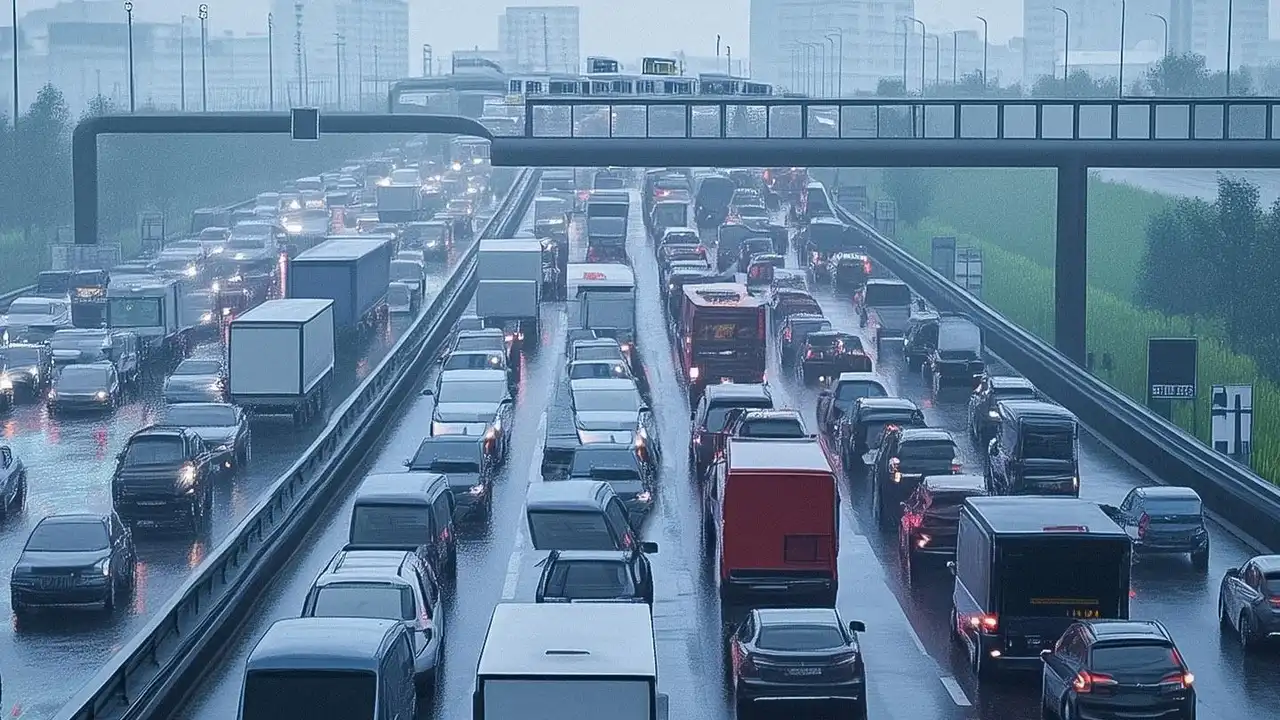


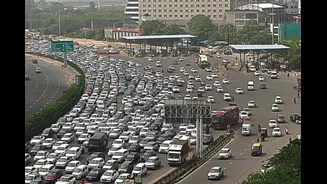
As winter approaches, Delhi is once again bracing for its annual battle with severe air pollution. Starting November 1, 2026, the capital will enforce strict entry rules for vehicles as part of a comprehensive Winter Action Plan.
Which Cars Are Barred From Entering Delhi?
The primary restriction
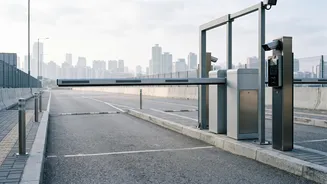
targets vehicles registered outside of Delhi. From November 1, 2026, to January 31, 2027, most petrol and diesel vehicles that do not comply with Bharat Stage VI (BS-VI) emission standards will not be allowed to enter the city. This rule is part of a separate Winter Action Plan and applies regardless of the daily air quality reading. It's a fixed-date measure aimed at curbing a major source of pollution during the three coldest months. Transport department officials estimate that over ten lakh vehicles from neighbouring NCR cities like Gurugram, Noida, Faridabad, and Ghaziabad could be affected by this directive. To enforce this, authorities are deploying automatic number plate recognition (ANPR) cameras at border checkpoints.
Are There Any Exemptions?
Yes, several categories of vehicles are exempt from this specific entry ban. The restriction does not apply to any vehicle, regardless of its registration state, that runs on Compressed Natural Gas (CNG) or is fully electric (EV). Vehicles used for essential and emergency services, such as ambulances, fire engines, and those involved in government work, are also permitted to enter. Importantly, the rule only applies to vehicles registered outside Delhi; cars with a Delhi registration are not covered by this particular entry ban, though other age and pollution-related rules still apply to them. For instance, the long-standing ban on diesel vehicles older than 10 years and petrol vehicles older than 15 years remains in force across the city for all vehicles.
Understanding the GRAP Framework
This vehicle ban is part of a larger strategy that includes the Graded Response Action Plan (GRAP). Managed by the Commission for Air Quality Management (CAQM), GRAP is an emergency response system that escalates anti-pollution measures based on how bad the air gets. It has four stages tied to the Air Quality Index (AQI): Stage I ('Poor', AQI 201-300), Stage II ('Very Poor', AQI 301-400), Stage III ('Severe', AQI 401-450), and Stage IV ('Severe+', AQI >450). Stage I, which includes measures like controlling construction dust and banning coal in eateries, was already invoked on October 21. If the air quality worsens to 'Severe' (Stage III), a different set of vehicle restrictions kicks in: BS-III petrol and BS-IV diesel four-wheelers are banned from the roads in Delhi and key NCR districts like Gurugram, Faridabad, Ghaziabad, and Noida. A fine for violating these GRAP-related driving bans can be as high as ₹20,000.
The 'No PUC, No Fuel' Rule
Another critical component of the anti_pollution drive is the strict enforcement of the Pollution Under Control (PUC) certificate requirement. Across Delhi_NCR, a 'No PUC, No Fuel' rule is in effect, meaning fuel stations can refuse to sell petrol, diesel, or CNG to any vehicle without a valid PUC certificate. This rule is intended to ensure that all vehicles on the road are meeting their prescribed emission norms. Driving without a valid PUC can lead to a fine of ₹10,000. Authorities are intensifying checks, and some fuel pumps are being equipped with cameras to automatically verify a vehicle's PUC status via its number plate.
What This Means for NCR Commuters
For the lakhs of people who commute from NCR towns into Delhi for work, these measures will require significant planning. The most impacted will be those driving personal diesel cars older than the BS_VI standard (typically registered before April 2020) or older petrol models. Before travelling to Delhi, it is essential to check your vehicle's registration certificate for its emission standard (e.g., BS_IV, BS_VI). If your vehicle is affected by the ban, you will need to rely on public transport like the Delhi Metro, which is increasing its service frequency, or use carpooling with compliant vehicles. The government is also encouraging a shift to public transport by doubling parking fees at many locations to discourage private vehicle use.