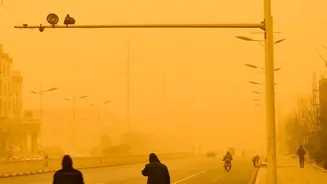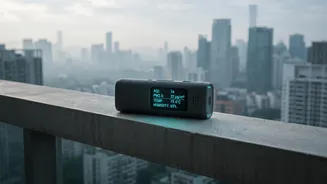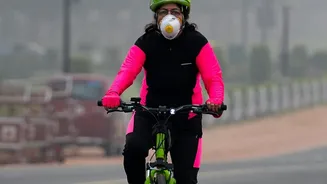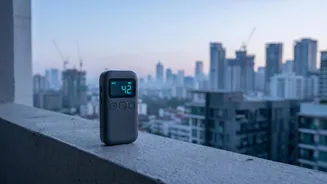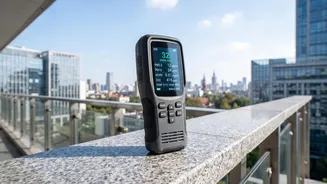







As winter approaches, the familiar haze of smog descends on many Indian cities. This annual health hazard can feel unavoidable, but it doesn't have to be. Real-time Air Quality Index (AQI) alerts empower you to protect your family's health.
Decoding the Air Quality Index
The Air Quality
Index, or AQI, is a simple tool for communicating how polluted the air is. Launched by India's Central Pollution Control Board (CPCB), it converts complex data about eight major pollutants—including harmful PM2.5 and PM10 particles—into a single number, name, and colour. The scale runs from 0 to 500, divided into six categories: Good (Green), Satisfactory (Light Green), Moderate (Yellow), Poor (Orange), Very Poor (Red), and Severe (Maroon). This 'One Number- One Colour-One Description' system makes it easy for anyone to quickly understand the air quality and its potential health impacts.
Why Winter Air is a Greater Threat
Winter smog is more than just fog; it's a public health crisis that is especially pronounced in northern India. The primary reason is a phenomenon called temperature inversion. During colder months, a layer of warm air traps cooler, denser air near the ground. This trapped layer prevents pollutants from vehicles, industry, and burning from dispersing, creating a toxic blanket over the city. Fine particulate matter like PM2.5 is particularly dangerous because it's small enough to bypass the body's natural defences, penetrating deep into the lungs and even entering the bloodstream, which can trigger or worsen a host of health issues.
How to Get Real-Time AQI Alerts
Accessing this life-saving data is easier than ever. The primary official source in India is the 'SAMEER' app, developed by the CPCB. It provides hourly AQI updates for over 100 cities, pulling data directly from government monitoring stations. Users can see colour-coded city data, view an AQI calendar, and even file complaints about pollution sources. Several reliable third-party apps are also popular, including IQAir AirVisual, which offers global data and forecasts, and AQI India, which provides highly localised readings. Many of these apps allow you to set personalised alerts for specific locations, notifying you when the air quality drops to unhealthy levels.
Your Action Plan Based on AQI
Knowing the AQI is the first step; acting on it is what protects your health. Your daily routine should adapt to the day's air quality forecast. On 'Good' (0-50) or 'Satisfactory' (51-100) days, it's generally safe to enjoy outdoor activities. When the AQI enters the 'Moderate' (101-200) range, sensitive groups—including children, the elderly, and people with heart or lung disease—should reduce prolonged or heavy outdoor exertion. These groups are the most vulnerable to the effects of pollution.
Measures for 'Poor' and 'Very Poor' Days
When the air quality is rated 'Poor' (201–300) or 'Very Poor' (301–400), everyone is at risk of breathing discomfort and potential respiratory illness with prolonged exposure. On these days, it is crucial to take protective measures. Avoid all outdoor exercise, especially near high–traffic areas. If you must go out, wear a well–fitting N95 or FFP2 mask to filter out fine particulates. At home, keep windows and doors closed and consider using an air purifier with a HEPA filter, particularly in bedrooms.
An AQI above 401 indicates 'Severe' air quality, which can have serious health impacts even on healthy individuals. During these episodes, the best course of action is to stay indoors as much as possible. Postpone non–essential errands and outdoor activities. This is especially critical for vulnerable individuals, who can experience significant respiratory distress. Pay close attention to symptoms like coughing, shortness of breath, or eye irritation, which are common effects of smog exposure.