






What Exactly Is Space Weather?
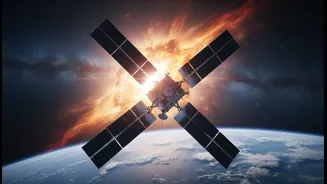
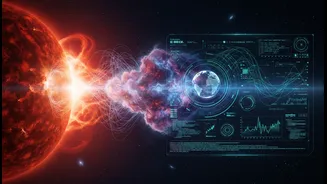
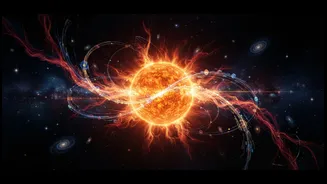
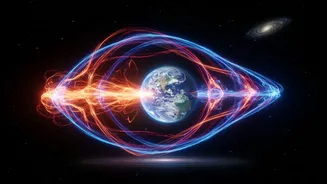
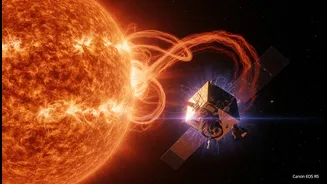
Space weather refers to the changing conditions in space, driven primarily by the Sun's activity. Unlike weather on Earth, it involves phenomena like solar flares, coronal mass ejections (CMEs), and streams of energetic particles that the Sun constantly
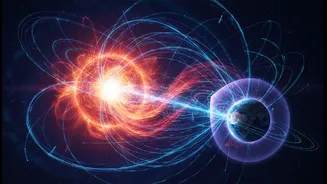
emits. These events send vast amounts of energy and matter hurtling through space. While Earth's magnetic field acts as a protective shield for the most part, intense solar storms can breach these defences, with significant consequences for the near-Earth environment and the technologies we rely on.
Why It's a Critical Concern Today
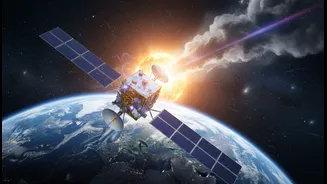
Our modern society is fundamentally dependent on technologies vulnerable to space weather. A severe solar storm could disrupt power grids, leading to widespread outages. It can damage satellites, affecting everything from GPS navigation and telecommunications to credit card transactions and weather forecasting. Aviation is also at risk, as solar radiation can interfere with high-frequency radio communications, especially on polar routes. As India's economy becomes more technologically integrated, with its own satellite navigation system (NavIC) and expanding digital infrastructure, the need to understand and forecast these cosmic threats has never been more urgent.
The Forecasters of the Final Frontier
This growing risk has created a demand for a new generation of professionals: space weather specialists. These are not your typical meteorologists. The roles are diverse and highly skilled, including space weather analysts, forecasters, researchers, and instrument scientists. They work in national space agencies like ISRO, government bodies, aviation, and private aerospace companies. Their primary job is to monitor the Sun, analyse vast streams of data from satellites and ground-based observatories, and create predictive models to issue timely warnings about potential solar storms.
The Skillset for a Cosmic Career
As the headline suggests, the core skills revolve around data and risk assessment. A strong foundation in physics, astrophysics, atmospheric science, or a related field is essential, often requiring a master's degree or even a PhD for research roles. Crucially, this must be paired with exceptional data analysis skills. Proficiency in programming languages like Python or MATLAB, which are used for processing data and running numerical simulations, is a must-have. Beyond the technical, these roles demand strong analytical thinking, problem-solving abilities, and the communication skills to translate complex data into actionable warnings for government agencies and commercial industries.
Your Launchpad in India
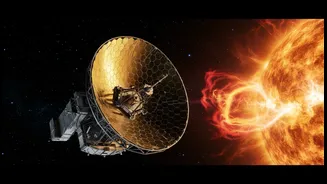
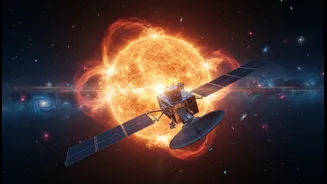
For students in India, several pathways are opening up into this exciting field. The Indian Space Research Organisation (ISRO) is at the forefront with missions like Aditya-L1, India's first space-based observatory dedicated to studying the Sun. This mission is not only a scientific achievement but also a clear signal of the country's growing investment in understanding and predicting space weather. Institutes like the Indian Institute of Space Science and Technology (IIST), the Indian Institute of Astrophysics, and various IITs offer programs in physics, astrophysics, and aerospace engineering that provide the foundational knowledge for this career. Shorter certificate courses in astronomy and space physics are also available for enthusiasts looking to get started.