




Back to the Moon, This Time to Stay
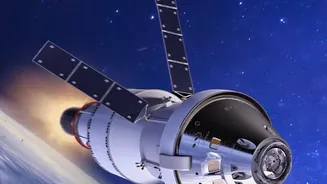
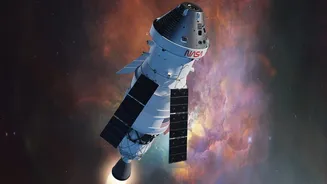
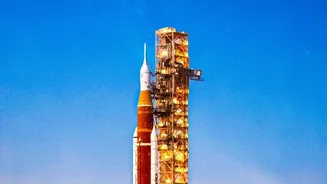
The centerpiece of NASA's human exploration efforts is the Artemis program. Unlike the Apollo missions that planted flags and left, Artemis is about establishing a long-term human presence on and around the Moon. The successful uncrewed Artemis I flight
and the crewed Artemis II fly-by in April 2026 have paved the way for more complex missions. The goal is not just to land astronauts on the surface again, but to build sustainable infrastructure. This includes the Gateway, a small space station in lunar orbit that will act as a staging point for missions to the surface and, eventually, to Mars. By partnering with commercial companies like SpaceX and Blue Origin to build lunar landers, NASA is fostering a new lunar economy. The ultimate objective is to learn how to live and work on another world, using resources like potential lunar ice to create water and rocket fuel, which will be critical for future deep-space voyages.
The Hunt for Life Gets Serious
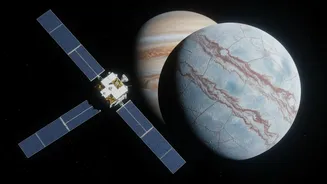
For decades, the mantra of planetary science was "follow the water." Now, it's about looking for signs of life in that water. Two flagship missions embody this shift. The Europa Clipper, which launched in October 2024, is on a long journey to Jupiter's icy moon, Europa. Arriving in 2030, it will perform dozens of close flybys to investigate the ocean that scientists are confident exists beneath its frozen crust—an ocean that may contain twice as much water as all of Earth's oceans combined. While not a life-detection mission itself, its instruments will study the ice shell's thickness, the ocean's composition, and look for plumes of water vapor that could offer clues about its habitability. Meanwhile, the Mars Sample Return mission is undergoing a strategic reset. The Perseverance rover has already collected a cache of compelling rock and soil samples from an ancient river delta on Mars. While the original plan to bring them back has been overhauled due to cost, NASA is actively developing a new, faster approach, with the goal of getting these pristine samples into terrestrial labs in the 2030s to be scrutinized for definitive signs of past microbial life.
Outsourcing the Ride to Orbit
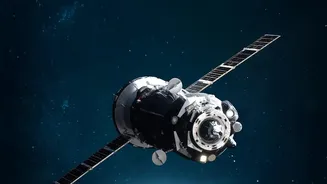
A major strategic shift for NASA is its embrace of commercial partnerships, particularly for routine operations in low-Earth orbit (LEO). With the International Space Station (ISS) scheduled for retirement around 2030, NASA is not planning to build a replacement. Instead, the agency is actively helping fund and support the development of privately owned and operated commercial space stations from companies like Blue Origin, Sierra Space, and Vast. NASA will transition from being the owner and operator to being just one of many customers on these new orbital platforms. This model, already proven successful with the Commercial Crew Program where SpaceX provides taxi services to the ISS, frees up NASA's resources and expertise. By letting private industry handle the business of LEO, the agency can focus its budget and brainpower on the more ambitious and scientifically demanding goals of pushing human presence to the Moon, Mars, and beyond.
New Eyes on the Deep Universe
While human exploration and the search for nearby life are key priorities, NASA is also preparing to take its next great leap in understanding the cosmos itself. The Nancy Grace Roman Space Telescope, slated for launch by mid-2027, is poised to be a revolutionary observatory. While its primary mirror is the same size as the Hubble Space Telescope's, its Wide Field Instrument will have a field of view 100 times larger. This means Roman can map vast swathes of the sky with Hubble's level of detail but in a fraction of the time. Its primary goals are to tackle some of the biggest mysteries in astrophysics, including the nature of dark energy, the force accelerating the universe's expansion, and to conduct a massive census of exoplanets using a technique called gravitational microlensing. Roman will also feature a technology-demonstrating coronagraph, an instrument designed to block starlight to directly image planets orbiting other stars, a capability crucial for future planet-finding missions.