




A Policy Shift Opens the Sector
For decades, a career in India's space sector meant one thing: securing a coveted position at the Indian Space Research Organisation (ISRO). But a seismic policy shift, culminating in the Indian Space Policy 2023, has changed the game. The government
has actively encouraged private companies to participate in everything from building rockets and satellites to providing space-based services. To facilitate this, it established the Indian National Space Promotion and Authorisation Centre (IN-SPACe) as a single-window agency to promote, authorise, and supervise the activities of private players, known as Non-Governmental Entities (NGEs). This has transformed a state-led domain into a commercially driven employment engine, with India's space economy projected to grow from around $8.4 billion to over $44 billion by the early 2030s.
Core Engineering and Manufacturing
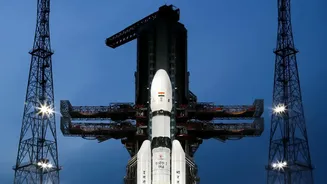
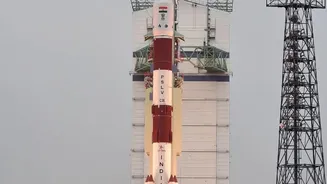
The most direct beneficiaries of this boom are core engineering disciplines. While aerospace, mechanical, and electronics engineering remain fundamental, the nature of the work is changing. Private companies like Skyroot Aerospace—which became India's first private company to launch a rocket to space—and Agnikul Cosmos, known for its 3D-printed rocket engines, are hiring aggressively. These startups are creating roles in advanced manufacturing, propulsion systems, avionics, robotics, and automation. The focus is on building cost-effective, reusable, and efficient systems. This also creates a massive demand for skilled technicians and specialists in areas like precision manufacturing, quality assurance, and systems integration, drawing talent from adjacent high-precision industries like automotive and electronics.
Data Science, Software, and AI
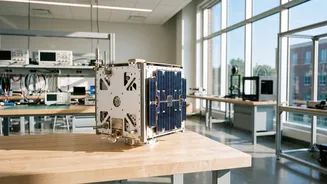
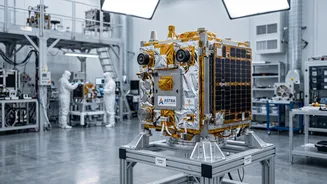
Modern space exploration is as much about data as it is about rockets. A single satellite can generate petabytes of data, and the real value lies in its interpretation. This has created a surge in demand for data scientists, software engineers, and AI/ML specialists. Companies like Pixxel are building constellations of hyperspectral imaging satellites that provide Earth observation data for agriculture, urban planning, and climate change monitoring. This requires experts who can build algorithms to analyse vast datasets, develop mission control software, ensure cybersecurity for ground stations, and create platforms for downstream applications. Skills in Python, C++, GIS tools, and machine learning are now as critical to the space economy as aerodynamics.
The Growing Support Ecosystem
A thriving space industry needs more than just scientists and engineers. As private companies launch satellites, manage constellations, and sign international contracts, a new domain of Space Law and Policy has emerged. Legal experts are now needed to navigate international treaties, secure licenses, handle intellectual property rights, and ensure regulatory compliance. Similarly, the growth of over 300 space startups in India has created a need for professionals in business development, marketing, finance, and human resources who understand the unique challenges and opportunities of the space sector. These roles are essential for attracting investment, managing growth, and building sustainable business models in this capital-intensive industry.
The Next Frontier: New and Emerging Roles
Looking ahead, the privatisation of space is set to create even more specialised career paths. As the cost of launches decreases, sectors like space tourism, in-orbit servicing of satellites, and space debris management become commercially viable. These nascent fields will require a new generation of professionals. Roles could include everything from training private astronauts and designing crew capsules to developing robotic systems for repairing satellites in orbit. Furthermore, the commercialisation of space applications in agriculture, telecommunications, and navigation will continue to expand, creating more specialised analyst and consultant roles that use space-based data to solve Earth-bound problems.