



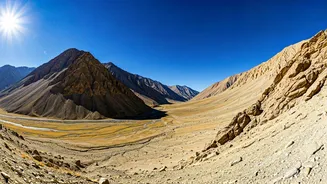


The Land of No Rain
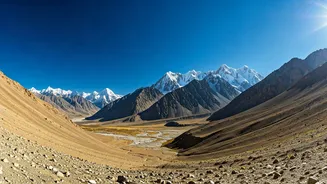
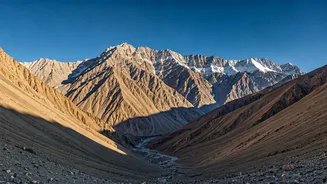
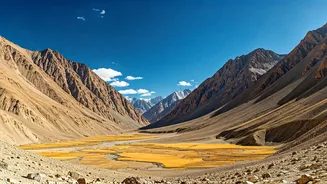
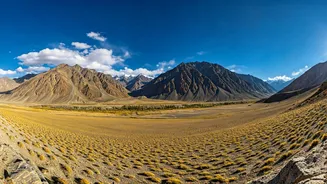
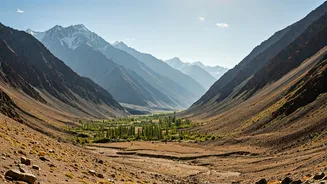
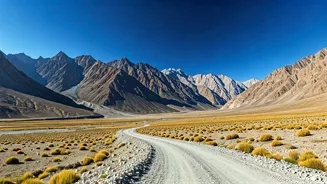
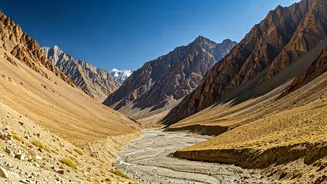
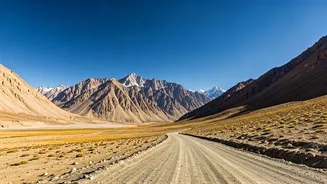
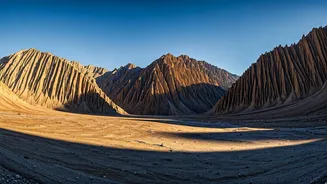
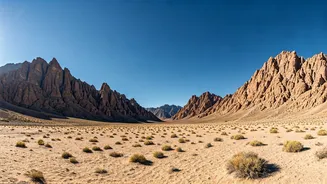
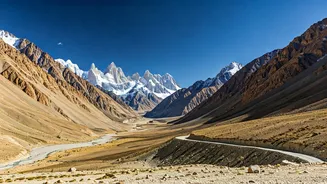
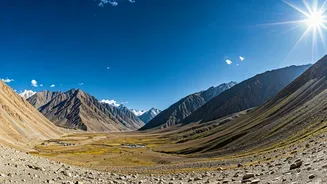
Spiti's magic in July lies in a simple geographical trick: it’s a rain-shadow region. The towering Himalayan ranges to its south block most monsoon clouds from ever reaching the valley. This results in a stark, beautiful landscape of barren mountains,
deep blue skies, and minimal rainfall, even as other hill stations face landslides and closures. While the approach roads through Kinnaur or Manali might see some rain, the core of Spiti Valley itself remains an arid sanctuary. Daytime temperatures in Kaza, the main town, hover around a pleasant 20-25°C, though nights get chilly, dropping to 5-10°C. This makes it ideal for exploring ancient monasteries, surreal landscapes, and some of the world's highest villages.
Choosing Your Path to Paradise
There are two main arteries into Spiti, each offering a different experience. The first is the route from Shimla via Kinnaur. This is a longer, 412-km journey to Kaza, typically taking at least two days. Its main advantage is the gradual ascent, which is crucial for acclimatizing to the high altitude and reducing the risk of sickness. This route is generally considered more reliable and stays open for most of the year. The second, more adventurous route is from Manali, a shorter 200-km drive that crosses the high-altitude passes of Rohtang (or Atal Tunnel) and Kunzum La (4,551m). This route usually opens by mid-to-late June. While stunning, it involves a rapid gain in altitude, making it riskier for first-timers. For a trip in July 2026, entering via Shimla and exiting via Manali is the recommended strategy, but always check road status a few days before you travel as conditions can change quickly.
A Blueprint for Adventure
A well-paced itinerary is key to enjoying Spiti. A 9 to 10-day trip is ideal. Start from Shimla, making your first night halt at Narkanda. From there, travel into the beautiful Kinnaur valley, staying in Sangla or Kalpa to acclimatize. Continue towards Kaza with stops at Nako, with its serene lake, and Tabo, home to a monastery over a thousand years old. Once in Kaza, use it as your base. Dedicate a day to explore the iconic Key Monastery and the nearby villages of Kibber and Chicham, connected by Asia's highest bridge. Another day can be spent on the circuit covering Langza (famous for its large Buddha statue), Hikkim (home to the world's highest post office), and Komic (one of the highest motorable villages). If road conditions permit, a trip to the stunning Chandratal Lake is a must before you head towards Manali to complete the circuit.
Respecting the Altitude
Altitude sickness, or Acute Mountain Sickness (AMS), is a serious risk in Spiti, where elevations regularly exceed 12,000 feet. Symptoms include headaches, nausea, dizziness, and fatigue. The best prevention is gradual acclimatization, which is why the Shimla route is strongly recommended. Once you arrive, walk slowly and do not over-exert yourself for the first couple of days. Hydration is critical; aim to drink 3-4 litres of water daily. Avoid alcohol and smoking, as they can worsen symptoms. It's also wise to eat light, carbohydrate-rich meals. If symptoms become severe, the only cure is to descend to a lower altitude immediately.
Essential Travel and Packing Tips
A trip to Spiti requires some practical preparation. Pack in layers: thermal inners, fleece jackets, and a windproof outer layer are essential, as temperatures can drop suddenly, especially at night and at high altitudes. Strong sun protection, including sunglasses and high-SPF sunscreen, is non-negotiable due to the harsh UV rays at high elevation. Carry enough cash for your entire trip, as ATMs are scarce and often unreliable beyond Reckong Peo and Manali. While some cafes and hotels in Kaza might have Wi-Fi, mobile connectivity is patchy at best, so download offline maps. Finally, always keep a buffer day or two in your itinerary to account for unpredictable road closures or delays.