








The Current Squeeze at 10,000 Feet
For years, travelling through Kushok Bakula Rimpochee Airport, one of the world's highest commercial airfields, has been a game of patience. The existing terminal, built to handle a fraction of the current traffic, often struggles during peak tourist
season. Long queues for check-in and security snake through the small building, and limited seating means many passengers are left standing. The airport’s capacity has been stretched to its limits, handling over a million passengers annually in a space not designed for such numbers. Furthermore, operations are highly dependent on weather. Strong afternoon winds and winter snowfall can lead to frequent flight cancellations, sometimes leaving tourists stranded and crowding the airport even more. This bottleneck has been a stressful start and end to what is otherwise a magical trip to the Himalayas.
A Glimpse into the Future Terminal
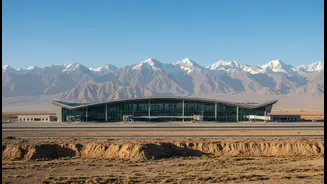
The Airports Authority of India (AAI) is overseeing the construction of a sprawling new integrated terminal building set to solve these issues. Recent updates from the Ministry of Civil Aviation confirm the project is progressing rapidly, with 83% of the physical construction already complete as of early July 2026. The new facility is designed to handle up to 3.5 million passengers annually, a massive jump from the current capacity. At peak hours, it will be able to accommodate 2,000 passengers. The design is not just about size; it's also about cultural resonance. The architecture is inspired by traditional Ladakhi stupas and monasteries, aiming to give travellers a sense of place the moment they step off the plane. Inside, passengers will find modern amenities, including more check-in counters and aerobridges, which will significantly speed up boarding and de-boarding.
More Than Just a Bigger Building
Perhaps the most significant upgrade is the terminal's ability to support expanded flight operations. Once fully functional, the airport will be able to handle up to 54 flights a day, nearly tripling its current capacity of around 18 daily flights. This will not only improve connectivity with major Indian cities but also holds the potential to stabilise airfares and open new routes. A groundbreaking feature of the new terminal is its commitment to sustainability. It will be India’s first airport to run on a hybrid of geothermal and solar power. A geothermal system will use heat from deep underground for the building's heating and cooling, a crucial innovation in Ladakh's harsh climate. This, combined with a large solar power installation, aligns with Ladakh's vision of becoming a carbon-neutral territory and will make the airport a model for green aviation.
The Final Stretch to a Smoother Journey
While the Civil Aviation Ministry has not announced a final commissioning date, earlier reports and directives from local authorities have pointed towards a target completion of July 2026. The project, which began in 2019, has faced challenges due to the region's tough climate, where construction is only possible for about six months a year. However, with work now in its final stages, both travellers and the local tourism industry are looking forward to its opening. The expansion is seen as a critical step to boost tourism, which is the backbone of the local economy. A more efficient and reliable airport will make the region more accessible and appealing, ensuring that the first and last impressions of Ladakh are as positive as the experience itself. The new terminal isn't just an upgrade; it's a transformation that promises a less stressful and more welcoming start to every Ladakhi adventure.