
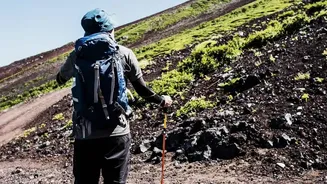
More Than Just Walking
So, what separates a regular stroll from a Nordic walk? The poles. Originally developed in Finland as a summer training method for cross-country skiers, the technique is designed to be a form of 'enhanced walking'. While conventional walking primarily
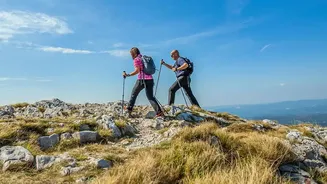
engages muscles below the waist, adding poles activates the arms, shoulders, chest, and core. This transforms your walk into a low-impact, full-body workout that engages up to 90% of your body's muscles. The result is a significant boost in calorie burn—studies show it can be anywhere from 18% to over 60% higher than regular walking—and improved cardiovascular fitness, muscle strength, and flexibility. It provides the upper-body benefits of a cross-trainer while you enjoy the outdoors.
Common Mistakes That Hold You Back
The effectiveness of Nordic walking hinges entirely on proper technique, but many beginners make easily avoidable errors. A frequent mistake is using the poles for balance rather than propulsion, planting them out in front like trekking poles. This slows you down and puts unnecessary strain on your joints. Another common issue is poor posture, such as hunching over or bending at the waist instead of leaning in from the ankles. This can lead to back pain and reduces your lungs' capacity. Many newcomers also struggle with coordination, moving the arm and leg on the same side together in an 'amble' rather than the natural cross-lateral motion (opposite arm and leg). Finally, keeping a clenched, rigid grip on the pole handle throughout the entire movement restricts arm swing and reduces power.
How to Master the Technique
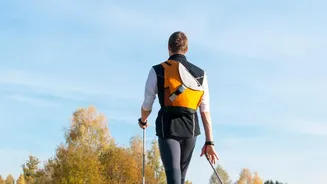
Unlocking the benefits of Nordic walking starts with the right form. First, stand tall with relaxed shoulders. The core of the movement is 'plant, push, propel'. Plant the pole tip on the ground roughly between your feet, in line with the heel of your opposite foot. As you step forward, push the pole back, keeping your arm relatively straight and extending from the shoulder, not the elbow. As your hand passes your hip, open your palm and release your grip, allowing the pole to swing backward, held in place by the specialised strap or gauntlet. This hand-opening is crucial for achieving a full arm swing and maximizing propulsion. Your arms should swing naturally from the shoulders in opposition to your legs—as your right leg comes forward, your left arm swings forward to plant the pole. If you lose coordination, simply let the poles drag behind you for a few steps to reset your natural rhythm.
Choosing the Right Equipment
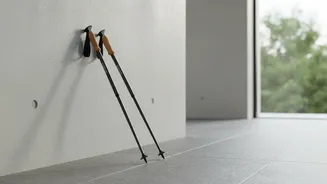
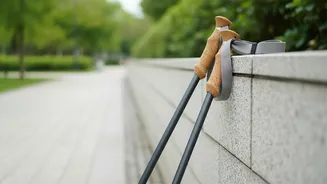
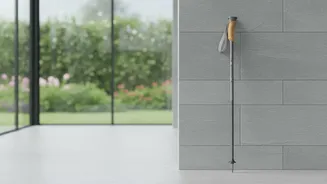
Not all poles are created equal. It's essential to use poles specifically designed for Nordic walking, not trekking poles, which are built for stability on uneven terrain. The right length is critical; too short, and you'll hunch over, while too long, and your propulsion will be inefficient. A common guideline for finding the correct length is to multiply your height in centimetres by 0.68. When it comes to materials, poles with a higher carbon content are preferable to pure aluminium ones. Carbon absorbs vibrations, which helps protect your wrist and elbow joints, whereas rigid aluminium can transfer jarring impacts up your arm. Look for poles with comfortable, ergonomic handles and quality rubber 'boot tips' that provide good traction and shock absorption on pavement.