






Nature’s Living Architecture
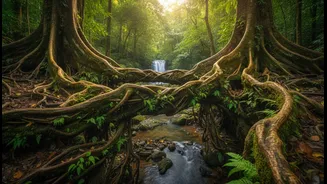
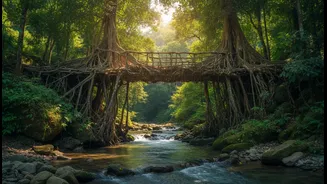
For centuries, the indigenous Khasi and Jaintia communities of Meghalaya have cultivated a unique form of natural architecture: the living root bridge, or 'Jingkieng Jri'. These are not built, but grown. By guiding the aerial roots of the rubber fig tree
(Ficus elastica) across rivers and gorges, often using bamboo scaffolding as a guide, these communities create sturdy, living suspension bridges. The process is a lesson in patience, taking 20 to 25 years for a bridge to become fully functional. Unlike concrete and steel, which decay in the region's heavy rainfall and humidity, these bridges grow stronger over time as the roots thicken and intertwine. They are a profound symbol of a culture that lives in harmony with its environment, a philosophy of being caretakers of the land rather than its owners.
Threats in a Modern World
Despite their resilience, the living root bridges face modern threats. The knowledge of how to create and maintain them is at risk of fading as younger generations are drawn to different livelihoods. The allure of modern construction has also led to some bridges falling into disrepair or being replaced by concrete structures. Furthermore, the very popularity of the bridges has brought its own challenges. Unregulated tourism can lead to environmental strain and the paving of natural pathways with concrete, which can damage the delicate root systems of the Ficus trees that support the entire ecosystem. Without a structured approach, these centuries-old traditions could be lost, turning a living heritage into a relic.
A Movement for Preservation
Recognizing both the cultural and ecological value of the bridges, a powerful preservation movement has taken root. Led by community organizations like the Living Bridge Foundation and cooperative federations, villagers are working to repair old bridges and educate youth in this traditional craft. These grassroots efforts have been bolstered by state and international support. The Meghalaya government has launched initiatives like the GREEN Meghalaya scheme, which provides financial incentives to communities for conserving forests and ecosystems, marking India's first Payment for Ecosystem Services (PES) program. These efforts are also gaining global attention, with India submitting a formal dossier to have the 'Jingkieng Jri Cultural Landscape' included on the UNESCO World Heritage Site list, a move that would bring international recognition and support for their protection.
The Megacity Connection: Tourism and Livelihoods
This is where the connection to India's megacities becomes clear. The preservation of the root bridges has catalysed a professional and sustainable eco-tourism industry that is largely fueled by domestic travellers. With rising disposable incomes and a desire for authentic experiences, city dwellers from Delhi, Mumbai, Bengaluru, and other urban centres are seeking out the unique landscapes of Meghalaya. This influx creates a virtuous cycle: tourists pay for experiences like guided treks, homestays, and local cuisine, generating direct income for the communities who are the custodians of the bridges. This tourism model empowers local people, including women and youth, creating viable jobs that offer an alternative to migrating to megacities for work. The income from tourism is then reinvested into conservation, ensuring the long-term health of the ecosystem that attracted the visitors in the first place.