





An Unprecedented Achievement
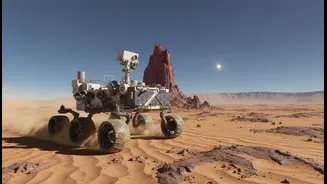
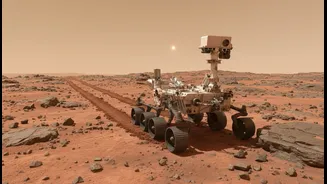
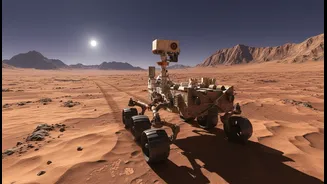
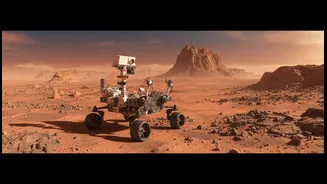
In March 2015, NASA's Opportunity rover achieved something unprecedented: it completed the first-ever marathon on another world. Over 11 years, the golf-cart-sized robot traversed 42.195 kilometers (26.219 miles) across the harsh Martian landscape. This
was a staggering feat for a machine designed to last just 90 days and travel about 1,000 meters. The rover's incredible longevity wasn't just luck; it was the result of brilliant engineering, creative problem-solving, and a deep understanding of how to manage a machine in one of the most hostile environments imaginable. Opportunity's journey provides crucial lessons in robotics, risk management, and long-duration space exploration that are still studied today.
Battling the Martian Elements
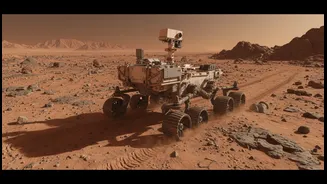
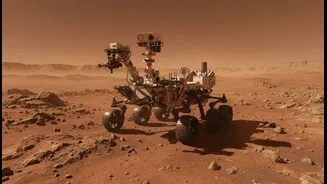
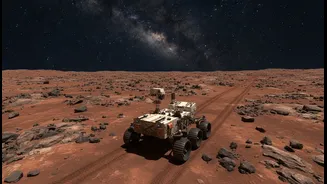
Mars is not kind to robots. The surface is covered in abrasive dust and sharp rocks, while temperatures swing wildly. One of the biggest threats was dust settling on the solar panels, which engineers initially believed would end the mission in months by starving the rover of power. However, Martian winds unexpectedly blew the panels clean on multiple occasions, granting the rover a new lease on life. But the physical wear was relentless. Engineers regularly used the rover's own cameras to inspect its six aluminum wheels for punctures and tears. This constant monitoring was critical. When damage to the Curiosity rover's wheels became more severe than expected, its operators learned to 'read' the terrain from orbit, planning routes that favored softer ground and developing new driving techniques, like moving backward, to minimize further damage.
The Art of Remote Driving
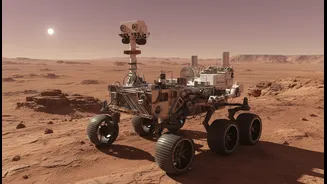
You can't just joystick a rover on Mars. Due to the vast distance, radio signals can take between 4 and 24 minutes to travel one way. This communication delay makes real-time control impossible. Instead, engineers must plan out entire drive sequences in advance. This process traditionally involved teams of experts meticulously analyzing orbital images and 3D terrain data to plot a safe path, identifying hazards like steep slopes, sand traps, and rock fields. The rover then executes these commands autonomously, using its own onboard cameras and software to navigate between pre-defined waypoints. A single miscalculation could leave a multi-billion-dollar asset stranded, so rover drivers developed a cautious and methodical approach, balancing the need to make progress with the paramount importance of keeping the vehicle safe.
Smarter Rovers, Smarter Routes
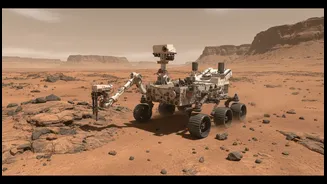
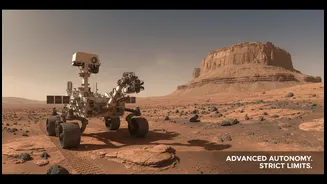
To extend the rovers' capabilities, engineers have increasingly turned to artificial intelligence. Newer rovers like Curiosity and Perseverance are equipped with more advanced autonomous navigation, allowing them to make more decisions on their own. For example, software can analyze stereo images, assess terrain traversability, and plot its own course around obstacles without waiting for instructions from Earth. More recently, NASA has experimented with using advanced AI models to analyze orbital data and generate potential routes at machine speed, drastically cutting down the human planning time. This allows for more efficient traverses and frees up engineers to focus on the bigger picture and scientific objectives. These systems represent a leap from simple automation to true autonomy, a necessary step for exploring even more distant worlds.
Lessons for Earth and Beyond
The success of rovers like Opportunity provides a powerful case study for anyone in engineering and robotics. It demonstrates the value of robust design, proactive maintenance, and creative problem-solving. When Curiosity's drill mechanism failed, engineers spent months testing solutions on a duplicate rover on Earth, eventually devising a new drilling method using the existing hardware in an unconventional way. These experiences—managing wear from millions of miles away, planning around communication delays, and leveraging software to overcome physical limitations—are not just applicable to space. They teach fundamental principles about designing resilient systems that can operate in unpredictable environments, a valuable lesson for robotics, logistics, and remote operations right here on Earth.