






A Galaxy of Opportunity
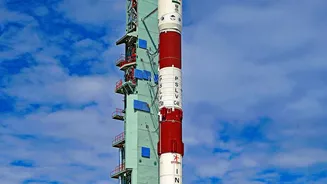
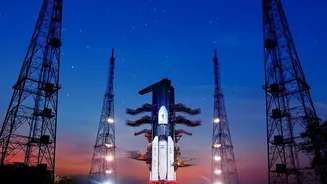
India's space ambitions are entering a new orbit. While the Indian Space Research Organisation (ISRO) remains the backbone of the nation's space program, a strategic policy shift is empowering a vibrant ecosystem of private companies. The goal is to grow
India's share of the global space economy from its current 2-3% to a formidable 8-10% in the next decade, potentially expanding the domestic space economy to USD 44 billion. This transition, facilitated by the Indian National Space Promotion and Authorisation Centre (IN-SPACe), is not about replacing ISRO but augmenting it. The government's vision is clear: let private industry handle routine manufacturing and commercial services, freeing up ISRO to focus on cutting-edge research, deep space exploration, and strategic national missions. This has sparked a surge in entrepreneurship, with over 400 space startups registering in recent years, all poised to create high-value employment.
The New Frontiers for Jobs
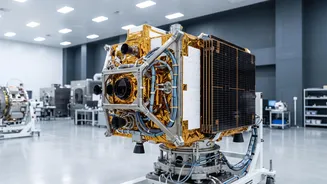
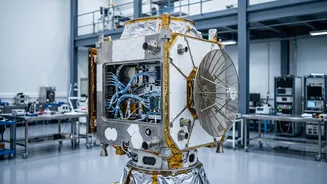
The job market in India's space sector is diversifying rapidly beyond traditional rocketry. While ISRO will continue its recruitment, the real explosion in opportunities is happening across three main private sector tracks. The first is in building hardware: companies like Skyroot Aerospace and Agnikul Cosmos are developing their own launch vehicles, requiring aerospace, mechanical, and propulsion engineers. The second track involves manufacturing satellites and their components. Firms such as Pixxel and Dhruva Space are building satellite constellations, creating demand for systems engineers, electronics specialists, and avionics experts. The third, and perhaps fastest-growing, track is in downstream applications. This involves using satellite data for everything from agriculture and disaster management to telecommunications and urban planning. This area needs data scientists, software developers, and GIS analysts to turn raw space data into actionable intelligence.
The Modern Engineer's Skillset
Aspiring space professionals today need a multi-disciplinary skillset. While a B.Tech in aerospace, mechanical, or electronics engineering remains a strong foundation, private companies are increasingly looking for more. Strong programming ability is now almost non-negotiable. Proficiency in languages like Python, C++, and MATLAB is crucial for simulation, data analysis, and developing the flight software that controls modern spacecraft. Beyond technical skills, the private sector values systems thinking—the ability to understand how complex subsystems interact within a satellite or launch vehicle. Startups, in particular, prize hands-on experience and a proactive mindset. They care less about grades and more about what a candidate has built, whether through internships, personal projects, or university competitions. This signals a shift from a purely academic focus to a more practical, problem-solving approach to engineering.
Building an Entire Ecosystem
The rise of private space companies is creating a ripple effect across the entire industrial landscape. It's not just about the headline-grabbing startups; it's also about the hundreds of smaller MSMEs that supply them with components, materials, and services. For every rocket launched or satellite deployed, a vast supply chain is activated, creating jobs in precision manufacturing, materials science, and electronics. This expansion is drawing talent from adjacent industries like automotive, defence, and semiconductor manufacturing, creating new career pathways for experienced professionals. This ecosystem approach is vital for achieving the scale needed to meet India's ambitious targets, such as launching nearly 50 vehicles per year—a demand far exceeding ISRO's current capacity alone. ISRO's own chairman has noted that nearly 80% of the agency's launch budget already flows through its 450 industry partners, a number set to grow as the sector commercialises further.