








The Powerful Pull of a Fleeting Shadow
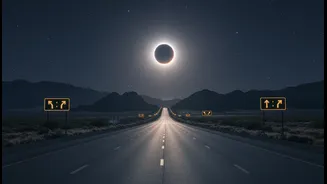
A total solar eclipse occurs when the Moon passes directly between the Earth and the Sun, casting a shadow that completely blocks the Sun's face. This period of darkness, known as totality, is only visible from within a relatively narrow strip of land,
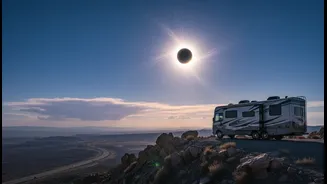
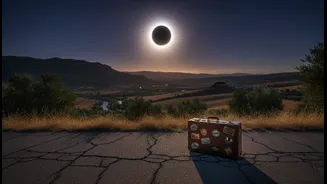
often about 115 miles wide, called the path of totality. While a partial eclipse can be seen over a much wider area, the experience of totality—witnessing the sun's fiery corona flare out from behind the black disk of the moon—is a profoundly different and more powerful event that people will travel across continents to see. This creates a unique tourism phenomenon, funneling millions of people into specific, often rural, corridors for just a few minutes of astronomical wonder.
Lessons from the Great American Eclipses
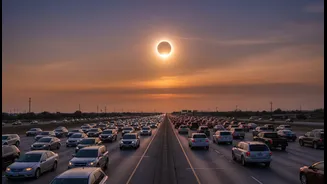
The United States witnessed this firsthand during the total solar eclipses of August 2017 and April 2024. Despite years of planning, many regions were overwhelmed by the sheer volume of visitors. The 2017 event was dubbed a potential "traffic nightmare" before it even happened. In Wyoming, state officials who had prepared for the 2017 eclipse later advised Texas that their state's population effectively doubled, leading to one of the worst traffic jams in its history. A four-hour drive from Casper, Wyoming, to Denver, Colorado, stretched to 10 hours or more. The 2024 eclipse saw similar scenes, with drivers reporting being stuck in traffic all night trying to get home. The core problem is not the arrival, which tends to be staggered over several days, but the departure. The moment totality ends, it's as if a switch is flipped, and nearly everyone leaves at once.
When Small Towns Become Metropolises
Many of the best viewing locations are in small towns and rural areas, which are unprepared for a massive, temporary population boom. Local infrastructure is pushed to its breaking point. Emergency management agencies treat the event like a major natural disaster or a Super Bowl, needing to plan for everything from medical emergencies to basic sanitation. During the 2024 eclipse, some Texas counties issued disaster declarations preemptively to free up resources. Hotels sell out years in advance, with rooms going for hundreds of dollars per night. Gas stations can run out of fuel, grocery stores can be picked clean, and local cell networks often become overloaded and fail, cutting off communication. For local economies, the influx can be a significant boon, but it comes at the cost of immense strain on public services.
Planning for the Next Big Show: Spain 2026
The next major opportunity for a widely accessible total solar eclipse is on August 12, 2026, with the path of totality crossing over northern Spain. European authorities are already studying the lessons learned from the American eclipses to prepare. The 2026 eclipse will occur late in the day, close to sunset, adding another layer of complexity for viewers who will need a clear western horizon. Given the high probability of clear summer skies, Spain is expected to be a top destination for eclipse chasers from around the world. The European Space Agency is even organizing public viewing events, which will add to the concentration of crowds. For travelers, the advice remains the same: plan far ahead. Book accommodations and transportation well in advance, and consider staying an extra day or two after the eclipse to avoid the inevitable traffic jam.