







The World's Most Important Job?
The UN Secretary-General is often called the world's top diplomat, acting as the chief administrative officer of the entire United Nations system. The role involves managing a massive bureaucracy, overseeing global peacekeeping missions, mediating international
conflicts, and acting as a moral voice for humanity. From climate change to humanitarian crises, the Secretary-General sets the tone and priorities for the organization's response to the world's most pressing challenges. With the second term of the current chief, António Guterres, ending on December 31, 2026, the race to find his successor is well underway, placing the unique selection process under a global spotlight.
A Two-Stage Gauntlet
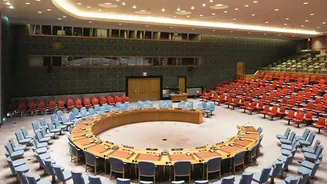
The UN Charter lays out a deceptively simple rule in Article 97: the Secretary-General is appointed by the 193-member General Assembly upon the recommendation of the 15-member Security Council. This creates a two-step process where the real power lies with the Council, which deliberates behind closed doors to select a single candidate. The General Assembly has never rejected a candidate recommended by the Security Council. Historically, the Council would simply present a name for the Assembly to rubber-stamp by acclamation, though recent reforms have pushed for more transparency.
The P5 and the Power of the Veto
The heart of the selection drama lies within the Security Council, specifically with its five permanent members (P5): China, France, Russia, the United Kingdom, and the United States. Any of these five nations can block a candidate with a veto, meaning a prospective Secretary-General must be acceptable to all of them. This gives the P5 disproportionate influence, as a single 'no' vote can end a campaign, regardless of how much support a candidate has from the other ten non-permanent Council members or the broader UN membership. To be recommended, a candidate needs at least nine affirmative votes in the Council and no vetoes from any of the P5.
Behind Closed Doors: Secret Straw Polls
To gauge support and identify potential vetoes without holding a formal vote, the Security Council conducts a series of informal secret ballots known as 'straw polls'. In these polls, members vote to 'encourage', 'discourage', or offer 'no opinion' on each official candidate. While the results are meant to be confidential, they often leak, providing a running tally of the race. In later rounds, the ballots are colour-coded, with the P5 using different coloured paper than the ten elected members. This immediately reveals if a leading candidate has a 'discourage' vote from a permanent member—a signal of a likely veto that can effectively kill a candidacy.
A Push for Transparency Meets Reality
In recent years, there has been a significant push to make the selection process more open and inclusive. Since the 2016 selection, candidates are now formally nominated, submit vision statements, and participate in public 'interactive dialogues' with the General Assembly, allowing all member states to ask questions. These town hall-style events are webcast and provide a platform for candidates to present their case to the world. However, while these reforms have increased transparency, they haven't changed the fundamental power dynamic. The final decision remains with the Security Council, where the secretive straw polls and the ever-present threat of a veto still hold the ultimate sway.
Why the Selection Matters for India
For a nation like India with growing global ambitions, the identity of the UN Secretary-General is far from a trivial matter. The UN chief's priorities on issues like Security Council reform, counter-terrorism, climate justice, and sustainable development can either align with or diverge from India's national interests. The selection process itself is a reflection of the global power structure that India seeks to reform, particularly the dominance of the P5. An independent and effective Secretary-General can champion the interests of developing nations and push for a more equitable multilateral system, while a leader beholden to P5 interests may maintain the status quo. Therefore, the manoeuvring in New York has direct implications for India's role on the world stage.