



The Limits of Radio Waves
For over half a century, space missions have relied on radio frequency (RF) signals to communicate with Earth. While dependable, RF communication is like trying to download a massive file over an old dial-up connection. Radio waves naturally spread out
over vast distances, weakening the signal and severely limiting the amount of data that can be sent. For example, NASA's Mars Reconnaissance Orbiter can take over seven hours just to transmit a single high-resolution image. As scientific instruments become more advanced, capturing terabytes of complex data, this bandwidth bottleneck has become a major hurdle for deep space exploration.
A Leap into Light-Based Data
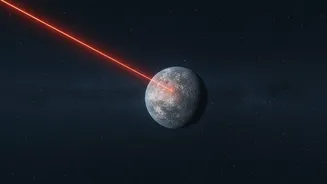
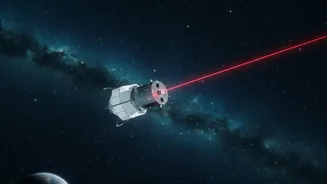
Infrared light, or optical communication, is the game-changing upgrade. Much like how fiber optics revolutionised internet on Earth, lasers are set to do the same for space. This technology encodes data onto photons—particles of light—which are then beamed across space using a near-infrared laser. Because infrared light has a much higher frequency than radio waves, it can carry significantly more information in a single transmission. The term "faster" doesn't mean the signal travels quicker than the speed of light; it refers to the data rate. This upgrade can boost bandwidth by 10 to 100 times compared to the best RF systems, enabling more discoveries.
How It Works: Precision and Power
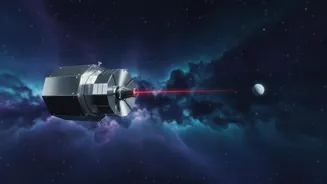
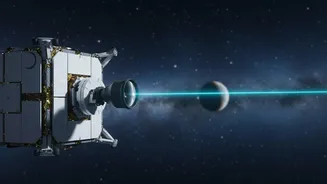
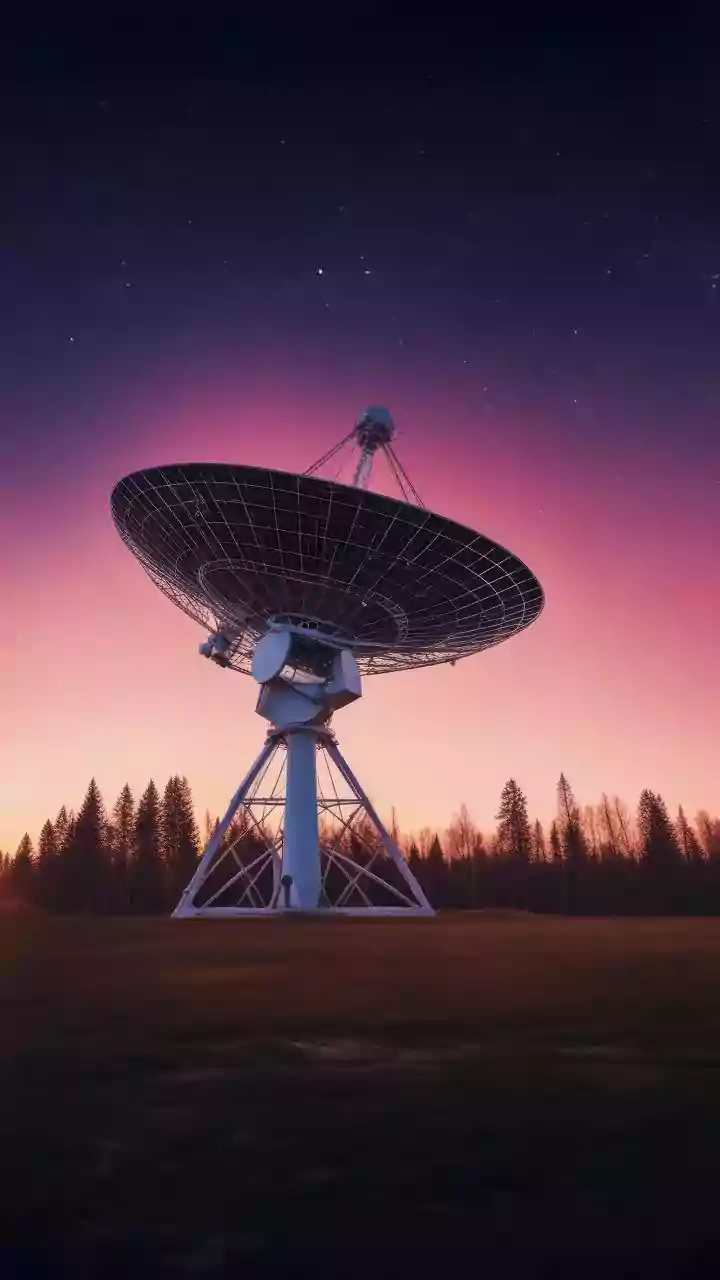
The system involves a flight laser transceiver on a spacecraft and a receiving station on the ground. The spacecraft aims its laser, which has a telescope-like aperture, at a ground-based observatory, like Caltech’s Palomar Observatory in California. The level of precision required is staggering. From millions of kilometers away, successfully hitting the detector is equivalent to hitting a moving coin from a mile away. To help with this, ground stations often send a laser beacon back to the spacecraft, giving it a target to lock onto. The faint light returning to Earth is then collected by large telescopes and read by highly sensitive, cryogenically cooled detectors that can count individual photons.
The High-Definition Difference in Action
NASA's Deep Space Optical Communications (DSOC) experiment, flying aboard the Psyche spacecraft, has already proven the technology's potential. In a landmark test, the system streamed a 15-second, high-definition video of a cat named Taters from 31 million kilometers away. The video was sent at a maximum rate of 267 megabits per second (Mbps), a speed comparable to many home broadband plans. This capability will allow future astronauts and robotic explorers to send back not just static images, but live, high-definition video feeds, complex geological maps, and enormous datasets that would have previously taken weeks or months to transmit.
Navigating Earth's Atmosphere and Other Hurdles
Despite its advantages, laser communication isn't without challenges. The primary obstacle is Earth's atmosphere. Clouds, fog, and even turbulence can block or distort the narrow laser beam, disrupting the connection. To mitigate this, space agencies plan to use a network of ground stations located in different, often arid, climate zones. If one station is clouded over, another can take over receiving duties. Another challenge is maintaining the laser's precise aim while the spacecraft is vibrating and moving millions of kilometers away, a problem addressed with sophisticated isolation and pointing systems.