








The Silent Crisis Beneath Our Cities
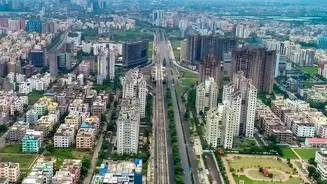
Beneath the concrete expanse of India’s bustling metropolises, a critical resource is being drained faster than it can be refilled. Groundwater, which supplies up to 50% of the urban water demand, is under extreme stress. According to the Central Ground Water
Board (CGWB), major cities like Bengaluru and Chennai are already in an 'over-exploited' stage, meaning they extract more groundwater than is annually replenished. Others, including Delhi and Hyderabad, are classified as 'critical'. This over-extraction is driven by rapid urbanisation, which paves over natural recharge zones with buildings and roads, and a growing population's relentless demand for water. The consequences are severe, leading to deepening borewells, increased energy costs for pumping, and the looming threat of widespread water shortages.
Tapping the Sky: A Simple Solution
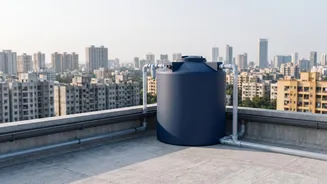
Rooftop rainwater harvesting (RWH) presents a deceptively simple yet powerful countermeasure. The concept is straightforward: instead of letting precious rainwater run off into clogged drains, it is captured from rooftops and put to use. A typical system consists of a few basic components: the roof itself (the catchment area), a network of pipes or gutters to transport the water, a filtration system to remove debris, and a method for storage or recharge. This collected water can either be stored in tanks for non-potable uses like gardening and flushing, or it can be directed into the ground to actively replenish depleted aquifers. Its simplicity is its strength—it is a decentralised, low-cost technology that can be adapted for individual homes, apartment complexes, and commercial buildings alike.
From Rooftop to Aquifer
RWH tackles groundwater depletion in two fundamental ways. First, by collecting and storing rainwater for daily use, it directly reduces the reliance on municipal supplies and private borewells. This conservation lessens the overall demand pulling from already stressed aquifers. Second, and more critically for long-term sustainability, RWH is a vital tool for artificial groundwater recharge. By channelling filtered rainwater into specially designed recharge pits or trenches, the water is allowed to percolate slowly through the soil, eventually reaching the underground water table. This process mimics nature's own replenishment cycle, which is often disrupted by urban construction. In essence, every building with an RWH system becomes a micro-recharge station, helping to raise the water table locally and contribute to the city's overall water security.
Success Stories from Indian Cities
The impact of widespread RWH is not just theoretical. Chennai offers a compelling, if complex, case study. After the Tamil Nadu government made RWH mandatory for all buildings in 2001, the results were dramatic. Within five years, the city's groundwater levels reportedly rose by 50%, reviving dry wells and providing a buffer against water scarcity. In Bengaluru, citizen-led movements and government initiatives have encouraged thousands of households and apartment complexes to adopt RWH, leading to significant reductions in water tanker dependency and replenishment of local aquifers. These examples prove that when implemented at scale, RWH can deliver measurable results, transforming urban landscapes from water consumers into water catchments.
Challenges and the Path Forward
Despite its proven benefits, the path to universal adoption of RWH is not without obstacles. The initial installation cost, though often recovered through lower water bills, can be a barrier for some. Furthermore, systems require regular maintenance, particularly the cleaning of filters and rooftops, to ensure water quality and prevent clogging. While many states have made RWH mandatory for new constructions, enforcement can be inconsistent, and retrofitting older buildings remains a significant challenge. Overcoming these hurdles requires a combination of government incentives, stronger policy enforcement, and continued public awareness campaigns to drive home the message that every drop captured is a step towards a water-secure future for our cities.