





A Monumental Policy Shift
The game-changer was the Indian Space Policy 2023. This policy marked a fundamental shift from a government-led model to an inclusive, private-sector-driven approach. The goal is to enhance India's space capabilities and grow its share of the global space economy,
which is projected to expand significantly. Previously, private companies were largely limited to being component suppliers for ISRO. The new policy empowers Non-Governmental Entities (NGEs) to undertake end-to-end space activities—from building and launching rockets and satellites to offering space-based data services. This strategic pivot is designed to unleash innovation, attract investment, and establish India as a global space hub.
IN-SPACe: Mission Control for Private Players
To oversee this new landscape, the government established the Indian National Space Promotion and Authorisation Centre (IN-SPACe) in 2020. Functioning as a single-window agency, IN-SPACe promotes, authorises, and supervises the activities of private space companies. Its mandate is crucial: to provide a level playing field and ensure that private firms can access ISRO's world-class facilities, expertise, and data on equitable terms. This support system demystifies the process for startups, offering technical advisory and helping to validate technologies. By handling the regulatory and authorisation aspects, IN-SPACe allows startups to focus on what they do best: innovate. The impact is clear, with over 450 space startups now registered in India, a dramatic increase from just a handful a few years ago.
The New Innovators Reach for the Stars
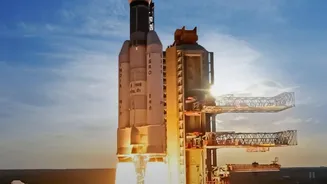
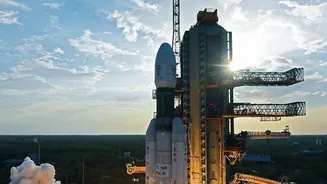
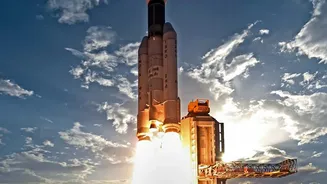
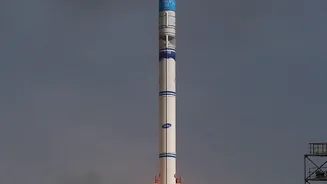
This supportive environment has given rise to a constellation of ambitious startups. Hyderabad-based Skyroot Aerospace made history on July 18, 2026, with the successful orbital launch of its Vikram-1 rocket, making India the third country with a private orbital launch capability. This was a monumental success, not just for the company, but for the entire Indian space ecosystem. Another key player, Agnikul Cosmos, incubated at IIT-Madras, successfully tested its Agnibaan SubOrbital Technological Demonstrator (SOrTeD) in May 2024. The mission was notable for featuring the world's first single-piece 3D-printed semi-cryogenic engine, a testament to indigenous innovation. Other startups are focusing on different parts of the value chain. Pixxel is building a constellation of hyperspectral imaging satellites to provide detailed Earth observation data for sectors like agriculture and mining. Meanwhile, Dhruva Space offers comprehensive solutions for small satellites, including development, launch services, and ground support.
Fueling the Final Frontier
The policy reforms have unlocked a significant flow of investment into the sector. India's space startups attracted nearly $390 million in funding over the last three years. Following its historic launch, Skyroot Aerospace achieved a valuation of $1.1 billion, becoming India's first space-tech unicorn. This financial confidence is backed by a growing order book; the top 10 startups reportedly hold confirmed orders worth $150 million. The government has further encouraged investment by amending its Foreign Direct Investment (FDI) policy in late 2024, allowing up to 74% FDI in satellite manufacturing and operations via the automatic route. This influx of capital is critical, enabling companies to move from demonstration missions to full-scale commercial operations and compete on the global stage. India's space economy, currently valued at around $8.4 billion, is projected to soar to $40-45 billion by 2030.