





A Natural Laboratory in the Sky
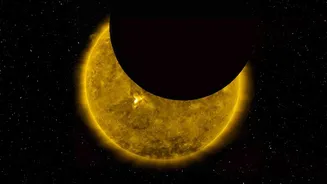
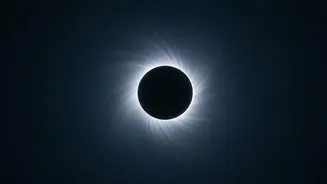
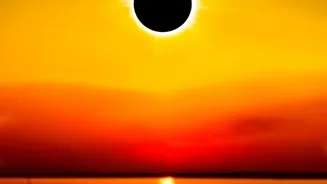
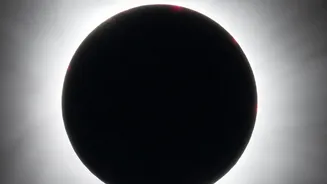
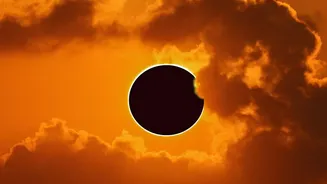
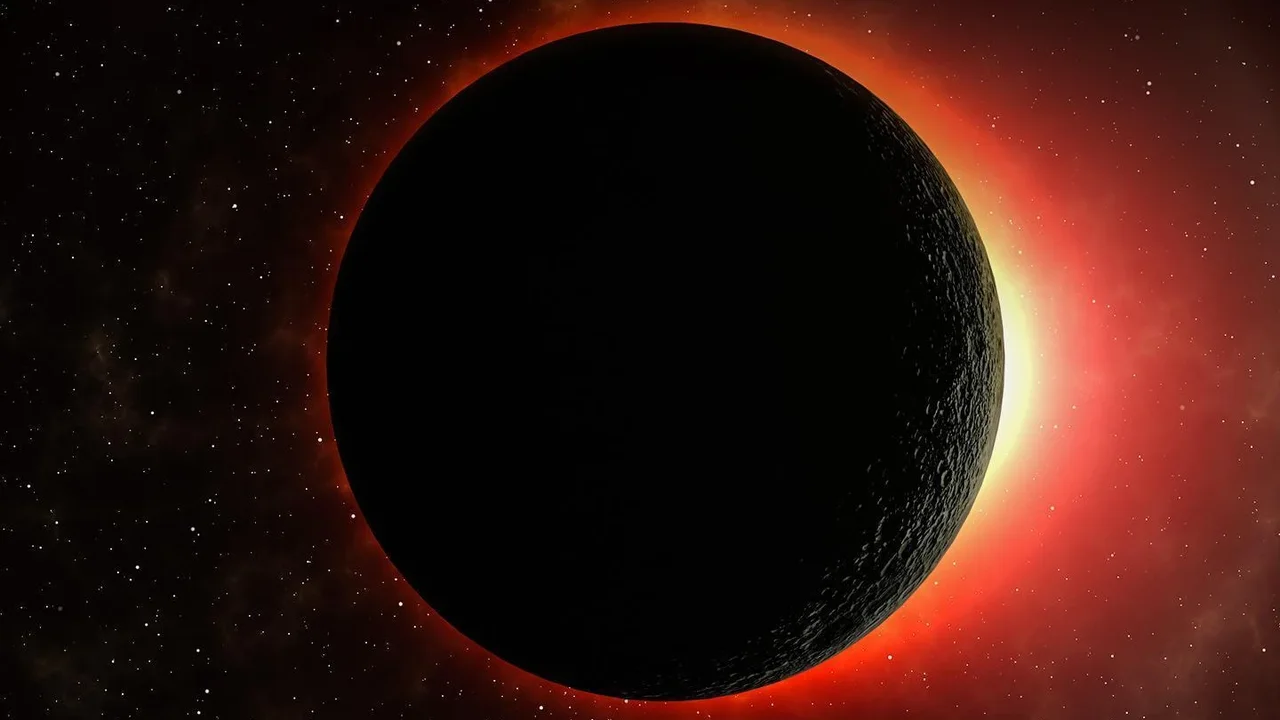
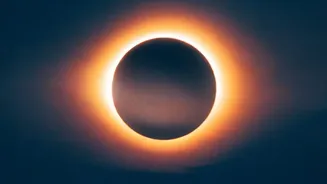
A total solar eclipse occurs when the Moon passes directly between the Sun and Earth, completely blocking the Sun's bright face. This brief period of totality, lasting just over two minutes in 2026, reveals the Sun's outer atmosphere, the corona, which
is otherwise hidden by the intense glare. This upcoming eclipse will trace a path across Greenland, Iceland, and northern Spain. Its path over accessible landmasses makes it particularly valuable, allowing teams from NASA and the European Space Agency (ESA) to deploy sophisticated instruments. These moments provide a unique natural laboratory to investigate some of the most enduring mysteries about our star.
The Mysteries of the Solar Corona
The primary focus for many scientists during the 2026 eclipse will be the solar corona. This wispy, superheated plasma halo is a profound puzzle: it reaches temperatures of millions of degrees, hundreds of times hotter than the Sun's visible surface below. Understanding why the corona is so hot is a central question in solar physics. Scientists will use specialized cameras and telescopes, including some flown on high-altitude research jets, to capture high-resolution images of the corona's structure in different wavelengths of light. These observations can help them understand the flow of energy and the role of the Sun's magnetic field in heating this enigmatic region.
Chasing the Shadow from Above
To maximize observation time and get above any interfering clouds, scientists will take to the skies. NASA's WB-57 research jet will chase the Moon's shadow, extending the time it can study the corona. Equipped with a suite of advanced cameras, the jet will record rapid changes in the corona, providing insights into the origin of the solar wind — the stream of charged particles that flows from the Sun and affects the entire solar system. Separately, an Irish-Italian mission will fly a telescope aboard an aircraft off the coast of Ireland to measure the corona's magnetic field, which is believed to drive its extreme heating. These airborne observatories offer a clearer view than is possible from the ground, where the atmosphere can distort images.
Understanding Our Own Atmosphere
The eclipse's impact isn't limited to the Sun. The sudden drop in sunlight and temperature dramatically affects Earth's atmosphere. To study these changes, the NASA-supported Nationwide Eclipse Ballooning Project will launch dozens of balloons from Iceland and Spain. These balloons will carry instruments to measure how the eclipse affects the boundary layer — the part of the atmosphere closest to the ground — and ozone levels. Previous experiments during the 2024 eclipse showed that the boundary layer collapsed in clear skies, and scientists are eager to see if the conditions in Iceland produce a different result. This research helps us understand how our atmosphere responds to rapid changes in solar radiation.
Testing the Universe's Rules
Eclipses have a long history of being used to test fundamental laws of physics. During the 1919 eclipse, observations of starlight bending around the Sun provided the first confirmation of Albert Einstein's theory of general relativity. In 2026, student teams from Portugal and Spain plan to replicate this famous experiment, using modern technology to precisely measure the gravitational deflection of starlight. Furthermore, various space missions like ESA's Solar Orbiter and Proba-3, which can create its own artificial eclipses, will work in concert with ground and air-based observations. By comparing computer-generated predictions of the corona's appearance with the real thing, scientists can fine-tune the models they use to forecast space weather, which can impact satellites and technology on Earth.