





The Building Blocks of Muscle Recovery
After any strenuous workout, your muscle fibres experience tiny tears. This is a normal part of the process that leads to growth and strength gains. To repair this damage, your body needs protein. More specifically, it needs the building blocks of protein,
known as amino acids. There are 20 amino acids in total, nine of which are called 'essential amino acids' (EAAs) because your body cannot produce them on its own; you must get them from food. When you consume protein, your body breaks it down into these individual amino acids and uses them to initiate muscle protein synthesis—the crucial process of repairing and rebuilding muscle tissue.
The 'Complete Protein' Challenge
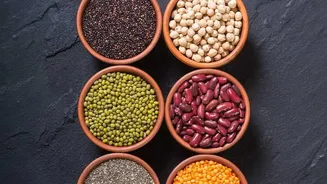
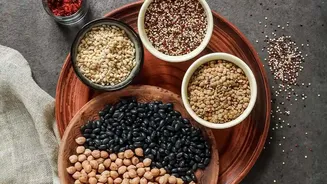
The effectiveness of a protein source is largely determined by its amino acid profile. A 'complete protein' is one that contains all nine essential amino acids in sufficient quantities. Historically, this has been the main argument for the superiority of animal-based proteins like whey, eggs, and meat, which are all naturally complete. Most single plant-based protein sources, on the other hand, are 'incomplete'. This doesn't mean they are bad; it simply means they are low in one or more of the essential amino acids. For example, many grains are low in the EAA lysine, while legumes can be low in methionine. This limitation is at the heart of the single-source versus blend debate.
Limitations of Single Plant Sources
Popular single-source plant proteins like those from pea, rice, and hemp each have unique strengths but also distinct weaknesses in their amino acid profiles. Pea protein, for instance, is rich in branched-chain amino acids (BCAAs) which are vital for muscle building, but it is low in the essential amino acid methionine. Brown rice protein is the opposite; it's a good source of methionine but lacks sufficient lysine. While some single plant sources like soy and quinoa are considered complete proteins, many people seek alternatives due to allergies, dietary preferences, or simply a desire to diversify their protein intake. Relying on just one incomplete source could mean your body doesn't get the optimal ratio of amino acids needed for efficient muscle repair.
The Power of a Synergistic Blend
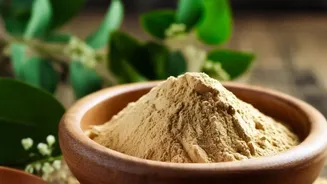
This is where blended formulations shine. By combining two or more complementary plant proteins, manufacturers can create a final product with a robust and complete amino acid profile. The most common and effective pairing is pea and brown rice protein. Pea protein's high lysine content perfectly compensates for rice protein's low levels of it, while rice protein provides the methionine that pea protein lacks. Together, they deliver all nine essential amino acids in balanced amounts, creating a synergistic blend that functions much like a complete protein. Studies have shown that these well-formulated plant blends can stimulate muscle protein synthesis at levels comparable to whey protein, making them a powerful and viable alternative for post-workout recovery.
More Than Just Muscle Repair
The benefits of blended plant proteins often extend beyond just their amino acid profile. By combining different plant sources, you also get a wider array of micronutrients, such as vitamins, minerals, and antioxidants, than you would from a highly isolated single source. Furthermore, many people find blended proteins to be more digestible. Those who experience bloating or discomfort from dairy-based whey protein often find plant blends to be a gentler option on their digestive system. The inclusion of different plant types can also contribute to a better taste and a smoother, less gritty texture, which has long been a complaint about some single-source plant powders.