


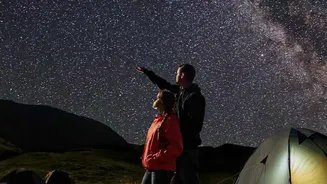

Far from the glare of city lights lies a celestial spectacle waiting to be discovered. India, with its diverse geography, offers some of the most stunning and accessible locations in the world to witness the awe-inspiring band of the Milky Way galaxy.
The Official Dark Sky Reserve: Hanle, Ladakh
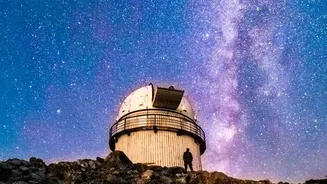
For the most dedicated stargazers, there is no better destination than Hanle in Ladakh. Designated as India’s first official Dark Sky Reserve, this high-altitude cold desert offers unparalleled viewing conditions. Located in the Changthang region at an elevation of about 4,500 metres, Hanle experiences minimal light pollution and boasts clear, dry air for most of the year. It is home to the Indian Astronomical Observatory, one of the world's highest-located sites for optical, infrared, and gamma-ray telescopes. The commitment to preserving its pristine night skies makes Hanle a world-class destination for astrophotography and naked-eye viewing. The best time to visit is from May to September when the roads are accessible and the core of the Milky Way is prominently visible.
High-Altitude Majesty: Spiti Valley, Himachal Pradesh
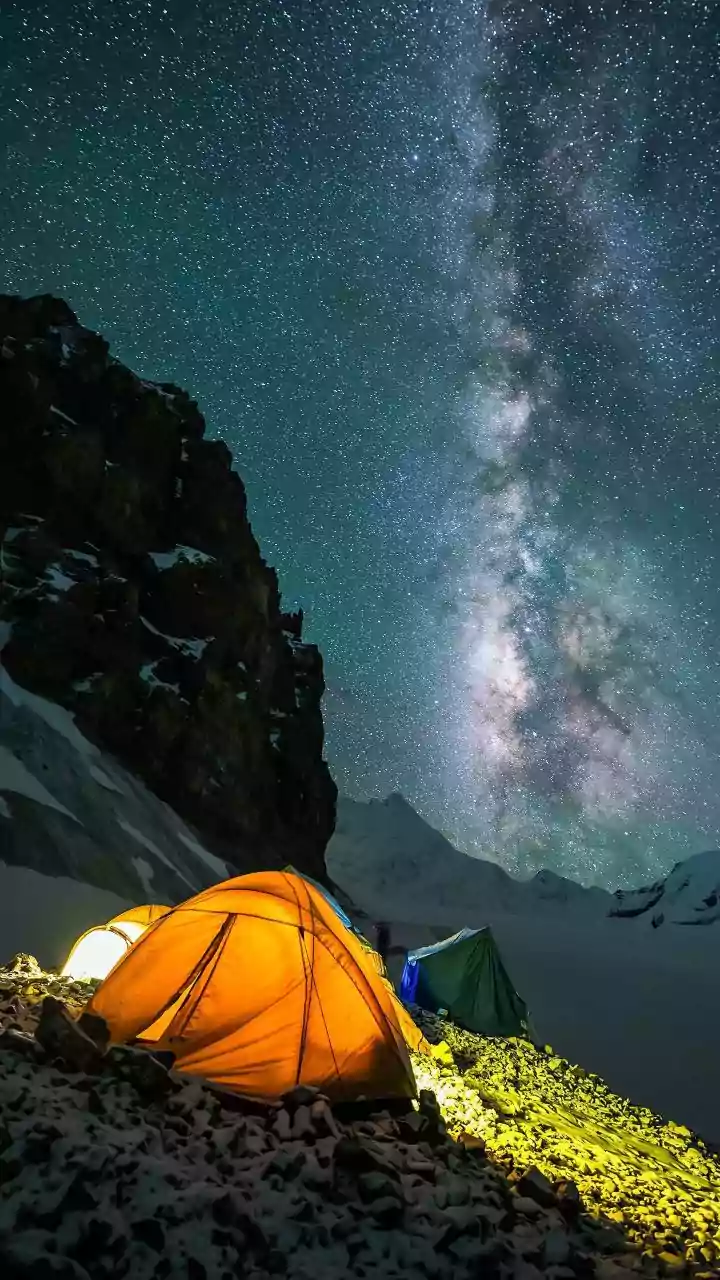
Often called 'Little Tibet', Spiti Valley is a remote, high-altitude desert renowned for its stark beauty and incredibly clear skies. Its isolation and elevation mean that light pollution is virtually non-existent, making the entire valley a natural observatory. Villages like Kaza, Kibber, and Komik serve as excellent bases for stargazers. Looking up at the night sky from here feels like being in a planetarium, with countless stars, constellations, and the dense, textured band of the Milky Way arching overhead. The landscape, dotted with ancient monasteries, adds a mystical element to the experience. The ideal window for a trip is during the summer months, from June to September, when the weather is favourable and the skies are at their clearest.
Reflections of the Cosmos: Pangong Tso, Ladakh
The famous high-altitude lake of Pangong Tso offers a stargazing experience that is both profound and surreal. At an altitude of over 4,350 metres, the thin atmosphere provides exceptional clarity. On a calm, moonless night, the vast expanse of the lake becomes a perfect mirror, reflecting the star-studded sky above. This unique phenomenon creates a feeling of being suspended in the cosmos, with the Milky Way visible both overhead and in the water below. While the journey to Pangong is challenging, the reward is a celestial view that is truly unforgettable. Camping near the lake (in designated areas) allows for an immersive night of watching the galaxy drift by. Summer is the best season to visit for both road access and optimal viewing conditions.
The Salt Desert's Endless Sky: Rann of Kutch, Gujarat
The Great Rann of Kutch offers a dramatically different but equally spectacular setting for stargazing. This vast expanse of white salt desert provides an unobstructed, 360-degree horizon, creating an immense, dark canvas for the night sky. With no hills or trees to block the view and minimal light pollution, it’s a place where the sky feels impossibly large. During the winter months, from November to February, the air is crisp and clear, making it the perfect time to visit. The experience of lying on the cool salt flats and watching the Milky Way rise is a highlight for many visitors. While the Rann Utsav festival brings crowds, venturing a little further away can secure you a private audience with the stars.
A Tropical Starlit Shore: Neil Island, Andamans
For those who prefer a warmer climate, Neil Island (Shaheed Dweep) in the Andaman and Nicobar Islands provides a unique coastal stargazing opportunity. Far from the mainland and with a low population density, the island is remarkably free from light pollution. Imagine watching the Milky Way appear over the tranquil turquoise waters of the Bay of Bengal, with the gentle sound of waves as your soundtrack. The beaches, such as Laxmanpur Beach, become perfect viewing spots after sunset. The best months for this tropical stargazing experience are from December to May, when the weather is dry and the skies are reliably clear. It’s a perfect fusion of a relaxing beach holiday and a spectacular astronomical show.