







A Digital Salute to the Sun
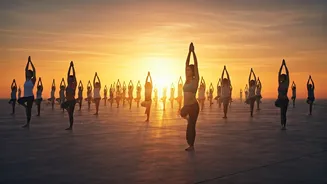
What we're witnessing is a large-scale, coordinated effort to bring people together virtually to perform Sun Salutations, or Surya Namaskars. Spearheaded by organisations like the Ministry of AYUSH and various yoga foundations, these events aim to achieve
staggering participation numbers. For instance, a recent initiative set a target of 75 crore (750 million) Surya Namaskars as part of the Azadi Ka Amrit Mahotsav celebrations. The goal isn't necessarily to have millions online at the exact same second, but to collectively contribute to a massive count over a set period, often culminating on a significant day like Makara Sankranti. Participants register online, perform the practice on their own time, and log their count digitally, creating a nationwide tapestry of wellness and cultural participation.
More Than Just a Stretch
For the uninitiated, Surya Namaskar might seem like a simple series of stretches. But it's a profound sequence with deep roots. Comprising 12 distinct postures performed in a flowing sequence, it is a complete workout in itself, designed to engage the entire body. Proponents believe its benefits extend beyond the physical; it’s considered a tool for improving flexibility, strength, and cardiovascular health, while also calming the mind and reducing stress. Each of the 12 steps corresponds to a mantra, honouring a different aspect of the sun, infusing the physical practice with a spiritual and meditative dimension. This holistic nature is a key reason why it has been chosen as the vehicle for these mass wellness movements—it’s accessible, requires no equipment, and offers a comprehensive mind-body experience.
Unity in Movement
Why do it together? The power of these events lies in their collective nature. In a country as diverse as India, a shared cultural practice like yoga acts as a powerful unifying force. Performing Surya Namaskar alongside millions of fellow citizens, even virtually, fosters a sense of community and shared identity. These events are often timed to coincide with culturally significant moments like Makara Sankranti, a festival that celebrates the sun's northward journey, adding another layer of meaning. It transforms a personal wellness routine into a collective celebration of heritage, health, and national unity. The act of logging one’s participation contributes to a larger, shared goal, making each individual feel part of something much bigger than themselves.
Tradition Meets Technology
The most fascinating aspect of this phenomenon is the seamless blend of ancient tradition and 21st-century technology. The practice is thousands of years old, but the execution is thoroughly modern. Dedicated portals and mobile apps are used for registration, instructional videos guide participants, and digital counters track the collective progress in real-time. Live-streamed sessions led by prominent yoga gurus allow for a shared experience, while social media campaigns using dedicated hashtags amplify the message and encourage more people to join. This digital infrastructure makes participation incredibly easy and accessible, breaking down geographical barriers and allowing anyone with an internet connection to be part of a national movement from the comfort of their home.
A Global Wellness Statement
Ultimately, these mass online Surya Namaskar events are more than just a weekend activity. They are part of a broader push to position yoga and traditional wellness practices at the forefront of the public health conversation in India and on the global stage. By showcasing the enthusiastic participation of millions, these initiatives serve as a powerful form of cultural diplomacy, reinforcing India's identity as the birthplace of yoga. It's a statement about valuing heritage, promoting holistic health, and harnessing technology to build community. As millions synchronise their breath and movement, they are not just improving their own well-being but are also contributing to a vibrant, modern expression of India's ancient wisdom.