



Source Your Flowers Thoughtfully
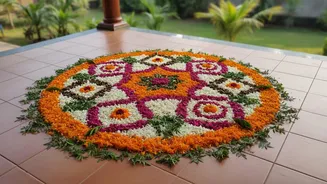
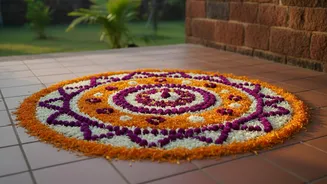
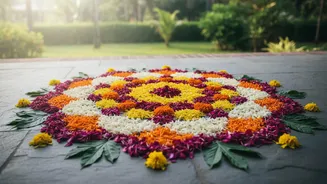
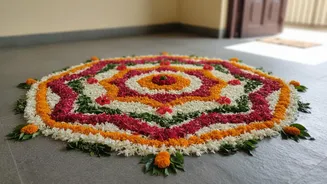
The most sustainable pookkalam begins with where your flowers come from. Instead of buying flowers that have been transported over long distances, try to use blooms from your own garden or local community. Traditionally, Onam celebrations utilized locally
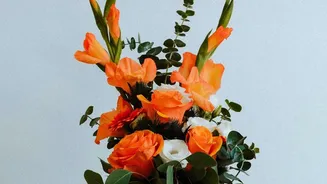
available flowers like thumba (Ceylon slitwort), chethi (ixora), hibiscus, and jasmine. Sourcing locally not only reduces the carbon footprint associated with transportation but also supports local growers and the seasonal economy. If you do buy from a market, ask for seasonal and locally grown varieties to ensure your pookkalam is as fresh and eco-friendly as possible.
Embrace Nature's Full Palette
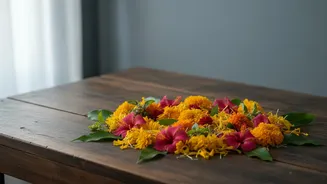
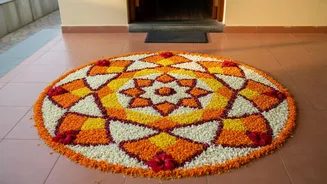
A stunning pookkalam doesn't have to rely solely on exotic or artificially coloured petals. Look around your home and garden for a wider range of natural materials. Brightly coloured leaves, both green and dried, can create wonderful textures and borders. In the kitchen, you can find natural colouring agents like turmeric powder for yellow, rice flour for white, and various pulses or coloured rice for different shades and textures. These alternatives reduce the demand for commercially dyed flowers, which can contain chemicals, and add an authentic, earthy touch to your design.
Say No to Synthetic Materials
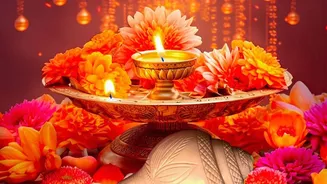
One of the biggest culprits of festival waste is the inclusion of non-biodegradable materials. Avoid using plastic glitter, synthetic colours, foam shapes, or plastic-based decorative items in your pookkalam. These materials complicate disposal and contaminate the organic waste, preventing it from being composted. Instead, opt for natural decorations. Small clay diyas or traditional brass lamps can be placed around the design for a beautiful evening glow. The beauty of a pookkalam lies in its natural essence; keeping it free of plastics preserves its purity and makes cleanup much kinder to the environment.
Rethink the Base of Your Design
Traditionally, pookkalams were created on a clean floor, sometimes prepared with a layer of cow dung, which has natural anti-bacterial properties. In modern homes, many people use plastic sheets as a base to protect floors and make cleanup easier. However, this creates unnecessary plastic waste. Consider going back to basics by simply drawing your outline with chalk or rice powder directly on a clean floor or balcony. If a base is needed, a large banana leaf or a collection of smaller leaves can serve as a beautiful and fully compostable alternative.
Plan for a Green Afterlife
The life of a pookkalam doesn't have to end when the festival is over. The flowers and leaves are valuable organic matter that can be returned to the earth. Instead of sweeping the petals into the general waste, collect them for composting. If you have a home compost bin, the pookkalam materials are a perfect addition. For those in apartments, many communities now have designated organic waste collection points. Some people also repurpose the petals by drying them for future use in crafts or creating fragrant potpourri. This final step closes the loop, turning your beautiful floral creation back into nourishment for the soil.
Consider Size and Significance
While large, elaborate pookkalams are breathtaking, a smaller, more intricate design can be just as meaningful and significantly less wasteful. Onam tradition involves adding a new layer to the pookkalam each day for ten days, starting with a small circle. Embracing this gradual process with a modest size can be a powerful way to focus on the daily ritual rather than a grand, resource-intensive display. A compact pookkalam in a hallway or on a balcony can still radiate festive joy and welcome King Mahabali with the same devotion, proving that what matters most is the spirit behind the tradition, not the scale.