



What Is Nordic Walking, Exactly?
At first glance, Nordic walking might look like hiking with poles, but the technique is entirely different. Originally developed in Finland as a summer training method for cross-country skiers, it's a specific fitness technique that uses specially designed
poles to engage the upper body. Unlike trekking poles, which are primarily used for balance on uneven terrain, Nordic poles are used to propel you forward. The core movement involves planting the poles at an angle behind you and pushing off with each stride. This transforms a simple walk into a coordinated, whole-body exercise that engages your arms, shoulders, chest, and back.
The Full-Body Fitness Advantage
The main reason for Nordic walking's renewed appeal is its efficiency. While regular walking primarily works the lower body, adding poles activates up to 90% of your body's muscles. This increased muscle engagement means you burn significantly more calories—with some studies suggesting an increase of 20% or even more compared to walking at the same pace. The action of pushing off with the poles strengthens your arms, tones your core, and improves your posture by encouraging you to walk upright with open shoulders. It provides a robust cardiovascular workout and enhances muscular strength, all while the poles help reduce the impact on your knees and hips, making it an excellent low-impact option.
Why the Sudden Revival?
So why is this decades-old technique suddenly popular again? The trend appears to be driven by a collective search for accessible, effective, and sustainable forms of exercise. Nordic walking hits all the right notes: it’s done outdoors, can be adapted to any fitness level, and doesn't require a gym membership. It's particularly appealing to those looking for a more challenging workout than walking but who want to avoid the high-impact stress of running. Recent research continues to validate its benefits, from improving balance and reducing chronic pain to boosting mental health, making it a well-rounded activity for people of all ages.
Gearing Up: It's All About the Poles
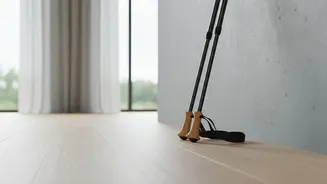
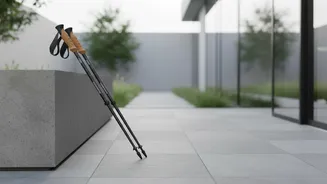
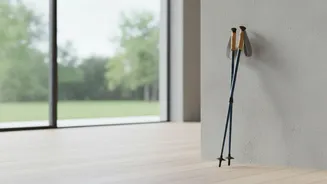
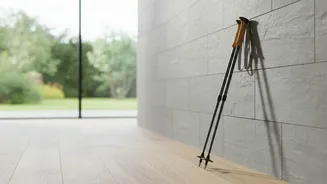
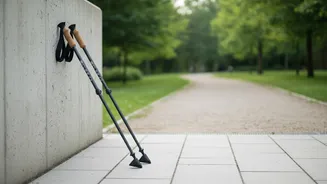
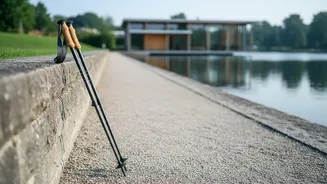
Getting started requires one crucial piece of equipment: proper Nordic walking poles. It's important not to confuse them with trekking or ski poles, which are designed differently. Look for poles that are lightweight and feature a specific glove-style strap system. This strap allows you to push off and release the pole grip on the backswing, which is essential for the correct technique. Many experts recommend adjustable-length poles for beginners, as they can be fine-tuned to your height or shared with others. A common way to find the right height is to hold the pole so your elbow is at a 90-degree angle with your forearm parallel to the ground. Investing in a quality pair will make the experience smoother and more effective.
Your First Steps into Nordic Walking
The technique can feel a bit awkward at first, so patience is key. The basic motion is to walk with your opposite arm and leg forward, just like in regular walking. As you step forward with your left foot, your right arm swings forward to plant the pole. The key is to plant the pole tip roughly in line with the heel of your opposite foot. Push the pole backward to propel yourself forward, keeping your arms relatively straight. Start with short 15 to 20-minute sessions on a flat surface to get a feel for the rhythm. Focus on maintaining good posture—walking tall with your shoulders relaxed and looking ahead. Many beginners find watching a few instructional videos or taking a lesson from a certified instructor incredibly helpful to nail the form.