



An Unbroken, 360-Degree Horizon
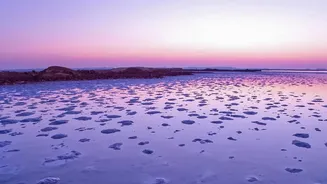
The defining feature of the Great Rann of Kutch is its extraordinary flatness. This seasonal salt marsh, covering over 2,900 square miles, is almost entirely devoid of trees, hills, or buildings to interrupt the view. For a stargazer, this translates
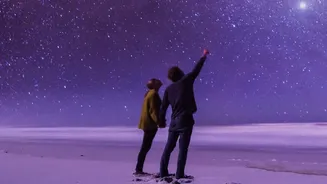
to an unobstructed, 360-degree horizon where the sky feels less like a dome above and more like a sphere that completely surrounds you. This unique geography allows for the observation of celestial objects right down to the horizon, a rare opportunity in most parts of the world. On a clear day, the horizon is so distant you can sometimes perceive the curvature of the Earth.
Freedom from Light Pollution
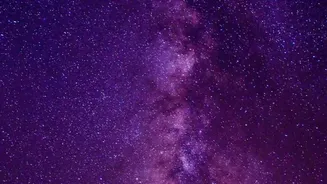
The Rann of Kutch's remoteness is its greatest asset for viewing the night sky. Far from any major city—the nearest, Bhuj, is over 50 miles away—the region boasts some of the darkest skies in India. Astronomers classify its sky quality as Bortle Class 2 or 3, a scale where Class 1 is a pristine wilderness sky and Class 9 is a major city center. This near-total absence of artificial light means the Milky Way is often visible in stunning detail, appearing as a structured river of light rather than a faint cloud. Even faint stars and distant celestial objects shine with a clarity that most urban dwellers have never experienced.
A Perfect Climate for Clarity
The best time to visit the Rann of Kutch for stargazing coincides with its best weather: the winter months from November to February. During this period, the post-monsoon air is exceptionally dry with very low humidity and minimal cloud cover. This lack of atmospheric moisture reduces haze and distortion, resulting in remarkably clear and stable viewing conditions. Stars twinkle less and burn with a steady intensity, a sign of the calm atmosphere that astrophotographers prize. This dry, cool air is crucial for capturing sharp, detailed images of the night sky.
The Salt Flat's Surprising Role
The ground itself plays a part in the Rann's celestial spectacle. After the monsoon waters evaporate, they leave behind a vast crust of white salt. This highly reflective surface creates two distinct, equally magical experiences. On moonless nights, the dark sky offers maximum contrast for viewing stars and galaxies. But on nights with a full moon, the salt flats glow with a soft, silvery light, reflecting the moonlight upwards. This creates a surreal environment where the landscape is gently illuminated from below, bright enough to walk without a flashlight, yet the sky remains dark enough to see countless stars.
A Hub for Celestial Events
The combination of these factors makes the Rann an ideal location for observing annual celestial events like meteor showers. The Geminids in December, for example, can be viewed in their full glory against the pitch black sky. Many local tour operators and resorts, particularly during the popular Rann Utsav festival (which runs from November to March), offer guided stargazing sessions. Some even provide telescopes and expert guides to point out constellations, planets, and deep sky objects, turning a beautiful view into an educational journey through the cosmos.