






Peak Nutrition, Peak Flavour
The primary reason experts champion seasonal eating is nutritional potency. When a fruit is allowed to ripen naturally on the plant and is harvested at its peak, it contains its highest concentration of vitamins, minerals, and antioxidants. Fruits that
are picked prematurely to be shipped long distances and artificially ripened simply don't pack the same punch. A locally sourced, seasonal guava in winter, for example, often has more Vitamin C than one that has travelled for weeks to reach you out of season. This natural ripening process also develops complex sugars and aromatic compounds, resulting in a depth of flavour that cold storage and ethylene gas can never replicate.
Kinder on Your Wallet and the Planet
Simple economics dictates that when a product is abundant, its price drops. During their peak season, fruits flood the local markets, leading to lower prices for consumers. You're not paying for long-haul transportation, extended refrigeration, or the complex logistics of getting a delicate fruit from another part of the world. This makes eating healthy more affordable. Furthermore, choosing seasonal and local produce significantly reduces your carbon footprint. Less transport fuel, less energy for storage, and support for local farmers are all powerful environmental benefits of simply enjoying what's growing near you, right now.
Summer's Bounty (March - June)
As the temperature soars, nature provides us with fruits that are hydrating and cooling. This is the season of the king of fruits, the Mango, rich in Vitamins A and C. Don't forget Watermelon and Muskmelon, which are over 90% water and perfect for replenishing fluids. Lychees offer a burst of Vitamin C and potassium, while the humble Jamun (Indian Blackberry) starts to appear towards the end of summer, loaded with antioxidants and known for its blood-sugar-regulating properties.
Monsoon Harvest (July - September)
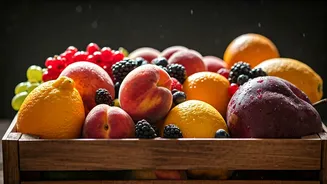
The monsoon brings a welcome respite from the heat, but also a higher chance of infections. Thankfully, the fruits of this season are packed with immunity-boosting nutrients. Peaches and Plums are excellent sources of antioxidants and fibre. Cherries, with their anti-inflammatory properties, make a brief but glorious appearance. This is also a prime time for Pomegranates to begin appearing, their jewel-like seeds packed with powerful compounds that support heart health and fight inflammation. Guavas also start their season, offering an incredible amount of Vitamin C to help keep your immune system strong.
Winter's Jewels (October - February)
Winter is the season for citrus. Oranges, Kinnows, and other citrus varieties are at their sweetest and juiciest, providing a massive dose of Vitamin C to ward off colds and flu. This is the best time for fresh Apples from the northern states, packed with fibre and flavonoids. Pomegranates are in their prime, and you'll also find Custard Apples (Sitaphal), a creamy, delicious fruit rich in potassium and magnesium. Grapes also have a strong winter season, offering a convenient and antioxidant-rich snack.
Making It a Habit
Embracing seasonal eating doesn't require a complete diet overhaul. Start small. The next time you're at the sabzi mandi or supermarket, take a moment to see what's piled high and being sold at a good price—that's usually what's in season. Challenge yourself to try one seasonal fruit each week that you don't normally buy. Instead of reaching for a waxy, imported apple in the middle of summer, grab a slice of watermelon. This small shift in perspective connects you more deeply with nature's rhythms and provides a host of benefits.