






More Than Just a Meal
For astronauts confined to a capsule far from Earth, food is more than just sustenance; it's a crucial psychological anchor. The familiar tastes and aromas of home can combat stress and the 'menu fatigue' that plagues long missions. Recognizing this,
the Indian Space Research Organisation (ISRO) has made providing a taste of home a priority. The goal is to ensure that while the environment is alien, the meal is not. This focus on familiar cuisine is a staple for all space-faring nations, as American and Russian astronauts also have menus tailored to their tastes. The carefully curated Indian menu for Gaganyaan aims to provide comfort and a morale boost, connecting the crew to their cultural roots billions of miles away.
The Zero-Gravity Kitchen Rules
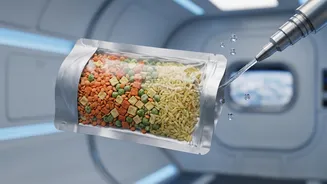
Designing food for space is a scientific feat governed by the strict laws of physics in a zero-gravity environment. The primary rule is simple yet critical: no crumbs. Stray food particles don't fall to the floor; they float, posing a significant risk to sensitive electronic equipment and ventilation systems. This is why bread, for example, is off the menu. Furthermore, all food must have a long shelf-life, be lightweight, and nutritionally dense to provide around 2,500 calories per day. Liquids pose their own challenge, as spills can float and cause short circuits. Special packaging and delivery mechanisms, such as sachets that allow water to be injected for rehydration and straws for drinking, are essential.
An Interstellar Menu by DFRL
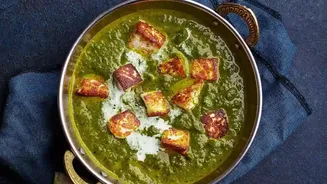
The task of developing this specialized cuisine has fallen to the Defence Food Research Laboratory (DFRL) in Mysuru, a lab under the Defence Research and Development Organisation (DRDO). Leveraging its long experience in creating food for soldiers in extreme conditions, DFRL has developed a diverse menu of around 30 to 50 Indian dishes. The list reads like a culinary tour of India, adapted for the cosmos. It includes breakfast favourites like idli-sambar and upma, hearty meals like chicken biryani, vegetable pulav, dal makhani, and aloo paratha, and desserts such as moong dal halwa and sooji halwa. Even staples like mango pickle have been specially formulated to accompany the astronauts. The food is generally prepared to be mildly spicy, with optional spice sachets for those who prefer more heat.
From Kitchen to Cosmos
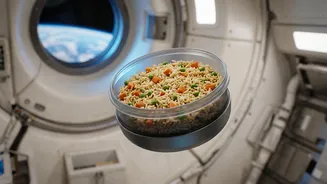
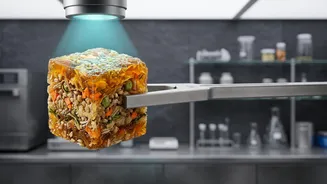
The process of making these dishes space-ready is highly technical. Most foods are dehydrated or thermostabilized (heat-processed) and sealed in special packets. To eat a dehydrated meal, like biryani or khichdi, an astronaut will inject water into the packet using a special device. The rehydrated food can then be warmed in a food heater onboard the spacecraft. Liquids are consumed from specially designed containers to prevent spillage. This entire system, from the food itself to the heaters and cutlery, has been developed by DFRL to ensure the astronauts can eat safely and efficiently. The final menu is selected in consultation with the astronauts themselves, ensuring they have meals they enjoy during their mission.
Nutrition and the Future
Ensuring optimal nutrition is a continuous and evolving process. ISRO recently launched the 'Santulan' program, bringing in nutritionists to create customized meal plans for the Gaganyaan crew based on their individual health profiles during training. This collaboration with institutions like the Indian Council of Medical Research–National Institute of Nutrition (ICMR-NIM) aims to tailor diets that account for the physiological changes that occur during spaceflight. The challenge is immense, as proven by recent international missions where only a few Indian dishes, like gajar ka halwa and moong dal halwa, could be certified for flight on the International Space Station due to rigorous testing and tight timelines. Each dish must be a perfect blend of taste, safety, and nutrition—a small but vital part of India's giant leap into human space exploration.