



The Unforgiving Rhythm of Running
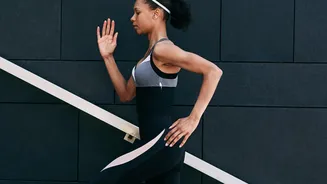
Running is a masterclass in repetition. With every stride, your body absorbs a ground reaction force that can be up to 2.5 times your body weight. This force travels up the kinetic chain, from your ankles to your knees, hips, and lower back. The movement
is almost exclusively linear, meaning the same joints and muscles are stressed in the same way, over and over. While this is fantastic for building cardiovascular endurance and strengthening the specific muscles needed for forward propulsion, it can lead to overuse injuries. Common complaints among runners include patellofemoral pain syndrome, also known as 'runner's knee,' Achilles tendinopathy, and stress fractures in the feet and shins, all stemming from this repetitive impact.
The Varied Landscape of Dance
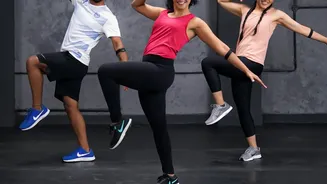
Dance, in contrast, is defined by its variety. Instead of a straight line, movements are multi-directional: side-to-side, rotational, and fluid. While some styles like hip-hop or high-energy Zumba can be high-impact, many forms like ballroom, salsa, or contemporary dance are significantly gentler on the joints. The impact is not only often lower but also more distributed. Movements in dance lubricate the joints by encouraging the production of synovial fluid, which helps them function smoothly. This variety challenges a wider array of muscles, including smaller stabilising muscles around the hips, knees, and core that running often misses. This holistic muscle engagement provides better support for the entire skeletal structure, improving balance and posture.
Strength and Stability: A Tale of Two Workouts
Both activities build strength, but in different ways. Running develops powerful leg and glute muscles designed for forward efficiency. However, it can sometimes lead to imbalances if supporting muscles, like the hip abductors, are neglected. This can cause issues like 'hip drop', where the pelvis becomes unstable during a stride, putting extra strain on the knees and lower back. Dance, on the other hand, is a full-body workout that builds strength more symmetrically. The constant shifting of weight, turning, and balancing required in most dance forms enhances coordination, flexibility, and core stability. This creates a strong, supportive frame that not only protects the joints during the activity itself but can also reduce the risk of injury in daily life.
Injury Profiles: Predictable vs. Diverse
The injury profiles for running and dancing reflect their core differences. Running injuries are predominantly overuse issues caused by repetitive stress on the lower body. Dancers also suffer from overuse injuries, such as 'dancer's tendinitis,' but the variety of movement can also lead to different kinds of acute injuries. Ankle sprains are the most common traumatic injury for dancers, often resulting from an awkward landing from a jump or a misstep during a turn. Knee and hip injuries are also prevalent, often linked to the extreme ranges of motion and rotational forces, such as forcing turnout in ballet. However, some research suggests that because dance training often starts at a young age, dancers may develop better muscle control that can help prevent certain injuries like ACL tears compared to other athletes.
Which One Is Right for You?
The choice between running and dancing isn't about which is definitively 'better', but which is better for your body and goals. If your joints are healthy and you love the meditative rhythm and high-calorie burn of a good run, it's a fantastic option. However, if you have a history of joint pain, are looking for a lower-impact alternative, or want to improve overall flexibility, balance, and coordination, dance might be a more suitable choice. Many styles like ballroom or salsa are gentle enough for people managing conditions like arthritis. Ultimately, the most effective workout is one you enjoy enough to do consistently. Both running and dancing offer profound physical and mental health benefits, from strengthening bones to improving your mood. The best approach might even be to incorporate both, using dance as a form of cross-training to build the supportive strength and mobility that can make you a more resilient runner.