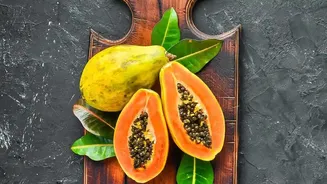







India's love for tropical fruits is legendary, but when it comes to the daily diet, a classic question emerges: mango or papaya? Both are delicious and packed with goodness, but their nutritional profiles offer different benefits.
A Nutritional Snapshot
In the vibrant landscape
of Indian fruits, mango, the 'king of fruits', and the humble papaya are both year-round favourites for their taste and health benefits. While both are celebrated, they serve different nutritional purposes. Mango is revered for its rich, sweet flavour and is packed with vitamins and antioxidants. Papaya, with its milder taste, is often hailed for its digestive properties and lower sugar content. Understanding their unique strengths can help you make a more informed choice for your health goals.
The Calorie and Sugar Question
For those managing their weight or sugar intake, this is a key battleground. Papaya is the clear winner for being lower in both calories and sugar. A 100-gram serving of papaya contains around 43 calories and 8 grams of sugar. In contrast, the same amount of mango has about 60 calories and nearly 14 grams of sugar. This makes papaya a lighter option, especially for those with diabetes or on a calorie-controlled diet. However, despite having more sugar, mango has a lower glycemic index (GI) of around 51, compared to papaya's 59. This means mango may cause a slower, more gradual rise in blood sugar levels.
The Vitamin C and A Champions
When it comes to vitamins, each fruit has its own area of excellence. Papaya is a vitamin C powerhouse, with a 100-gram serving providing over 60 mg, which is more than the recommended daily intake for an adult in India. Mango is no slouch, offering a respectable 36 mg of vitamin C, but it truly shines in its vitamin A content. Thanks to its high beta-carotene levels, which give it that golden-orange hue, mango is superior for eye health and skin. Just one medium mango can provide a significant portion of your daily vitamin A needs.
The Digestion Debate: Papain vs Fibre
Papaya is famous for its digestive prowess, and for good reason. It contains a unique enzyme called papain, which helps break down proteins, making it an excellent fruit to eat after a heavy meal. This can aid in reducing bloating and improving gut motility. Mango also supports digestion, primarily through its fibre and certain enzymes like amylase that help break down carbohydrates. Both fruits contain a similar amount of dietary fibre, at around 1.6 to 1.7 grams per 100g, which is crucial for preventing constipation and maintaining a healthy gut.
Role in the Indian Diet
In India, both fruits are dietary staples, but they are used differently. Mango is celebrated seasonally, enjoyed fresh during the summer and used in a vast array of dishes from aamras and lassi to pickles and chutneys. Its rich flavour makes it a versatile ingredient. Papaya, available year-round, is more commonly eaten fresh, often for breakfast or as a snack to aid digestion. Raw papaya is also a popular vegetable in many regional cuisines, used in curries and salads, where it is valued for its health properties, including its anti-inflammatory compounds.
Which One Should You Choose?
The 'better' fruit really depends on your individual needs. If your primary goal is weight management, lower sugar intake, or a significant vitamin C boost, papaya is your best bet. Its lower calorie count and high water content make it a filling, hydrating snack. If you are looking to boost your vitamin A intake for better eye and skin health, or want a fruit richer in a wider range of vitamins like E and folate, mango is the superior choice. Its antioxidant profile, including the unique compound mangiferin, also offers anti-inflammatory benefits.