



Gather Your Essential Gear
Before you begin, assembling the right ingredients and equipment is crucial for a successful brew. At its core, kombucha is simply fermented sweet tea. You will need a SCOBY (Symbiotic Culture of Bacteria and Yeast), the living culture that drives the fermentation.
You can get one from a fellow brewer or purchase a quality one online. It should come packed in strong starter tea. This starter tea is just as important as the SCOBY itself, as it lowers the initial pH of your brew to protect it from unwanted microbes. You’ll also need black or green tea (unflavored is best), plain cane sugar, filtered water, a large glass jar (at least 4 litres), a tightly woven cloth cover, and a rubber band. Cleanliness is paramount; ensure your hands, jar, and any utensils are thoroughly cleaned to avoid contamination.
The First Fermentation: Making the Tea Magic Happen
The first fermentation, or F1, is where sweet tea transforms into tangy kombucha. Start by boiling about 4 cups of your filtered water. Remove it from the heat, add your tea bags or loose-leaf tea, and stir in about 1 cup of sugar until it dissolves completely. Let this concentrate steep for 10-15 minutes before removing the tea. Pour the hot sweet tea into your large glass jar and top it up with the remaining cold filtered water. It is critical to let this mixture cool to room temperature (around 20-29°C). Adding your SCOBY and starter tea to warm liquid can damage or kill the delicate culture. Once cooled, pour in your starter tea and gently place the SCOBY on top. Cover the jar with the cloth and secure it with a rubber band. This allows the brew to breathe while keeping out dust and pests.
Patience and Tasting: When is F1 Done?
Place your jar in a warm spot with good airflow, away from direct sunlight, and let it ferment. The ideal temperature range is generally between 22–26°C. The fermentation time for F1 typically ranges from 7 to 21 days. The exact duration depends heavily on the temperature of your room; warmer temperatures speed up the process. After about seven days, you can start tasting your brew. Simply slide a straw down the side of the jar (avoiding the SCOBY) and take a small sip. At first, it will be very sweet. As the days go on, the sweetness will decrease and a pleasant tartness will develop. The perfect time to stop F1 is entirely up to your personal preference. When it reaches a balance of sweet and tangy that you enjoy, it's ready for the next stage.
The Second Fermentation: Creating Fizz and Flavor
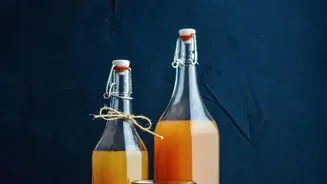
The second fermentation, or F2, is the optional but exciting step where you add carbonation and flavour. First, carefully remove the SCOBY from your jar with clean hands. Then, measure out and reserve about two cups of your freshly made kombucha to use as the starter tea for your next batch. The rest of the kombucha can now be bottled. This is where you get creative. Add small amounts of fruit juice, fresh or frozen fruit pieces, or herbs like ginger directly into pressure-safe, airtight bottles (flip-top bottles are ideal). Pour the kombucha over the flavourings, leaving about an inch of headspace at the top. Seal the bottles tightly and leave them at room temperature for 2 to 5 days. The added sugar from the fruit will feed the remaining yeast, creating carbon dioxide that gets trapped in the bottle, resulting in natural carbonation. Be sure to 'burp' the bottles daily to release excess pressure. Once fizzy to your liking, refrigerate them to stop the fermentation.
Maintaining Quality and a Healthy SCOBY
To ensure consistently great kombucha, SCOBY health is key. Always handle your SCOBY with clean hands. Between batches, you can store your SCOBY in a glass jar with the starter tea you set aside, covered with a cloth, at room temperature. This is often called a 'SCOBY hotel'. Avoid refrigerating your active SCOBY, as the cold can make the culture sluggish or dormant. If you see fuzzy, black, or green spots, that's mold, and the entire batch and SCOBY must be discarded. The most common cause of mold is insufficient starter tea, which fails to make the brew acidic enough from the start. If your kombucha becomes too sour, you simply let it ferment for too long. If it's too sweet, it needs more time. Keeping notes on your timing and tasting will help you perfect your process.