





Redefining the 'Goldilocks Zone'
For as long as we have scanned the cosmos, the guiding principle has been to find a planet like our own. This involves looking for rocky worlds within the 'habitable zone' of a star, often called the 'Goldilocks zone', where conditions are just right
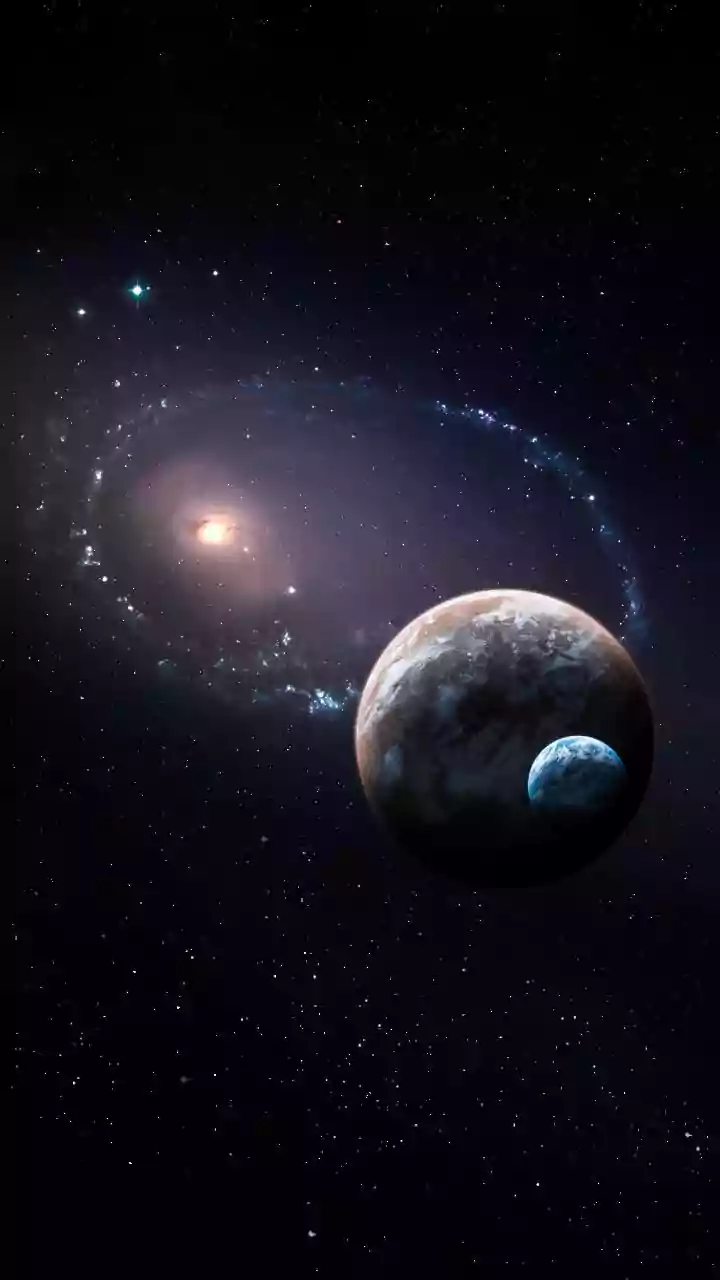
for liquid water to exist on the surface. But this approach has a built-in assumption: that Earth is the best possible model for a life-bearing planet. Scientists like Dirk Schulze-Makuch, a geobiologist at Washington State University, are challenging this Earth-centric view. They propose that there could be planets out there that are older, larger, warmer, and wetter than Earth, making them potentially more suitable for life to emerge and flourish. This isn't about finding a new home for humanity, as the identified candidates are all over 100 light-years away, but about broadening our understanding of where and how complex life might exist in the universe.
The Superhabitable Checklist
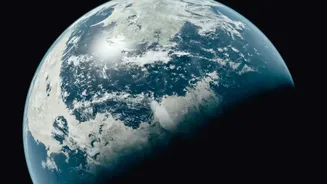
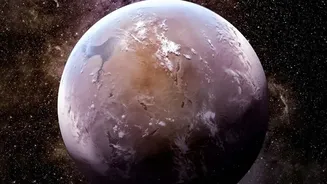
So, what makes a planet 'better' than Earth? Researchers have developed a checklist for superhabitability. An ideal candidate would be about 1.5 times the mass of Earth and about 10% larger. This increased size means it would retain its internal heat for longer, powering a protective magnetic field, and its stronger gravity would hold onto a thicker atmosphere. A slightly warmer average surface temperature, around 25°C, could promote greater biodiversity, similar to Earth’s tropical rainforests which are bursting with life. Abundant water is a must, but arranged in shallow seas and archipelagos rather than vast, deep oceans, allowing light to penetrate and support aquatic ecosystems more effectively. Finally, the planet should be ancient, somewhere between 5 to 8 billion years old. It took nearly 4 billion years for complex life to appear on Earth, so an older planet would have had a longer, more stable period for evolution to work its magic.
Why Our Sun Isn't Perfect
Perhaps the most surprising criterion involves the host star. Our Sun, a G-type yellow dwarf, has a relatively short lifespan of about 10 billion years. Stars more massive than our sun burn out even faster. The sweet spot for a superhabitable planet may be a K-type orange dwarf star. These stars are cooler, smaller, and less luminous than the Sun, but they are incredibly stable and have lifespans ranging from 20 to 70 billion years. This provides a much longer and more consistent window for life to emerge and evolve, without the threat of the star running out of fuel just as things are getting interesting. K-dwarf stars also emit less dangerous UV radiation, which could be beneficial for life.
Potential Cosmic Edens
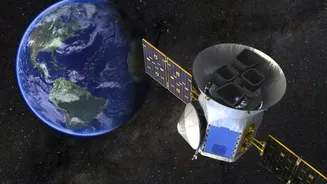
This is not just theoretical. In a study led by Schulze-Makuch, astronomers sifted through the 4,500 known exoplanets at the time to identify potential candidates. They flagged 24 top contenders that meet some of the key superhabitability criteria. None of these are a perfect match, and all are too far away to visit or observe in detail with current technology. However, they represent exciting targets for future, more powerful instruments like the James Webb Space Telescope. The goal is to focus precious telescope time on the worlds that have the most promising conditions for hosting not just microbial life, but large, complex ecosystems. By studying these distant worlds, we can begin to test our theories about what truly makes a planet a haven for life.