








The Silent Epidemic of Hidden Hunger
On the surface, many Indian households may seem food secure, with enough calories to get through the day. However, a different, more insidious form of malnutrition often lurks beneath: hidden hunger. This isn't about the quantity of food but its quality.
Hidden hunger, or micronutrient deficiency, occurs when people lack essential vitamins and minerals like iron, zinc, and vitamin A. The consequences are severe, leading to impaired growth in children, weakened immune systems, and reduced productivity in adults. In India, the scale of this problem is staggering, with a significant portion of the population, especially women and children, suffering from deficiencies that undermine public health and the nation's developmental potential.
Crop Diversity: A Promising Solution?
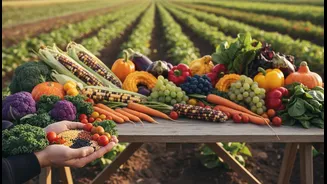
In the fight against hidden hunger, one of the most advocated solutions is promoting crop diversity. The logic is intuitive and appealing: if farmers cultivate a wider variety of crops—including traditional grains, pulses, fruits, and vegetables—rather than relying on a few high-yield staples like rice and wheat, household diets will naturally become more diverse and nutritious. This approach suggests that moving away from monotonous, cereal-dominated diets can directly tackle micronutrient deficiencies at the source. Many studies have indeed observed a positive link, or association, between greater on-farm diversity and better nutritional outcomes in communities. This has led to a strong push for nutrition-sensitive agriculture that champions a broader portfolio of crops.
The Crux of the Matter: Association vs. Causation
Here is where we arrive at the headline's critical point. In research, finding an 'association' simply means two things tend to happen together. For example, areas with high crop diversity might also have lower rates of hidden hunger. But this does not automatically prove that the crop diversity caused the better nutrition. This is the classic trap of confusing correlation with causation. An easy analogy is that ice cream sales and sunburn cases are correlated—they both rise in the summer—but eating ice cream does not cause sunburn. A third factor, the hot sun, causes both. In nutrition research, this distinction is vital. Just because diverse farms are associated with healthier families doesn't mean it's the only, or even the main, reason for their good health.
What Else Is at Play? The Confounding Factors
The relationship between what's grown on a farm and what a family eats is complicated by numerous other factors. For instance, a farmer who chooses to diversify their crops might also have a higher level of education, more income, or better access to markets where they can sell surplus and buy other nutritious foods. These socioeconomic factors could be the real drivers of better nutrition, with crop diversity being just another choice made by an already empowered household. Furthermore, factors like access to clean water, sanitation, and healthcare services also play a significant role in a child's nutritional status, independent of the farm's output. Therefore, there isn't one universal causal pathway from diverse crops to healthy people; it's a web of interconnected influences.
Toward Smarter, Holistic Policies
Understanding this limitation is not about dismissing the value of crop diversity, which is crucial for agricultural resilience and sustainability. Instead, it calls for smarter, more holistic policymaking. Simply encouraging farmers to plant more crop types without addressing underlying issues might yield disappointing results. Effective strategies must go further. They should include improving market access so farmers can profit from diverse crops, strengthening nutrition education to promote healthier eating habits, and ensuring that public health initiatives like food fortification and sanitation are robust. Policies must tackle the multiple barriers that prevent families from achieving nutritional security, from poverty and lack of infrastructure to ingrained dietary habits. The goal is to build a supportive ecosystem where the benefits of crop diversity can be fully realised.