


India's Next Interplanetary Frontier
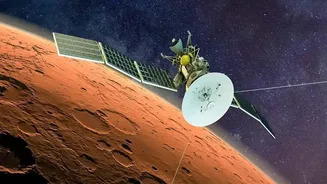
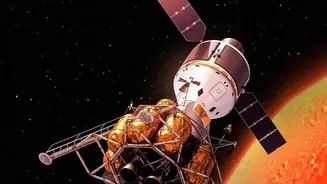
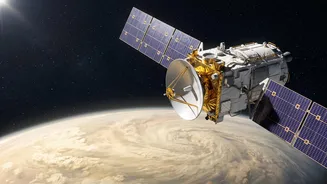
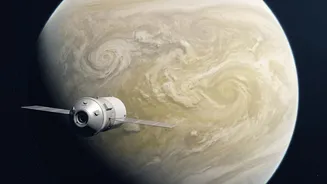
Shukrayaan-1, formally known as the Venus Orbiter Mission, represents India's first dedicated mission to explore the second planet from the Sun. After the historic Mangalyaan mission to Mars, this project cements ISRO's position as a key player in deep-space
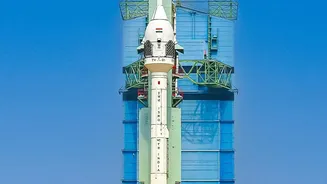
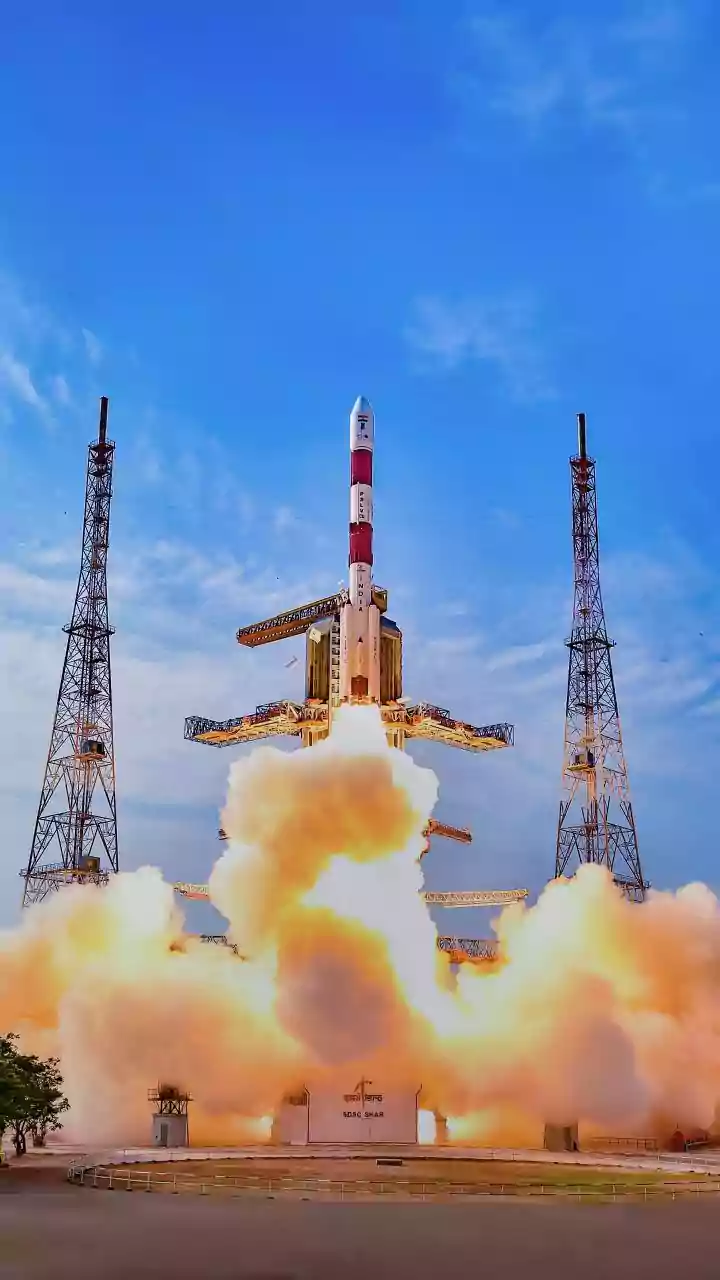
exploration. The mission, which received formal cabinet approval in September 2024, is currently scheduled for a March 2028 launch aboard the powerful LVM-3 rocket. Upon its arrival after a 112-day journey, the orbiter will position itself in a large elliptical orbit around Venus to begin its scientific investigations. This mission is not just about planting a flag; it's a sophisticated scientific endeavour to understand a world that, despite its similarities in size to Earth, evolved into a planetary inferno.
Why Venus? Earth's Hostile Twin
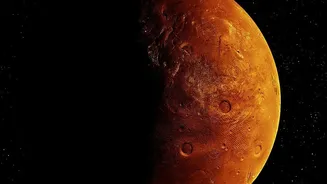
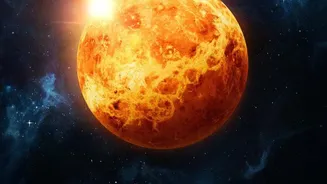
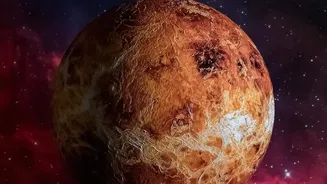
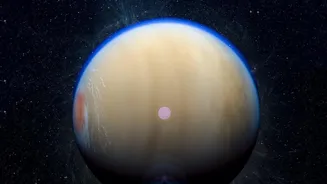
Venus is often called Earth's twin because of its similar size, mass, and density. However, the similarities end there. Venus is the most hostile planet in our solar system, with a surface temperature hot enough to melt lead, averaging over 460°C. Its atmosphere is a crushing force, with surface pressure over 90 times that of Earth's, and it's shrouded in thick clouds of sulfuric acid. The primary reason for these extreme conditions is a runaway greenhouse effect, where a thick carbon dioxide atmosphere traps heat. For scientists, Venus serves as a natural laboratory for understanding how planetary climates can dramatically change. Studying why our twin took such a different evolutionary path can provide critical insights into Earth's own climate dynamics and future.
Decoding a Toxic Atmosphere
The core of Shukrayaan's mission, as the headline suggests, is to analyze the complex systems within Venus's dense atmosphere. This isn't just about measuring the dominant carbon dioxide. The mission aims to study the structure, composition, and dynamics of the atmosphere in unprecedented detail. The spacecraft will carry a suite of instruments designed to peer through the thick cloud cover and analyze the gases below. Scientists are keen to understand the mysterious 'super-rotation,' where the atmosphere circles the planet in just four Earth days. Another key interest is the potential presence of gases like phosphine, which was the subject of debate after a potential detection years ago. Since phosphine is associated with anaerobic life on Earth, investigating its source is a tantalizing scientific objective.
The Scientific Toolkit on Board
To achieve its goals, Shukrayaan will carry an array of approximately 19 scientific instruments, or payloads, weighing around 100 kg in total. These are a mix of Indian-developed and internationally collaborative tools. For atmospheric analysis, one key instrument is the Venus InfraRed Atmospheric Gases Linker (VIRAL), a joint effort with Russia, designed to study atmospheric gases. Other instruments will include thermal cameras, cloud monitoring sensors, and spectrometers to analyze the chemical makeup of the air. This payload is not limited to the atmosphere; a high-resolution Synthetic Aperture Radar (SAR) will map the planet's surface, which remains hidden from optical telescopes by the permanent cloud cover. This will help identify volcanic hotspots and lava flows, providing clues as to whether Venus is still geologically active.
A Mission of Global Significance
While a major milestone for India, the Shukrayaan mission is a global scientific effort. International partners, including Russia, Sweden, and Germany, are contributing payloads and expertise, making it a collaborative venture. The data gathered will be crucial for the entire scientific community, helping to piece together the puzzle of Venus's evolution. By studying its extreme greenhouse effect, Shukrayaan will provide invaluable data for climate modeling on Earth. Moreover, understanding the conditions on an Earth-sized planet like Venus helps scientists refine their search for habitable exoplanets orbiting other stars. As India prepares for this challenging mission, it's not just exploring another planet; it's contributing vital knowledge to our understanding of planetary science and our own place in the cosmos.