



More Than Just Pretty Pictures
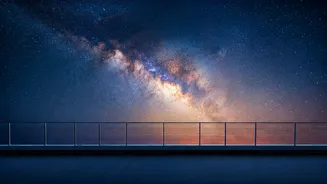
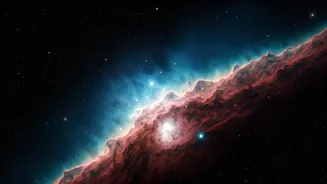
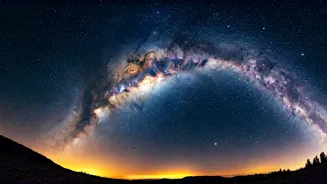
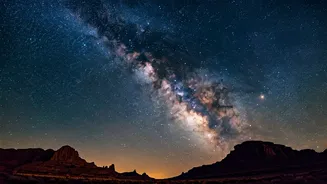
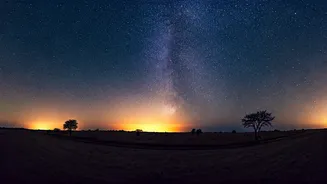
Across social media feeds, a quiet revolution is happening. Hashtags like #astrophotography and #nightsky are filled with breathtaking images of swirling nebulas, distant galaxies, and the Milky Way arcing across the horizon. These are not from the Hubble
Space Telescope. They are the work of passionate amateurs—doctors, engineers, students, and artists—who spend hours under the stars. For them, this hobby is more than just taking a beautiful photo. It's a profound connection to the cosmos, a patient pursuit of capturing something impossibly vast and old on a digital sensor.
Capturing Time Itself
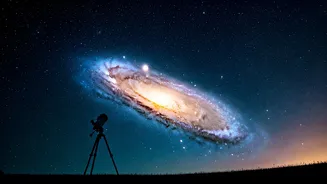
The headline's phrase, 'tracking ancient starlight,' isn't just poetic—it's literal. Light, fast as it is, takes time to travel across the universe. When you look at a star, you are seeing it as it was in the past. The nearest star system, Alpha Centauri, is over four light-years away, so we see its light as it was four years ago. Now, consider the Andromeda Galaxy, a popular target for amateur astrophotographers. It's 2.5 million light-years away. The light hitting a camera sensor in India tonight left Andromeda when early human ancestors were first walking the Earth. Every photograph of a distant galaxy is, in essence, a form of time travel. The 'stargazers' are not just photographers; they are cosmic archivists, capturing photons that have journeyed through space for millennia.
The Gear and the Grit
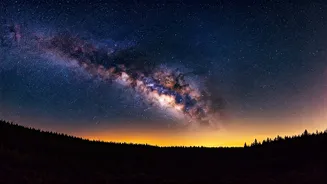
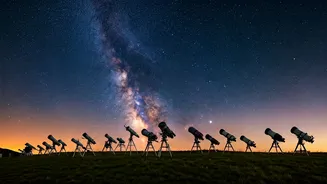
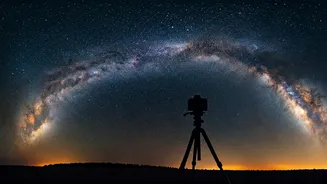
While the results are magical, the process is a blend of science, art, and incredible patience. You don't just point and shoot. Astrophotography can be done with a basic DSLR camera on a tripod for wide shots of the Milky Way, but capturing deep-sky objects like galaxies and nebulas requires more. Many enthusiasts use telescopes mounted on special 'trackers' that slowly rotate to counteract the Earth's spin, allowing for long exposures of several minutes without the stars blurring into streaks. The real work happens later. A single stunning image is often a composite of dozens or even hundreds of individual photos, 'stacked' using software to reduce noise and enhance faint details. It’s a meticulous process that can take hours of data capture followed by more hours of processing.
A Digital Campfire
The 'share' part of the headline is key. Online forums, Instagram, and Facebook groups have become digital campfires where these stargazers gather. They don't just post their finished work; they share triumphs and frustrations. They exchange tips on equipment, debate processing techniques, and offer encouragement when a promising night is ruined by clouds. For many isolated in their pursuit under dark skies, this community provides a vital sense of connection. It’s a space where someone understands the thrill of finally nailing the focus on a distant nebula or the disappointment of a technical glitch ruining a night’s work. They are celebrating the universe together, creating a shared sense of wonder that transcends geographical boundaries.
Your Window to the Universe
The beauty of this trend is its accessibility. You don’t need a PhD in astrophysics to feel the awe. Following these photographers on social media offers a daily dose of cosmic perspective. But it can also inspire you to look up. While Indian cities grapple with light pollution, there are still dark-sky spots accessible from most urban centres. Astronomy clubs across the country often host public star parties. Even without a telescope, learning to identify a few constellations or noticing the phases of the Moon is a start. The work of these astrophotographers is a powerful reminder that a universe of ancient beauty is waiting just above the clouds, inviting us to look up and wonder.