





The Tale of Two Cups
At first glance, a cup is a cup. But in the world of baking, there are two distinct families of measuring cups: those for liquids and those for dry goods. Liquid measuring cups are typically made of clear glass or plastic, with a handle, a pour spout,
and measurement lines marked below the rim. This design is perfect for seeing the level of a liquid and pouring it without spills. Dry measuring cups, on the other hand, are designed to be filled to the very top. They usually come in nested sets (like 1 cup, 1/2 cup, 1/3 cup) and have a perfectly flat rim. This flat top is the key feature that makes them ideal for dry ingredients.
The Science of a Level Scoop
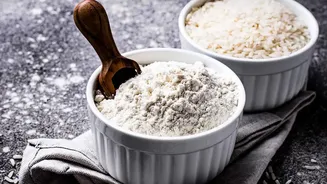
The gold standard for measuring dry ingredients like flour without a kitchen scale is the "spoon and level" method. First, you fluff the flour in its container to aerate it, as it can become compacted over time. Then, you use a spoon to lightly transfer the flour into the dry measuring cup until it's mounded over the top. Finally, you take a straight edge, like the back of a knife, and sweep it across the flat rim, leveling off the excess flour. This technique prevents you from packing in too much flour, which is a common mistake. Using a dry measuring cup's flat rim is essential for that final, crucial leveling step.
Why Liquid Cups Don't Measure Up
Trying to measure flour in a liquid measuring cup is a recipe for inaccuracy. Because the measurement lines are below the rim, it's impossible to properly level the ingredient with a straight edge. You're left to shake and jiggle the cup to flatten the top, but this often compacts the flour, leading you to use more than the recipe intends. Dipping a measuring cup directly into a bag of flour can result in using up to 50% more flour than needed, a mistake that a liquid cup makes hard to avoid. The volume might technically be the same, but the density of the packed ingredient will be wildly different, throwing off the entire recipe's balance.
The Domino Effect of Inaccuracy
Baking is a science, relying on precise chemical reactions between ingredients. Adding even a small amount of extra flour can have a dramatic impact. Too much flour can turn cookies tough and cakey instead of chewy, make cakes dry and dense, and cause breads to become heavy. The delicate balance of fat, sugar, and flour is what creates the textures we love. When that ratio is disrupted by an inaccurate flour measurement, the results are often disappointing. Consistently measuring your ingredients correctly is arguably one of the most important skills for improving your baking.
Beyond Flour: Other Ingredients Matter Too
This principle isn't just for flour. Granulated sugar, brown sugar, cocoa powder, and oats should all be measured in dry cups. While white sugar is less prone to compacting, it still benefits from being leveled properly. For brown sugar, most recipes specify that it should be packed into the dry measuring cup. For ingredients like cocoa powder or powdered sugar, the spoon and level method is best to ensure a light, accurate measurement. Using the right tool for each ingredient removes guesswork and sets you up for success before the oven is even preheated.