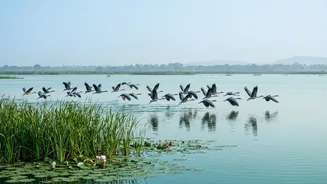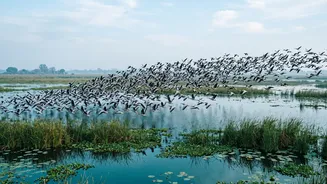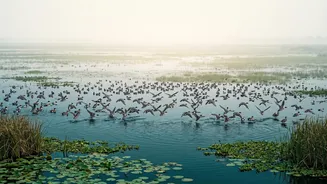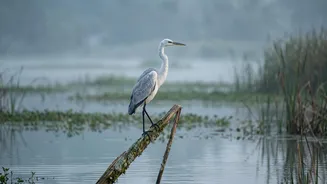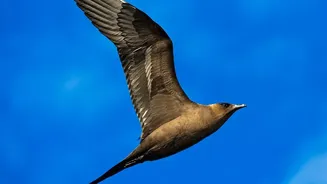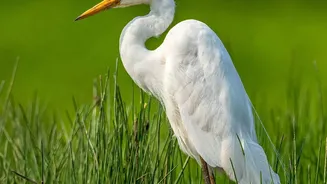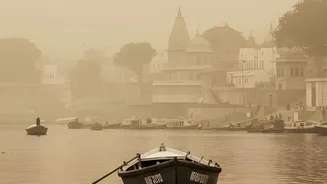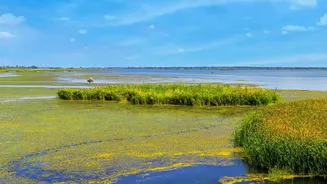






Every winter, India’s quiet marshes, lakes, and coastal flats transform into bustling international hubs. These local wetlands, often overlooked, are critical pit stops for thousands of birds migrating from as far as Siberia and the Arctic.
More Than Just Water
At first glance,
a wetland might look like a simple, waterlogged patch of land. But these ecosystems are among the most productive on the planet, often called ‘biological supermarkets’. Their power lies in their biodiversity. A healthy wetland is a complex web of life, combining shallow water, nutrient-rich soil, and a vast array of plants and microorganisms. This combination creates a perfect environment for organisms that form the base of a vibrant food web, attracting a stunning variety of wildlife. For migratory birds that have travelled thousands of kilometres along routes like the Central Asian Flyway, these wetlands are not just a destination; they are essential for survival.
A Rich, All-You-Can-Eat Buffet
The primary service a biodiverse wetland offers a weary bird is food. After an arduous journey, birds need to replenish their energy reserves, and wetlands provide a feast. The menu is varied and rich. It includes the tubers, fruits, and leaves of aquatic plants for herbivorous species like ducks and geese. For others, it's a protein-heavy buffet of insects, snails, crustaceans, amphibians, and small fish that thrive in these waters. The health of this food web is crucial; the presence of tiny invertebrates and healthy fish populations directly supports the birds that feed on them. Without this rich, diverse offering, migratory birds would be unable to refuel for their return journey or survive the winter.
Sanctuaries for Rest and Safety
Beyond food, wetlands provide two other crucial resources: rest and shelter. The long flight is exhausting and makes birds vulnerable. Wetlands offer a safe place to land, away from land-based predators. The dense vegetation of reeds and grasses along the water's edge provides excellent cover from birds of prey and other threats, as well as shelter from harsh weather. This allows them to rest and conserve energy without constant threat. These areas function as vital stopover sites, essentially service stations on a long highway, where birds can safely rest before continuing their journey or settling in for the winter.
India's Avian Crossroads
India is dotted with wetlands that are globally important for migratory birds. Chilika Lake in Odisha, a massive brackish water lagoon, hosts millions of birds each year. Keoladeo National Park in Rajasthan, a UNESCO World Heritage Site, is another famous wintering ground for species arriving from the Palaearctic region. Other key sites include Gujarat's Nalsarovar Bird Sanctuary, famous for flamingos and pelicans, and Pulicat Lake in Andhra Pradesh. Even smaller, lesserndown wetlands like Basai in Haryana play a crucial role, providing refuge for tens of thousands of birds annually. These diverse habitats—from salt pans and marshes to lakes and riverbanks—form a critical network supporting global bird populations.
The Silent Threats to These Havens
Unfortunately, India's wetlands are under serious threat. It's estimated that the country has lost nearly a third of its natural wetlands over the last few decades to urbanisation, agricultural expansion, and pollution. When wetlands are drained or polluted, the entire ecosystem collapses. Chemical runoff from farms and industries contaminates the water, killing off the fish and insects that birds rely on. Encroachment for construction destroys resting and nesting sites. This habitat loss has a direct impact on bird populations. For these winged travellers, arriving after a gruelling flight to find a polluted or dried-up wetland can be a death sentence, disrupting a migratory pattern that has existed for millennia.