





A Digital Expert in the Field
The latest breakthrough in smart farming is equipping farmers in crucial agricultural states like Punjab and Maharashtra with artificial intelligence right on their smartphones. Non-profits and tech companies have developed applications, such as CottonAce
by the Wadhwani Institute for Artificial Intelligence, that act as a digital agronomist. These apps use a phone's camera to identify pests and diseases, providing immediate, science-based advice. This allows farmers to move from guesswork and reactive treatments to precise, data-driven decisions, fundamentally changing how they protect their crops and livelihoods.
How It Works: From Photo to Action
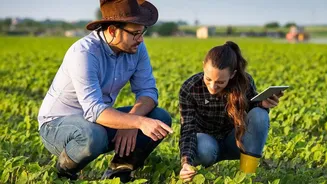
The process is remarkably simple yet incredibly powerful. A farmer can take a photo of an insect caught in a pheromone trap or a suspicious-looking leaf on a plant. The app's AI model, trained on thousands of images, analyzes the photo to identify the specific pest or disease. For instance, it can differentiate between harmful insects like the pink bollworm—a major threat to cotton crops—and other, more benign species. Based on the identification and the number of pests counted, the app advises the farmer on whether the infestation has crossed the 'Economic Threshold Level', a point at which action is required to prevent significant financial loss. It can then recommend specific, targeted treatments.
Targeting Threats in India's Cotton Belt
Punjab and Maharashtra are vital to India's cotton production, a crop that supports millions of rural households but is notoriously vulnerable to pests. The pink bollworm, for example, can decimate 20% to 30% of the cotton crop in an average year. In 2017, a severe infestation destroyed nearly half the cotton crop in Maharashtra. By providing early warnings and precise treatment advice, AI tools help farmers intervene before infestations become catastrophic. This targeted approach also leads to a significant reduction in pesticide use—some reports indicate a drop of up to 25%—which cuts costs for farmers and reduces the environmental impact of chemical runoff. Farmers using these apps have reported profit increases of around 20%.
The Bigger Picture: Data and Scalability
The benefits extend beyond individual farms. Every photo and diagnosis contributes to a massive dataset that can be used to monitor and predict pest outbreaks on a regional and even national level. This data allows agricultural departments to issue timely alerts and deploy resources more effectively. National platforms like the National Pest Surveillance System (NPSS), which integrates technology from players like Wadhwani AI, are already covering dozens of crops across the country. Many of these apps are designed to be inclusive, functioning offline in areas with poor connectivity and supporting multiple local languages, including Marathi and Punjabi, to ensure they are accessible to as many farmers as possible.
Challenges and the Road Ahead
Despite the promise, scaling this technology comes with challenges. Ensuring widespread smartphone adoption and improving digital literacy among all farmers remains a hurdle. Building trust is also crucial; many farmers are accustomed to taking advice from local agrochemical dealers, whose recommendations may not always be impartial. To succeed, these AI tools must consistently prove their value and be supported by local networks and government extension services. Initiatives like the Maharashtra government's MahaVISTAAR-AI platform show a commitment to embedding these digital tools into the fabric of the agricultural support system, aiming to reach millions of farmers.