







Why Go Natural This Monsoon?
The high humidity of the Indian monsoon creates the perfect breeding ground for mould and mildew, while closed windows can trap unpleasant odours and fumes from conventional cleaners. Switching to low-chemical cleaning offers a healthier alternative,
reducing exposure to ingredients that can trigger allergies and respiratory issues. Natural ingredients like vinegar, baking soda, and neem are not only inexpensive and readily available but also better for the environment. They provide a powerful way to manage the specific challenges of the season, from dampness to pests, without filling your home with toxic chemicals.
The Acidity Ace: White Vinegar
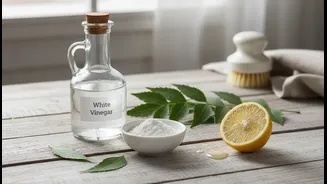
White vinegar is a star player in any natural cleaning arsenal. Its power comes from acetic acid, which is effective at breaking down and killing a majority of common mould species. For general surface cleaning and to cut through grime on kitchen counters or tiles, a solution of equal parts vinegar and water is perfect. To tackle visible mould on bathroom tiles or window sills, spray undiluted white vinegar directly on the area, let it sit for at least an hour to work its magic, and then scrub it away. It's also fantastic for deodorising sink drains; just pour a cup down the drain followed by hot water. A word of caution: its acidic nature can damage porous surfaces, so avoid using vinegar on natural stone like marble or granite.
The Alkaline All-Rounder: Baking Soda
Baking soda (sodium bicarbonate) works wonders as both a gentle abrasive and a powerful deodoriser. Its mild alkaline nature helps to scrub surfaces without scratching, making it ideal for cleaning sinks, stovetops, and even inside the refrigerator. To combat the musty smells that plague monsoon wardrobes and cabinets, simply place an open bowl of baking soda inside to absorb moisture and odours. For tough grime on surfaces, you can create a thick cleaning paste by mixing baking soda with a little water. Apply the paste, let it sit, and then scrub and wipe clean for a fresh, sparkling finish.
The Antifungal Powerhouse: Tea Tree Oil
Tea tree oil is a potent essential oil known for its impressive antifungal and antibacterial properties, making it a valuable tool against monsoon mould and mildew. Adding just a teaspoon of tea tree oil to a cup of water or a vinegar-water solution in a spray bottle creates a powerful mould-fighting spray. Use this to treat existing mould spots or as a preventative measure in damp-prone areas like bathrooms and behind cupboards. Its strong, clean scent also helps to purify the air. Because it is so concentrated, a little goes a long way, and it should always be diluted before use.
The Pest Repellent: Neem and Lemon
The monsoon often brings an influx of unwanted pests. Instead of using chemical insecticides, turn to natural repellents. Neem, revered in Indian households for centuries, has powerful insecticidal properties. Boiling a handful of neem leaves in water, straining the liquid, and using it to mop the floors can help keep insects at bay. A few drops of pure neem oil in your mopping bucket work well too. The strong scent of citrus is also a natural insect deterrent. Lemon juice, with its fresh smell and mild bleaching properties, can be added to water for mopping floors, leaving your home smelling clean and less attractive to bugs.
Knowing the Limits
While natural ingredients are incredibly effective for day-to-day cleaning and maintenance, it's important to understand their limitations. For severe or widespread black mould infestations, a more aggressive, professional approach may be necessary. Similarly, while vinegar and tea tree oil have disinfectant properties, they may not be sufficient for sanitising surfaces after a family member has been ill with a contagious virus. The key is to use these natural solutions for regular upkeep to prevent problems from starting. Also, never mix certain ingredients; for instance, combining vinegar and baking soda in a closed container can cause a dangerous pressure build-up, and their cleaning properties largely cancel each other out when mixed directly.