
The Heart of Old Bengal: North Kolkata
North Kolkata is not just a geographical area; it's a cultural phenomenon. This part of the city, which grew from early settlements like Sutanuti, became the chosen home for wealthy Bengali merchants, landlords, and intellectuals. Exploring its narrow
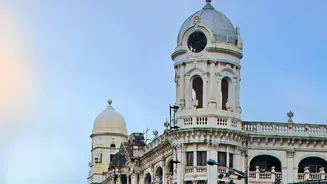
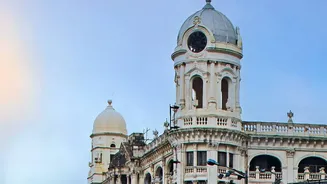
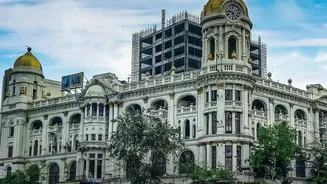
lanes on foot is the best way to absorb its character. The architecture itself is a narrative, with grand residential buildings featuring elaborate balconies, intricate ironwork, and spacious courtyards that once hosted opulent ceremonies and festivals. Though some mansions show signs of age, their enduring presence gives the area an atmosphere of faded grandeur and living history. This is where you can still feel the pulse of the Bengal Renaissance and the city's aristocratic past.
Sovabazar: A Glimpse into Aristocracy
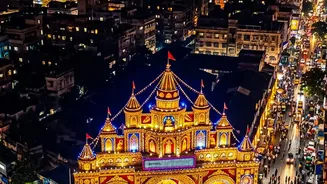
At the center of North Kolkata's aristocratic world is Sovabazar, best known for the Sovabazar Rajbari. This historic mansion, built in the 18th century by Raja Nabakrishna Deb, offers a direct window into the lifestyle of Bengal's zamindars. With its towering pillars, expansive central courtyard, and a blend of Indo-European design, the Rajbari stands as a symbol of a bygone era. It is especially famous for its Durga Puja celebrations, a tradition that has continued for over 250 years and remains a major cultural event, drawing visitors who come to witness devotion meet royal legacy. A walk through this neighbourhood reveals other palatial homes, or 'rajbaris', that cement Sovabazar's reputation as the heart of old Bengali nobility.
Kumartuli: Where Gods Are Born from Clay
A short distance away lies Kumartuli, the traditional potters' quarter, whose name translates to 'potter's locality'. For over 300 years, this neighbourhood has been the epicentre of idol-making, supplying the exquisite clay idols for Durga Puja and other festivals like Kali Puja and Saraswati Puja. The winding lanes are filled with workshops where artisans, who have inherited their skills through generations, transform bamboo frames, straw, and clay from the Hooghly River into divine figures. Visiting Kumartuli, especially in the months leading up to Durga Puja, is a captivating experience. You can witness the entire creative process, from the initial framework to the sacred 'Chokkhu Daan'—the painting of the eyes that is believed to bring the idol to life.
College Street: A Paradise for Bibliophiles
No cultural tour of old Kolkata is complete without a visit to College Street, affectionately known as 'Boi Para' or 'Book Town'. Reputed to be the world's largest second-hand book market, this nearly 1.5-kilometre stretch is lined with countless stalls and historic bookshops. It serves the students of surrounding prestigious institutions like Presidency University, Calcutta University, and Calcutta Medical College. Here, you can hunt for rare editions, out-of-print books, academic texts, and popular fiction, often at bargain prices. The area's intellectual energy is palpable, best enjoyed with a stop at the iconic Indian Coffee House, a historic hub for generations of students, writers, and thinkers to engage in spirited discussions, or 'adda'.
The Taste of Tradition
Exploring these neighbourhoods also means indulging in their legendary street food. The food stalls in and around Shyambazar and College Street are institutions in their own right. Don't miss out on 'telebhaja'—an assortment of fried snacks like alur chop (potato fritters) and begun bhaaja (fried eggplant)—best enjoyed on a rainy afternoon. For a more substantial bite, the Kathi Roll, a Kolkata invention, is a must-try. And no culinary journey is complete without tasting the city's famous sweets. Historic shops like Adi Haridas Modak in Shyambazar have been serving treats like 'chanar jilipi' and 'kheer kadam' for over two centuries. These flavours are as much a part of the city's heritage as its architecture.