



The Puzzling Toll of Zero Gravity
Space is an unforgiving environment. Astronauts on long-duration missions face a barrage of health challenges that have long puzzled medical experts. They experience significant loss of bone density and muscle mass, a weakening of the cardiovascular system,
and disruptions to their immune response. Many also suffer from Spaceflight-Associated Neuro-Ocular Syndrome (SANS), a condition that can cause vision changes due to swelling behind the eyes. For years, these ailments were treated as separate problems to be solved one by one. Researchers studied bone loss in isolation from immune dysfunction, and cardiovascular deconditioning separately from eye problems, all while searching for unique countermeasures for each. This fragmented approach offered partial solutions but failed to answer a fundamental question: could there be a common trigger for this cascade of physiological breakdown?
Meet Your Cellular Powerhouses
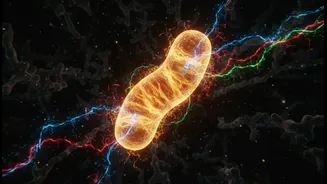
The answer may lie within the mitochondria, the tiny power plants inside almost every cell in your body. These organelles are responsible for generating about 90% of the chemical energy, in the form of a molecule called adenosine triphosphate (ATP), that our bodies need to function. From powering muscle contractions to enabling nerve signals, mitochondria are essential for life. When they function correctly, our biological systems run smoothly. But when they are under duress, their energy production falters, leading to widespread consequences. This state is known as mitochondrial dysfunction or stress, a condition where the cell's power supply becomes unreliable, triggering alarms that can affect the entire body.
A Unifying Theory Emerges
A landmark body of research, synthesising data from dozens of astronauts and numerous animal studies through NASA's GeneLab platform, points to mitochondrial stress as a universal driver of spaceflight's health effects. Scientists discovered that the dual hazards of microgravity and increased space radiation exposure directly harm mitochondria. Analysis of blood and urine samples from astronauts, including data from the famous NASA Twin Study, consistently revealed signs of altered mitochondrial activity and DNA damage. This led to a breakthrough insight: instead of numerous independent failures, the astronaut's body might be suffering from a systemic energy crisis. According to lead researcher Afshin Beheshti, whether looking at issues in the liver or the eyes, the same pathways related to mitochondria were identified as the source of the problem.
Connecting the Dots
Once this central link was established, the seemingly unrelated symptoms began to make sense. Tissues with high energy demands, like muscles, the heart, and the liver, are hit particularly hard when their power supply is disrupted. Without enough energy, muscle and bone cells cannot perform the constant repair and maintenance needed to combat atrophy. A stressed mitochondrial system can also impair the function of highly active immune cells, leading to the observed immune dysregulation. Researchers now hypothesise that even SANS could be connected, as mitochondrial dysfunction can contribute to the oxidative stress and metabolic shifts that affect the delicate structures of the eye. This central theory provides a comprehensive framework for understanding how the body breaks down in space.
A New Target for Treatment
This discovery does more than just solve a long-standing medical mystery; it revolutionises the strategy for keeping astronauts healthy. Instead of developing a dozen different treatments for a dozen different symptoms, scientists can now focus on the root cause: protecting the mitochondria. This opens the door for developing targeted countermeasures, such as specific nutritional supplements, antioxidants, or even pharmacological therapies designed to bolster mitochondrial resilience against the stresses of spaceflight. As humanity sets its sights on longer and more ambitious missions to the Moon and Mars, understanding and solving this fundamental challenge is critical. This research not only makes deep space exploration safer but also has potential applications for treating age-related and mitochondrial diseases here on Earth.