







Start with Your Tyres
Your tyres are the only part of your car in direct contact with the road, making them critical for monsoon safety. Wet roads significantly reduce grip, and worn-out tyres can lead to aquaplaning, where a layer of water builds between the tyre and the road, causing
a loss of control. Before the rains intensify, inspect your tyres for adequate tread depth; experts suggest having at least 3mm. Deeper treads are more effective at channelling water away and maintaining traction. Also, ensure your tyres, including the spare, are inflated to the manufacturer's recommended pressure, as this affects braking and handling.
Check Wipers and Lights
Visibility is dangerously low during heavy downpours. Your wipers are your first line of defence. If they are leaving streaks, skipping across the glass, or failing to clear water effectively, replace them. It's a relatively inexpensive fix that makes a world of difference. Also, top up your windshield washer fluid to clear away mud and grime splashed by other vehicles. Equally important are your lights. Check that your headlights, tail lamps, brake lights, and indicators are all functioning correctly. Use low-beam headlights during the day in heavy rain to make yourself more visible to others without blinding oncoming traffic.
Test Your Brakes thoroughly
Braking distances can increase significantly on wet surfaces. Before you embark on any long monsoon journey, get your brakes checked by a professional. Worn-out brake pads can be extremely dangerous, leading to skids on slippery roads. If you notice any juddering, unusual noises, or feel that the brake pedal is soft or spongy, get it serviced immediately. After driving through a waterlogged area, it's a good practice to gently tap your brakes a few times to help dry out the brake components and ensure they are responsive when you need them most.
Slow Down and Keep Your Distance
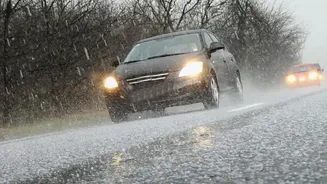
The single most effective safety measure for monsoon driving is to reduce your speed. Driving slower gives you more time to react to hazards hidden by the rain, such as potholes. A good rule of thumb is to reduce your normal speed by about 25-30%. It's also crucial to increase the following distance between your car and the vehicle in front of you to at least double what you would normally keep in dry conditions. This accounts for longer braking distances and reduces the blinding spray from larger vehicles.
Navigating Waterlogged Roads
Encountering a flooded road is common in the Indian monsoon. If you can, turn around and find an alternate route. A few inches of water can be enough to cause you to lose control, and you never know how deep a puddle is or what debris lies hidden beneath. If you must proceed, do so only if the water level is below the center of your wheels. Drive slowly and steadily in a low gear, keeping the engine revs high to prevent water from entering the exhaust pipe. Most importantly, if your car stalls in water, do not try to restart it. This can cause 'hydrostatic lock,' leading to catastrophic engine damage. It's safer to abandon the vehicle if water levels are rising and call for a tow later.
Pack a Monsoon Emergency Kit
Being prepared for the worst can turn a crisis into a manageable inconvenience. Keep an emergency kit in your car during the monsoon season. Essential items include a tow rope, jumper cables, a powerful flashlight, and a first-aid kit. A tyre inflator and a puncture repair kit can also be lifesavers. It’s also wise to have a phone charger or power bank, an umbrella, and a reflective warning triangle to alert other drivers if you break down. These simple items can provide immense help if you find yourself stranded on a rainy highway.